
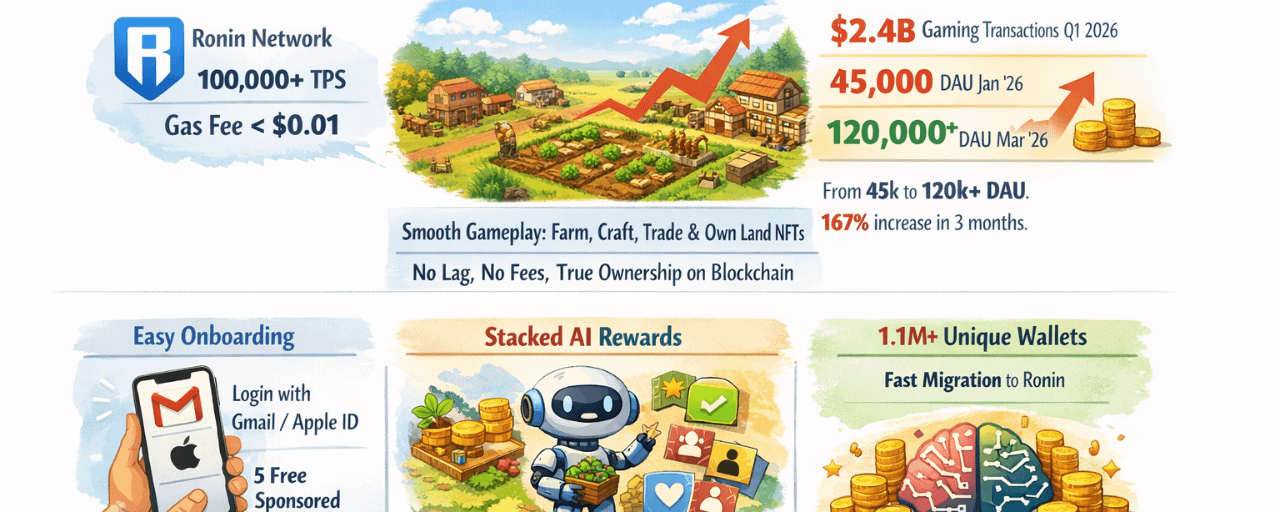

I used to think web3 gaming was just another version of the old “play to earn” model. You log in, complete a few tasks, earn some tokens, then leave. But when I looked deeper into how Ronin Network and Pixels actually operate, I started to see a different direction, something more practical and, in a good way, more powerful.
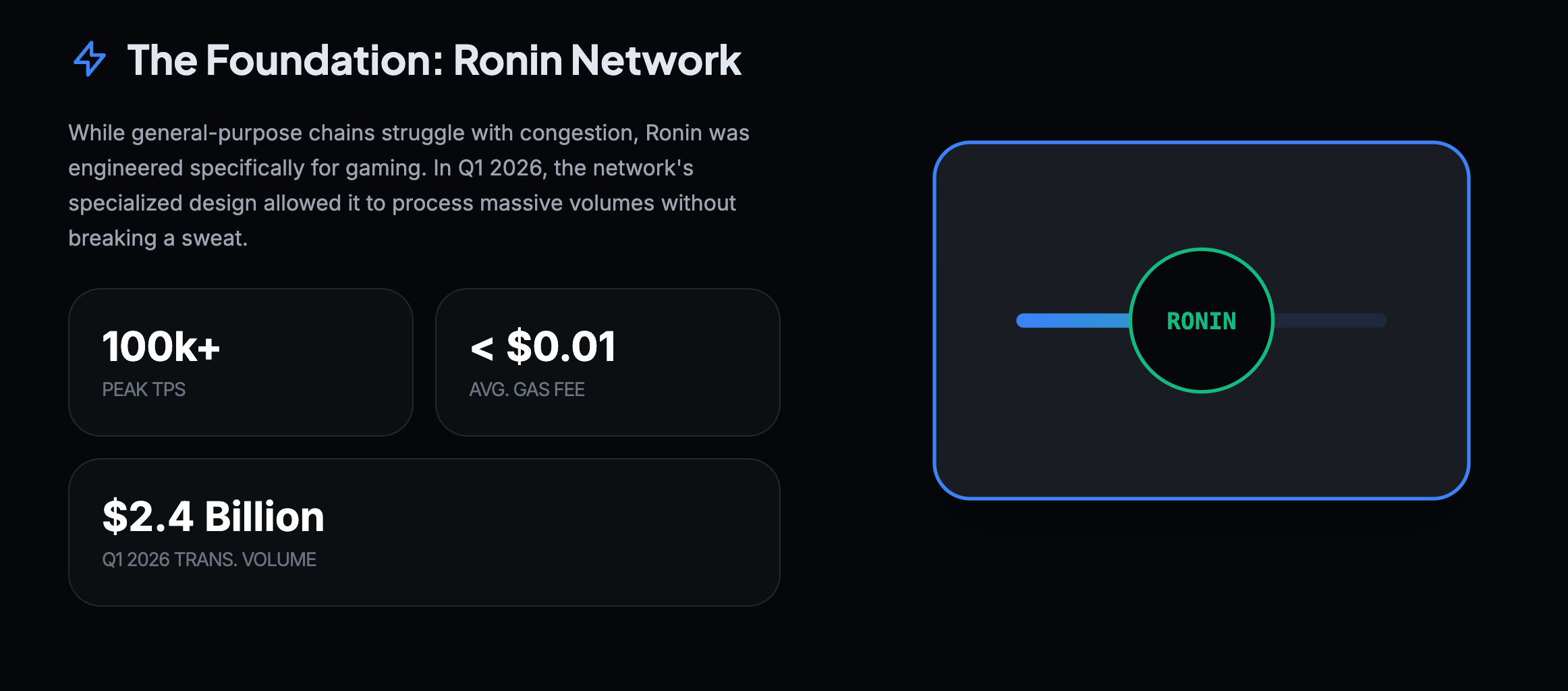
The first thing that caught my attention was the infrastructure. Ronin can theoretically reach over 100,000 TPS, with average gas fees below $0.01 per transaction. In Q1 2026 alone, the network processed around $2.4 billion in gaming transactions, with Pixels contributing a significant share. Its daily active users also grew fast, from about 45,000 in January to over 120,000 in March, a 167% increase in just a short period.
But numbers only tell part of the story. What really matters is the actual experience. Inside Pixels, everything from farming, crafting, trading items, to buying and selling land NFTs happens smoothly, almost identical to a web2 game. There’s no feeling of “using blockchain.” No lag, no waiting, no noticeable fees. Yet behind the scenes, every action is recorded on-chain, meaning ownership is real, not just stored on a company’s database.
This is where many other chains have struggled. Ethereum often faces high fees and congestion during peak activity. Polygon improves scalability, but still isn’t fully optimized for large-scale gaming. Ronin took a different approach by designing specifically for games from the start, and that design choice is starting to show real results.
However, speed and low fees alone are not enough to bring in mass users. The biggest problem in crypto has always been onboarding. New users are asked to create wallets, store seed phrases, and buy gas tokens. Just one complicated step is enough to make them quit.
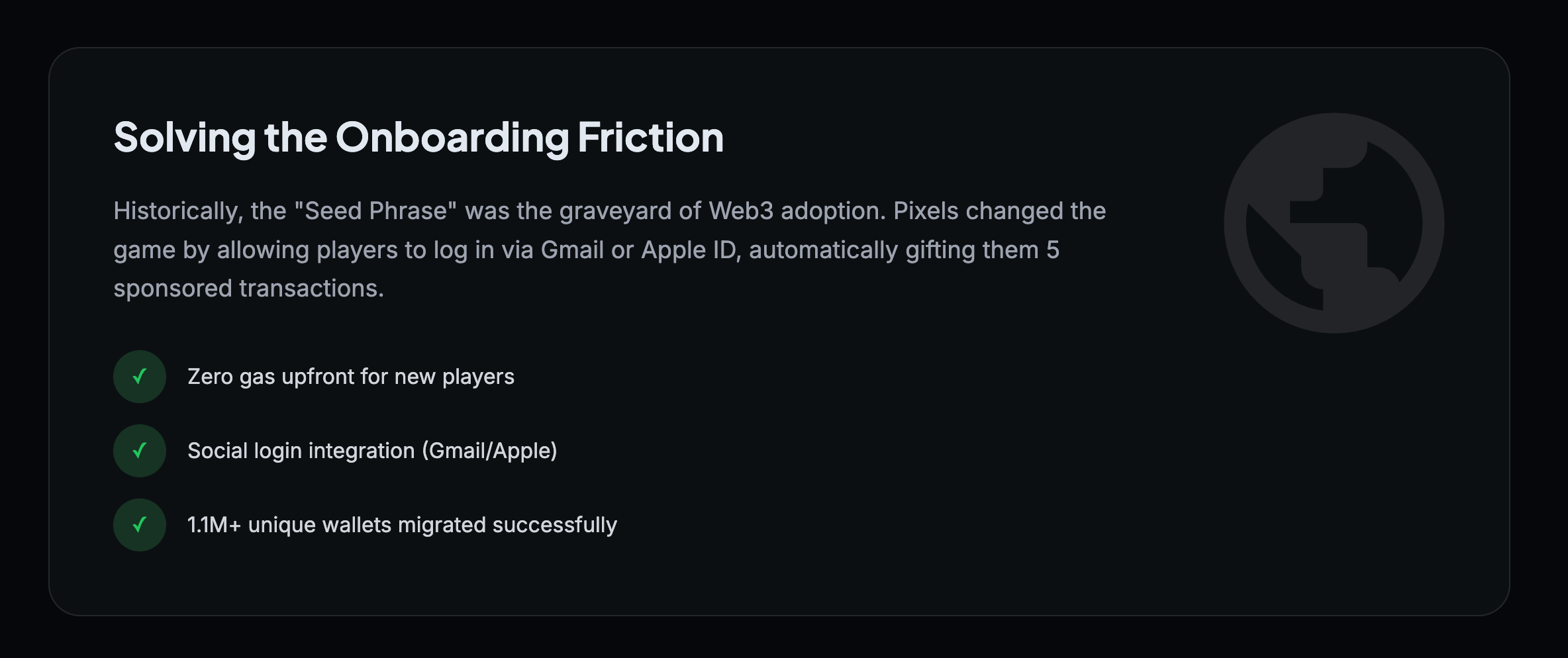
$PIXEL solves this in a very practical way. New users can log in with Gmail or Apple ID and immediately receive five sponsored transactions. That means you can start playing instantly without knowing anything about crypto. After migrating to Ronin between 2023 and 2024, Pixels quickly reached over 1.1 million unique wallets and hundreds of thousands of DAU within just a few months. The conversion rate from web2 players to on-chain users increased significantly simply by removing the need to buy gas upfront.
Personally, I see this as the real gateway to web3 gaming. When players don’t feel friction, they stay long enough to understand the value of ownership. And once they’re comfortable, transitioning into using tokens or crypto wallets becomes much more natural.
But the most interesting part lies in the in-game economy. In the past, play to earn models failed because rewards were farmed excessively, leading to token inflation and system collapse. Pixels is trying a different approach through a system called Stacked, an AI layer that analyzes player behavior in real time.
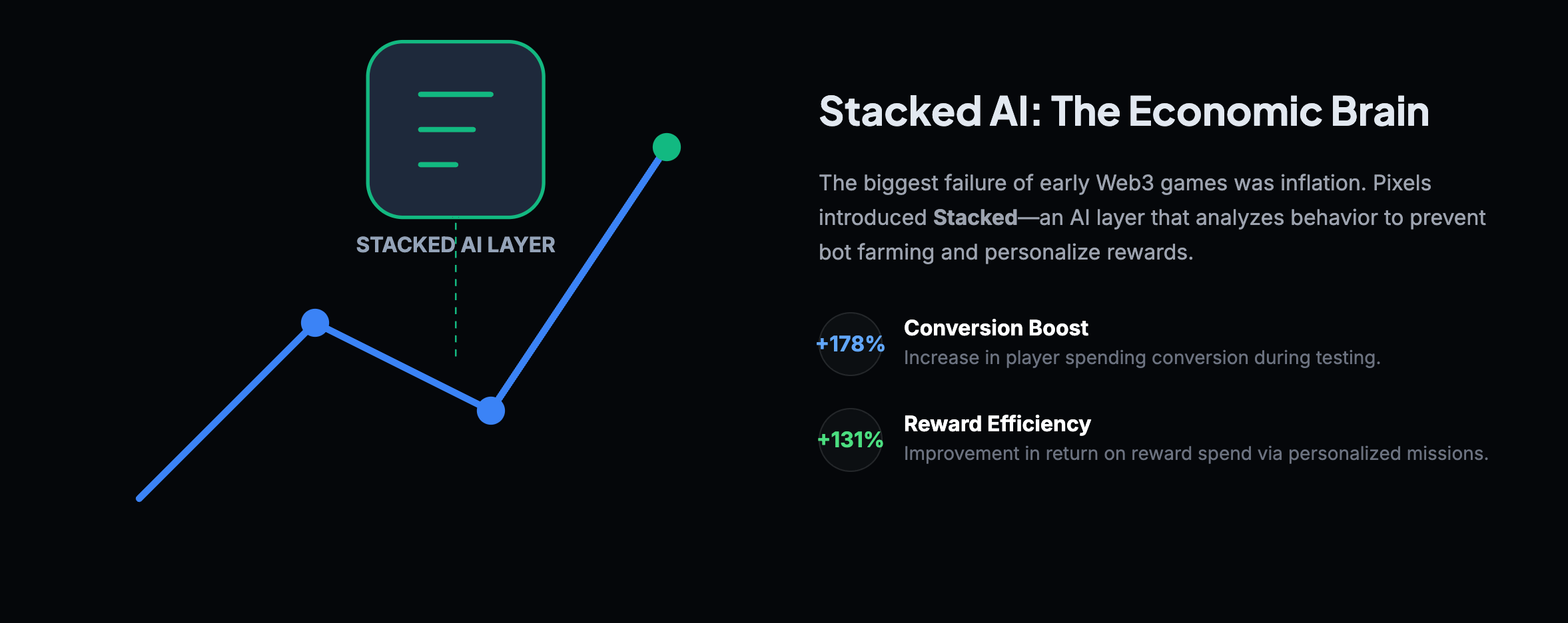
Instead of distributing rewards equally, it personalizes missions. If you enjoy farming, you get long-term farming quests. If you prefer social interaction, you’re rewarded for inviting friends or joining events. In testing campaigns, this system increased spending conversion by 178% and improved return on reward spend by 131%. Pixels has also generated around $25 million in cumulative revenue while maintaining stable DAU, something very few web3 games have achieved.
What’s even more interesting is that Stacked is no longer just for Pixels. It is gradually becoming a shared platform for other games in the Ronin ecosystem like Pixel Dungeons and Sleepagotchi. If it continues in this direction, it could evolve into the “AI brain” of the entire gaming ecosystem, where rewards are no longer just expenses but tools to optimize player behavior.
Looking at the bigger picture, these three components fit together naturally. Ronin provides speed and near-zero costs. Sponsored transactions remove onboarding friction. And Stacked AI ensures the in-game economy remains sustainable.
I’m not sure if @Pixels will become the biggest game in the future, but the way it is being built shows something important. Web3 gaming truly begins when players no longer realize they are using blockchain, yet still benefit fully from everything it offers.
#pixel