
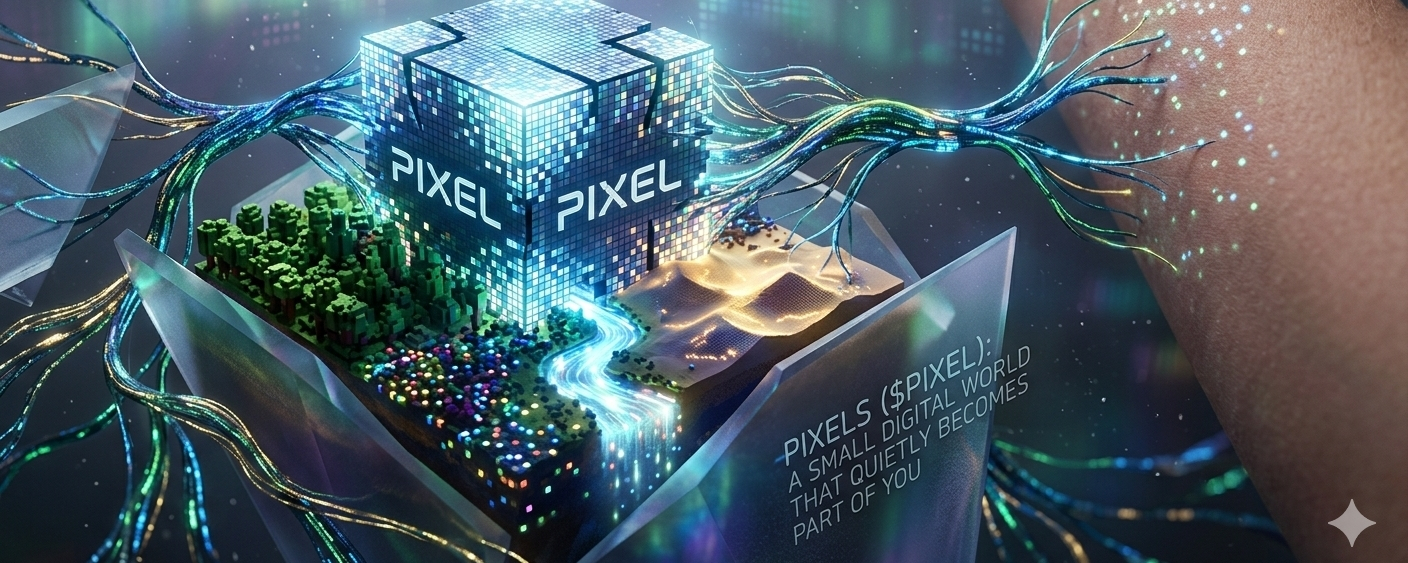
If I’m being completely real, most Web3 games I’ve come across always seem to start the same way, full of noise, big promises, and this constant pressure to believe that you’re stepping into the future, but after a while that excitement fades and what’s left behind feels more like a system than a world, something you log into because you think you should rather than because you actually want to, and that’s where Pixels feels different in a way that’s hard to explain at first but becomes very clear the longer you stay. It didn’t begin by trying to impress anyone or dominate attention, it just quietly existed with a simple idea that maybe people don’t need another intense experience or another economy to optimize, maybe they just need a place that feels calm, familiar, and genuinely theirs, and that idea shaped everything about how it grew.
When you first step into Pixels, nothing feels forced and nothing feels urgent, and that alone changes your entire mindset because you’re not being pulled in ten different directions or asked to understand systems you didn’t come for, you’re just there, walking around, planting something small, noticing other players doing their own thing, and slowly, without realizing it, you start to settle into the rhythm of the world. It doesn’t rush you, it doesn’t try to hook you with pressure, it just lets you exist, and in a space like Web3 where everything often feels fast and transactional, that kind of quiet experience feels almost unexpected. Underneath all of this, the game runs on the Ronin network, but the interesting part is that you don’t really notice it while you’re playing, because the technology stays in the background where it belongs, supporting the experience instead of interrupting it, and that balance is something many projects try to achieve but rarely get right.
What makes it even more interesting is how ownership is introduced, because instead of pushing it on you from the beginning, Pixels lets you discover it naturally over time, and that changes how you connect with it. You spend time building your farm, upgrading small things, interacting with others, and then at some point you realize that parts of this world can actually belong to you, not in a theoretical way but in a real, on-chain sense, and that realization feels earned rather than sold. Land, items, little details that make your space feel personal, they start to carry weight because they’re not just part of a temporary session, they’re something you can keep, something that reflects the time you’ve put in, and that’s where the emotional side of the experience quietly deepens.
The $PIXEL token exists inside all of this, but it doesn’t take over the experience or define it, and that’s probably one of the most important things about how the system is designed, because you’re not required to engage with it to enjoy the game, and that removes a lot of the pressure that usually comes with Web3 environments. Instead, the token becomes relevant when you want it to, when you’re ready to go deeper, when you start caring more about upgrades, better tools, premium features, or simply getting more out of the time you’re already spending. It connects to gameplay in a way that feels natural, and even features like staking don’t feel like separate financial activities but rather extensions of your presence in the world, where holding and using the token becomes part of how you grow within the system. For those who do want to explore the token beyond the game, it’s accessible through platforms like Binance, but inside the world itself, it never feels like you’re being pushed toward it, and that’s what keeps everything balanced.
If we’re looking at why Pixels manages to feel stable in such an unpredictable space, it really comes down to how thoughtfully everything is layered, because it doesn’t rely on a single idea to keep people engaged. It starts with accessibility, letting anyone join without cost or complexity, then slowly introduces deeper systems for those who want them, and all of this is supported by a social environment where players interact, form groups, and create their own small communities. The health of something like this isn’t just about token price or market trends, it’s about whether people keep coming back, whether they feel connected to the space and to each other, and whether the world continues to evolve without losing what made it special in the first place.
At the same time, it’s important to stay grounded and recognize that Pixels isn’t perfect, because no project in Web3 really is. The token side of things can still be affected by market conditions, and as more supply enters circulation, there can be pressure that doesn’t necessarily reflect what’s happening inside the game, and that disconnect is something players and investors both have to understand. There’s also the challenge of keeping the experience fresh, because even the most comfortable worlds need new ideas to stay alive, and while the team has been consistent so far, maintaining that over a long period of time is never guaranteed.
What makes the future of Pixels feel interesting is that it doesn’t seem locked into a single direction, and instead it feels open, like it’s slowly becoming something bigger without losing its core identity. There are early signs of player-driven creativity, of systems that might allow people to build their own experiences within the game, and if that continues, it could turn into a space where players are not just participants but contributors, shaping the world in ways that go beyond farming and trading. It’s not about becoming massive overnight or chasing the next big narrative, it’s about growing in a way that still feels human, and that kind of growth tends to last because it doesn’t break under pressure.
In the end, Pixels doesn’t try to be everything, and maybe that’s exactly why it works, because it focuses on something simple that a lot of projects forget, which is that people don’t just want systems to use, they want places to return to, places that feel calm, familiar, and a little bit personal. It gives you that kind of space, somewhere you can log into after a long day and just exist without expectations, and over time, without even realizing it, it starts to feel like a small part of your routine, something you come back to not because you have to, but because you genuinely want to, and if it continues to grow with that same quiet honesty, there’s a real chance it becomes more than just another Web3 game, becoming instead a place that people carry with them in a way that feels real.
