
I've read all the tasks related to pixel and found it as a low cap + strong users= Pixel is a hidden gem. The Ideas behind pixel is different and long term approach makes it easier to understand even begginers.
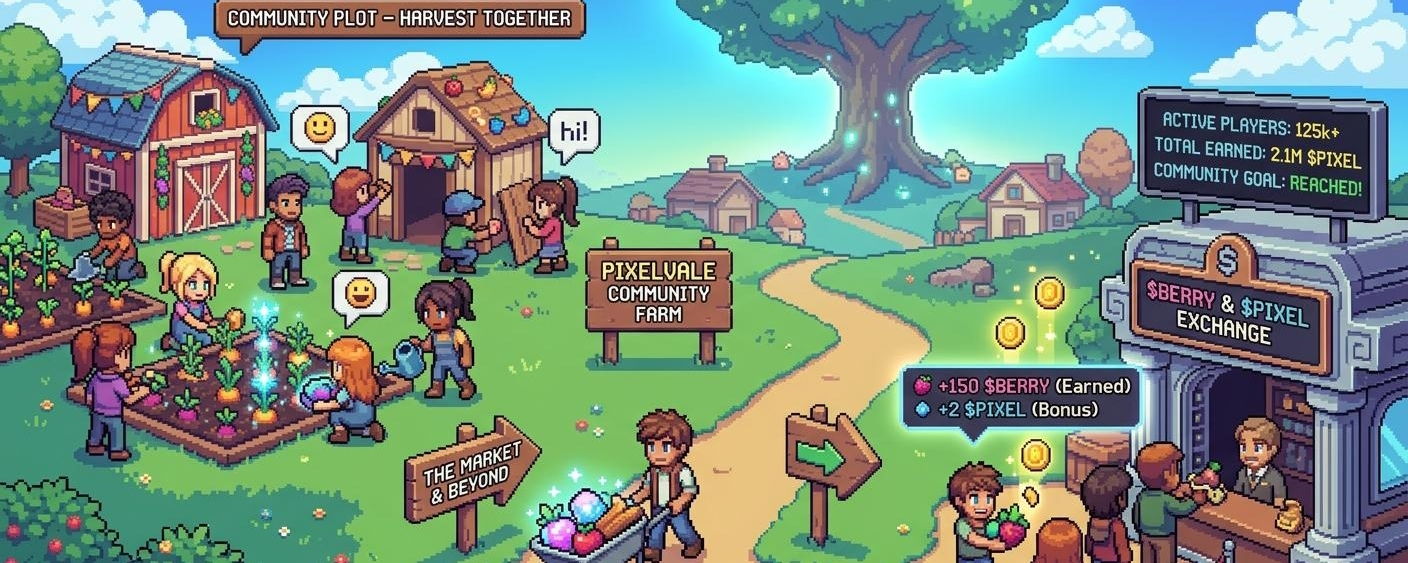
The most web3 games promise a community and deliver a grind. Pixel does something different. It builds the farming loop around social interdependence in a way that makes the earning feel like a byproduct of actually playing, not the other way around.
I noticed the core mechanic is deceptively simple. You farm, you craft, you trade. But what holds it together is that no single player can be fully self-sufficient. You need neighbors. You need the market. You need other people showing up and doing their part of the economy for your part to work. That design choice — intentional or not — creates something most web3 games never manufacture. A reason to care about the people around you.
Because the care is baked into the loop, the earning feels earned. When i sell a crafted item or complete a guild task, it doesn't feel like i'm extracting value from a system on its way to zero. It feels like i participated in something that was already moving. That's a rare texture in this space.
I feel the pixel token economy isn't perfect. Nothing in web3 is. But the game doesn't lean on token speculation as its primary draw, which is exactly why it has retained players long past the initial hype cycle. The people still in pixel are there because the game is genuinely fun to be in — the earning is a feature, not the whole pitch.
What pixel understood that most web3 games missed is that retention comes from belonging, not from yield. If you feel like part of something A farm. A neighborhood. A guild. You come back. And when you come back consistently, the earning takes care of itself. That's not a tokenomics breakthrough. That's just good game design wearing a web3 hat
I noticed one thing that doesn't get enough credit is the land ownership model. In most web3 games, owning an asset means holding a jpeg and hoping someone else wants it more than you do. In pixel, land actually functions. It produces. It appreciates through use, not just through speculation. When you develop your plot — upgrade your crops, build structures, attract foot traffic — the value follows the activity, not the other way around. That's a healthier relationship between ownership and utility than most nft-based games have managed to build.
The quest and mission system also deserves more attention than it gets. It gives newer players a structured on-ramp without making the game feel like a tutorial that never ends. You're earning while you're learning, which keeps the feedback loop tight and the motivation intact. It's a small design decision but it compounds. players who feel productive early are far more likely to stick around long enough to become real contributors to the economy.
The seasonal content drops are another quiet strength. Pixel updates its world in cycles — new crops, new events, new collaborative goals — which means the game always has a reason to pull you back in without resorting to artificial scarcity or forced urgency. The cadence feels human. It mirrors how real farming communities operate, where the calendar gives structure and the seasons give meaning.
Also the accessibility layer matters too. Pixel runs in a browser. No heavy client. No complicated wallet setup that scares off anyone who isn't already deep in web3. That low barrier of entry has let it pull in players who would never have touched a blockchain game otherwise — and once they're in, the community does the rest of the convincing.
Taken together, these aren't flashy innovations. they're just considered decisions made by people who actually thought about what keeps a game alive past its launch window. And in web3, that kind of patience is rarer than any token.