

I’ve been looking at Pixels (PIXEL) the way you watch something new grow—not rushing in, just observing how it behaves over time.
At a glance, it feels simple. A farming game, open world, a bit of exploration, some social interaction. Nothing revolutionary on the surface. But sometimes it’s not about doing something new—it’s about doing something familiar in a way that actually works in a different environment. That’s what makes Pixels interesting to me.
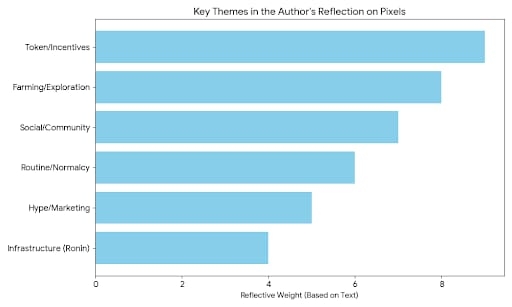
The token has already had its moment of excitement. Price moved, volume picked up, people paid attention. That’s normal. In crypto, attention comes fast. What matters is what happens after that initial wave settles. Circulating supply increases, market cap shifts, traders rotate in and out—but none of that really answers the core question: is there something real being built here?
What Pixels seems to be trying to do is simple in idea, but difficult in practice. It’s trying to build a small digital economy where players don’t just show up for rewards—they stay because the system makes sense.
That’s where most Web3 games struggle.
If people are only playing because they’re earning, they usually leave the moment rewards slow down. We’ve seen that pattern too many times. But if people are playing because they enjoy the loop—planting, building, trading, interacting—then the economy has a chance to breathe on its own.
Pixels feels like it’s leaning toward that second path. Not perfectly, not completely, but at least directionally.
Still, there’s a gap between activity and real engagement.
It’s easy to show numbers—wallets, transactions, users. But numbers don’t always tell the full story. Are people actually playing, or just optimizing rewards? Are they building something inside the game, or just extracting value while it lasts? That difference is everything.
I also think about balance.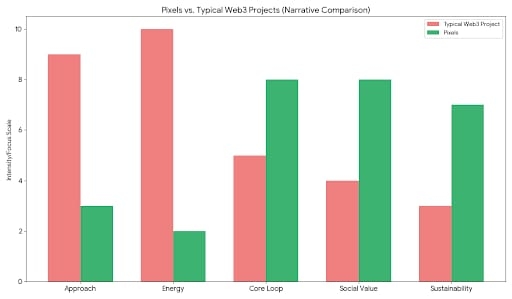
Too many rewards, and the system becomes inflationary. Too few, and people lose interest. Finding that middle ground is where most projects quietly fail. It’s not a technical problem—it’s a human one.
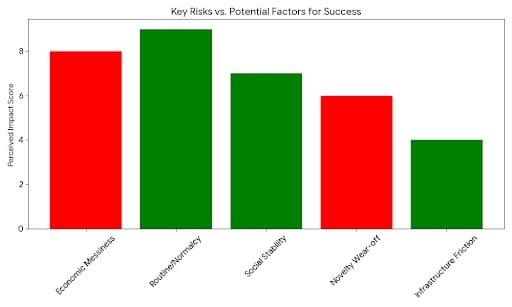
Being on Ronin helps, no doubt. The infrastructure is there, the audience understands Web3 gaming, and the friction is lower than most ecosystems. But even strong infrastructure doesn’t guarantee that people will stay. It just gives them a reason to try.
What I’m really watching is behavior over time.
Do players come back when things get quieter?
Do in-game assets still matter when hype fades?
Does the economy feel alive, or does it depend on constant outside attention?
Those signals don’t show up in headlines, but they’re the ones that matter.
Right now, Pixels is in that early phase where everything feels possible. But crypto has a way of testing ideas quickly. What looks strong at the start doesn’t always hold up when the pace slows down.
So I’m not rushing to conclusions.
I’m just watching to see if this world they’re building actually holds together—if it can stand without needing constant incentives, constant hype, constant new users to keep it alive.
Because in the end, the project
s that last aren’t the ones that launch the loudest.
They’re the ones that quietly keep working… even when no one is watching.