


I’ve spent enough years watching crypto to notice a pattern that doesn’t really change. Hype shows up early, long before clarity does. A project starts trending, the token begins to move, and suddenly it feels like everyone has already agreed that it matters. But popularity and usefulness are not the same thing. In many cases, they don’t even arrive together.
Lately, I’ve been seeing more attention around Pixels and its token PIXEL. The signs are familiar. More posts, more strategies being shared, more people talking about earning inside the game. The energy feels similar to earlier moments in crypto gaming, where interest builds quickly and expectations follow.
Instead of following the conversation, I tried to look at something more basic. What problem is this actually solving outside of crypto?
Pixels runs on the Ronin Network, which is known for supporting blockchain-based games with lower fees and faster transactions. On the surface, the idea makes sense. A farming game where players can own assets, trade them, and build value over time. It mixes gameplay with an economy that extends beyond the game itself.
But when I step away from the crypto perspective, the question becomes simpler. Do people who play games really need this?
I spoke to a few people who work in game development. Not crypto-focused, just people who design and think about games for a living. Their responses were not negative, but they were careful. One of them said players come for the experience, not for ownership. Another pointed out that most in-game economies already function well without tokens. They are designed to keep players engaged, not to expose them to financial risk.
One comment stood out to me. When real money enters a game, behavior changes. Players stop playing just to enjoy it. They start thinking about efficiency, returns, and optimization. At that point, the game slowly turns into something else.
I’ve seen that happen before.
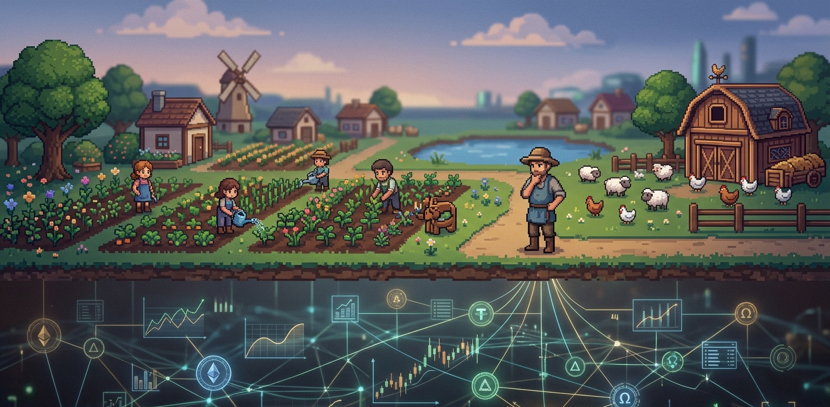
There were also concerns about how sustainable this kind of system is. If rewards depend on token distribution or new users joining, then the model relies on constant growth. And growth is unpredictable, especially in gaming where attention shifts quickly.
Another person I spoke to works with online game economies. They explained that balancing resources, controlling inflation, and keeping systems stable is already a solved challenge in traditional games. Adding a token introduces volatility. Prices move based on external markets, not just in-game decisions. That can make things harder, not better.
None of them dismissed the idea completely. But none of them felt that blockchain was necessary for what Pixels is trying to do.
That brought me back to something I’ve been thinking about for a while. Crypto often builds around problems it assumes exist, rather than problems that people outside the space are actively trying to solve.
Where crypto has worked best is within its own environment. DeFi improved how people trade and manage assets without intermediaries. NFTs created a way to represent ownership inside digital communities. Wallets became easier because users needed better access to blockchain tools.
These were internal needs. Crypto solved them because they came from within.
But when projects try to move into industries like gaming, the situation changes. Those spaces already have working systems. They may not be perfect, but they serve their purpose. Replacing them requires something clearly better, not just something different.
With Pixels, the idea is interesting. A shared world, a player-driven economy, and a sense of ownership that goes beyond the game. But the real challenge is not building it. The real challenge is proving that it offers something meaningfully better for players who are not already part of crypto.
That is not easy to prove.
The token adds another layer to this. When someone buys PIXEL, they are not just buying access or utility. They are buying into a possibility. A belief that the game will grow, that the economy will hold, and that ownership inside the game will matter more over time.
Prices can rise for many reasons. Attention, momentum, community belief. But price is not the same as real usage. A game can have an active token and still struggle to keep players who are there for the experience rather than the rewards.
That difference is easy to ignore when things are moving up.
I don’t think Pixels needs to fail for any of this to be true. It just needs to answer a more difficult question over time. If the financial incentives were removed, would people still want to play?
Because if the answer is no, then the value was never really in the game itself.
After watching this space for years, I’ve learned to come back to one simple question.
What real problem, experienced by people outside crypto, does this solve today?