
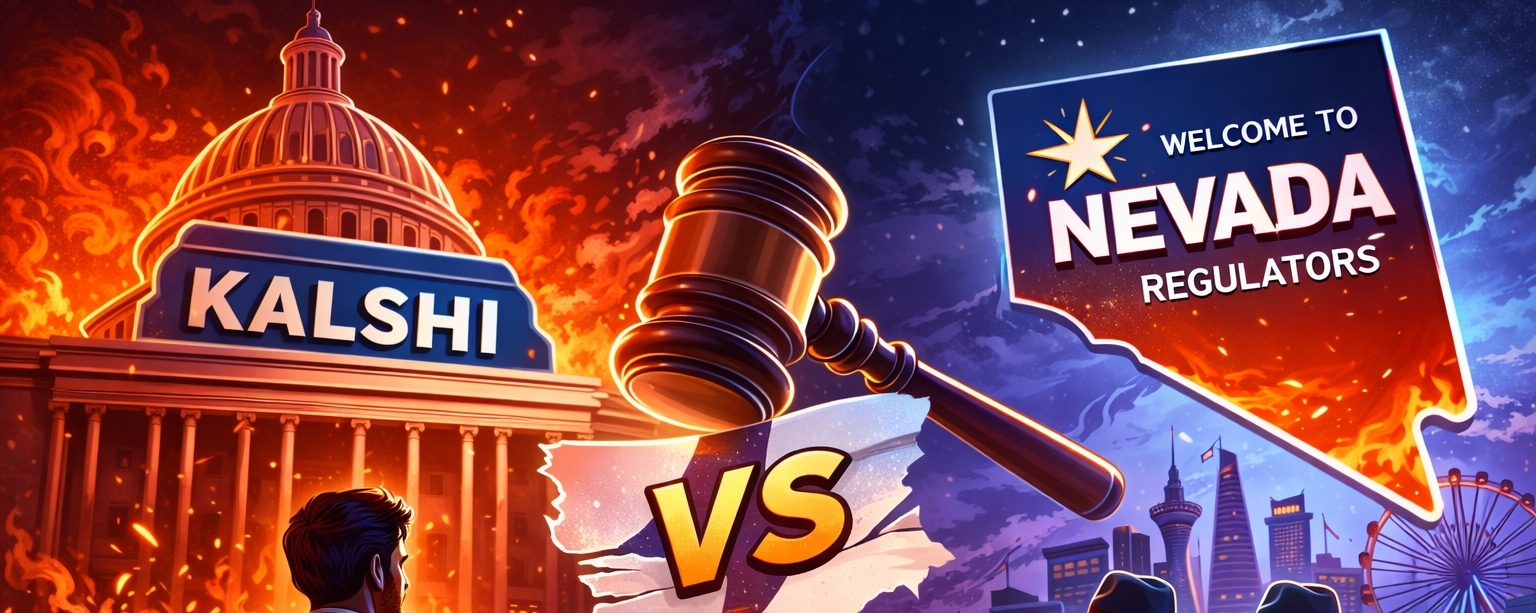
The rise of prediction markets has introduced a new way to trade on real-world outcomes—everything from inflation rates to election results. But as this space grows, so do the legal battles surrounding it. One of the most talked-about conflicts right now is the dispute between Kalshi and the state of Nevada—a clash that highlights the tension between innovation and regulation in the financial world.
What is Kalshi?
Kalshi is a federally regulated prediction market exchange in the United States. It allows users to trade contracts based on the outcome of future events—essentially turning predictions into tradable assets.
Unlike traditional betting platforms, Kalshi operates under the oversight of the Commodity Futures Trading Commission (CFTC), positioning itself as a legitimate financial exchange rather than a gambling service.
Nevada’s Position: “This Looks Like Gambling”
Nevada—a place synonymous with regulated gambling—has taken issue with Kalshi’s operations. State regulators argue that certain event-based contracts offered by Kalshi resemble sports betting or wagering, which falls under Nevada’s strict gaming laws.
From Nevada’s perspective:
If people are staking money on uncertain outcomes, it looks like betting
If it resembles betting, it should be regulated as gambling
And if it’s gambling, it must comply with state licensing laws
This puts Kalshi in a difficult position, especially since it operates under federal approval.
The Core Conflict: Federal vs State Authority
At the heart of this dispute is a bigger legal question:
Who gets to regulate prediction markets—federal authorities or individual states?
Kalshi argues that its approval from the CFTC gives it the right to operate across the U.S. without needing separate state licenses. In contrast, Nevada believes it has jurisdiction when financial products start to resemble gambling within its borders.
This isn’t just about one company—it’s about defining the boundaries of a completely new asset class.
Why This Matters for Crypto and Web3
You might wonder: What does this have to do with crypto or Web3?
A lot, actually.
Prediction markets share several similarities with decentralized finance (DeFi):
Both challenge traditional regulatory frameworks
Both operate across borders
Both blur the line between finance and speculation
If states begin classifying innovative financial tools as gambling, it could set a precedent that affects crypto derivatives, decentralized prediction platforms, and even NFT-based betting ecosystems.
The Bigger Picture: Innovation Under Pressure
Kalshi’s dispute with Nevada reflects a familiar pattern:
New technology emerges → Regulation struggles to catch up → Legal battles define the future
We’ve seen this with ride-sharing, crypto exchanges, and now prediction markets.
The concern isn’t just regulation—it’s overregulation that might stifle innovation before it fully matures.
What Could Happen Next?
There are a few possible outcomes:
Federal dominance: Courts may side with Kalshi, reinforcing federal authority over prediction markets
State control: Nevada’s stance could lead to stricter, state-level regulation
Hybrid model: A mix of federal oversight with state-specific restrictions
Each path carries major implications—not just for Kalshi, but for the broader financial ecosystem.
Final Thoughts
The Kalshi vs Nevada dispute isn’t just a legal disagreement—it’s a preview of the future of finance.
As the lines between trading, betting, and decentralized systems continue to blur, regulators and innovators will keep clashing. The real question is whether the system can evolve fast enough to support innovation without losing control.
Because in the end, it’s not just about who wins the case.
It’s about who defines the rules of the next financial era.
#Kalshi #CryptoRegulation #Web3 #PredictionMarkets #Finance


