
At first, Pixels feels easy to slip into. You plant something, come back later, turn it into something else. It has that slow, familiar rhythm that doesn’t ask much from you. Nothing feels rushed. You can just exist in it for a while.
But after some time, that calm starts to feel a bit more intentional than it first appeared. Not forced, just… managed. Like things are moving, but only within a range the game is comfortable with.
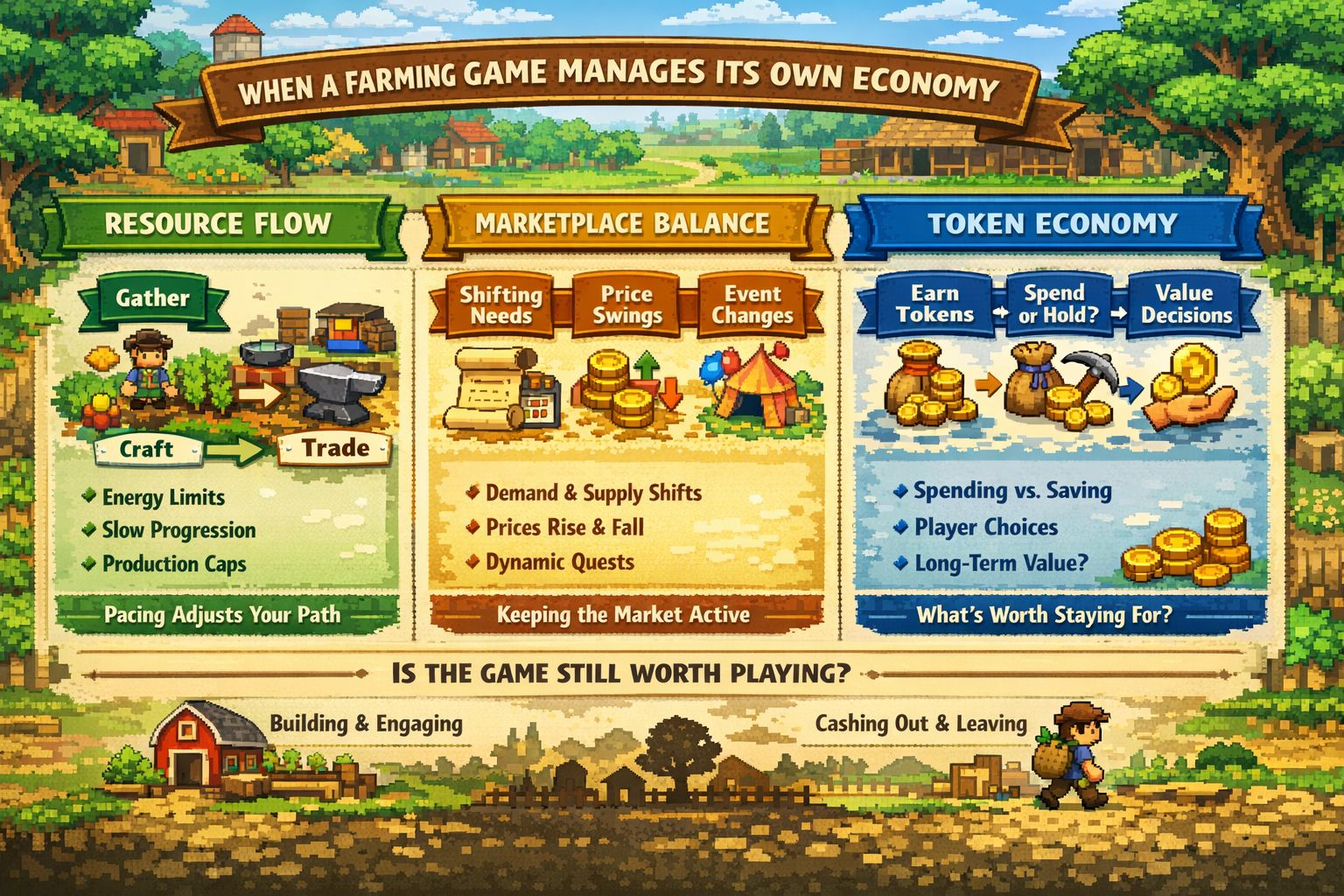
The loop itself is simple enough—gather, craft, trade. That part never really changes. What does change is how far you can push it. You start to notice the small limits. Energy runs out right when you’re getting into it. Better tools take time to reach. Recipes pull you in directions you didn’t plan for. Even your space to produce feels just slightly capped. None of it blocks you, but it quietly decides your pace.
And that pacing matters more than it seems. In a system where players can sell to each other, things can get out of balance quickly. If one method works too well, everyone moves toward it. And when that happens, it stops working just as well. Prices drop, demand fades, and something that felt like a good move suddenly isn’t anymore.
So the game keeps things shifting. Not in a way that feels obvious, but enough that nothing stays too predictable. One day something is worth making, the next day it’s something else. Quests change what people need. Events pull attention in different directions. It feels like variety when you’re playing, but it’s also keeping the system from settling too much.
The token adds a different kind of weight to everything. It gives your time a number, something you can measure. But once that’s there, it changes how people think. Earning starts to come with decisions—do you spend it, hold it, or move it out? And when enough people make the same choice, you can feel the shift.
The game tries to make spending feel natural. You don’t always stop and think about it. You use something, and it’s gone. You fix a tool because you need it. You buy something because it helps. The smoother it feels, the less it feels like a cost.
But there’s still a difference between spending because you want to keep going, and spending because you feel like you should. One feels easy. The other makes you pause, even if just for a second.
The bigger question is harder to see, but it’s always there. Are players putting value back into the game—using what they earn to keep playing, to build more, to stay involved? Or are they slowly pulling it out, treating the game like something temporary?
Even the way the game runs underneath all this plays a part. When trading is quick and cheap, people act faster. They adjust, they optimize, they notice things sooner. That keeps everything active, but it also means nothing stays hidden for long. If something is off, people find it.
Right now, Pixels feels like it’s holding that balance. Things are moving, people are playing, the system feels alive. But that kind of balance doesn’t just stay on its own.
At some point, the pace slows. The excitement settles. And when that happens, what’s left becomes clearer. People aren’t just playing anymore—they’re deciding why they’re still there.
And that’s the part that matters in the end. Not how much you can earn, but whether the world still feels worth staying in when earning stops being the main reason.