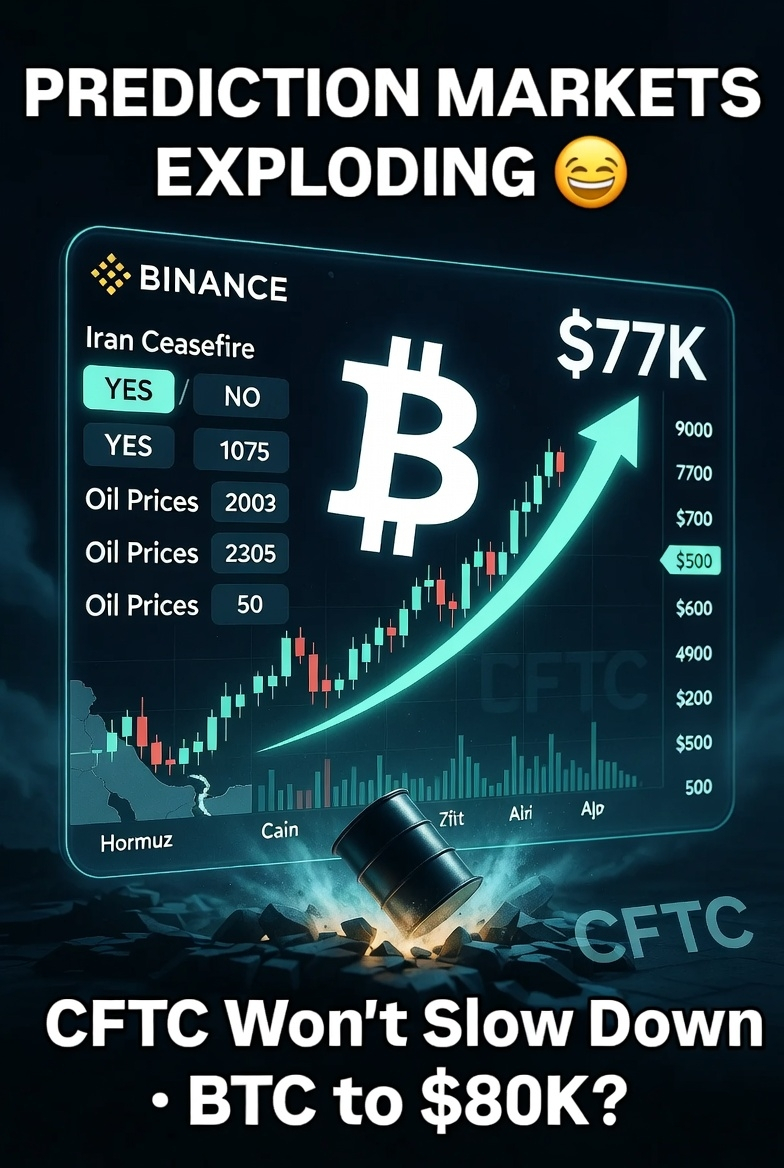
Prediction Markets: The Hottest Corner of Crypto & Finance Right Now 🔥
Prediction markets — platforms where people bet on real-world outcomes like elections, sports, crypto prices, wars, or economic events — have exploded in 2025-2026. What started as a niche DeFi experiment (think Polymarket on blockchain) has become a multi-billion-dollar industry with massive monthly volumes. In early 2026, some reports showed monthly trading volumes crossing $20B+, with platforms like Kalshi (CFTC-regulated) and Polymarket (crypto-native/offshore) dominating.
These aren't just gambling apps. They function as crowd-sourced forecasting machines. The prices (odds) often reflect collective wisdom better than polls or experts because real money is on the line — creating powerful informational signals for the market.
Why Selig's "We Won't Slow Down" Statement Matters Big Time
In the recent House hearing, CFTC Chair Michael Selig made it clear: even as the sole commissioner, he's not pausing rulemaking on digital assets and prediction markets (also called "event contracts"). This is huge because:
Clarity = Growth: The CFTC is actively shaping rules via an Advanced Notice of Proposed Rulemaking (ANPRM from March 2026) and staff advisories. They're seeking public input on everything from insider trading prevention to what events can be listed. Clear federal rules reduce uncertainty, attract institutional money, and help platforms scale nationally without constant legal fights.
Federal vs. State Battle: States like Arizona, Illinois, and Connecticut have tried cracking down, calling some markets "illegal gambling." The CFTC (backed by the Trump admin) has sued these states, arguing exclusive federal jurisdiction under the Commodity Exchange Act. Recent court wins (e.g., New Jersey ruling favoring Kalshi) suggest the feds are winning this turf war. If CFTC prevails, prediction markets could operate uniformly across all 50 states — a massive unlock compared to fragmented sports betting rules.
Bullish for Crypto: Crypto-native platforms like Polymarket use blockchain for transparent, decentralized betting. Regulatory clarity could boost on-chain volumes, drive adoption of stablecoins/crypto collateral, and integrate prediction markets deeper into DeFi (e.g., linking to perpetuals or options). It also positions the U.S. as a leader in "information markets" rather than pushing innovation offshore.
Positive Impacts
Better Forecasting & Risk Management: Markets on oil prices, BTC hitting $80K, or geopolitical events (like the recent Iran ceasefire news that pumped BTC) give real-time probability signals. Traders and institutions use them for hedging.
Liquidity & Innovation: Volumes have skyrocketed — sports, politics, and crypto events lead the pack. Platforms are adding self-imposed guardrails against insider trading, which builds trust.
Crypto Synergy: Prediction markets thrive on crypto rails (fast settlement, global access, pseudonymity). A pro-innovation CFTC stance under Selig could accelerate tokenization, 24/7 trading, and cross-border participation.
Economic Value: They aggregate dispersed knowledge efficiently, potentially improving policy, business decisions, and even election transparency.
Risks & Challenges
Insider Trading & Manipulation: High-profile cases (e.g., well-timed bets on political or war events) raise red flags. The CFTC is already enforcing against misuse of nonpublic info.
"Contrary to Public Interest": Rules might ban or limit contracts on sensitive topics like war, assassination, or terrorism to avoid moral hazards.
Gambling vs. Derivatives Debate: Critics argue sports/political markets blur into gambling, potentially undermining state gaming laws or tribal interests. If not handled well, it could lead to fragmentation or over-regulation.
Retail Risks: Easy access (sometimes starting at age 18) could lead to over-leveraged losses, especially with volatile events.
Tie-Back to Today's Crypto News
The Iran Strait of Hormuz announcement easing tensions → BTC surge + oil drop shows exactly how prediction markets shine. Traders on Polymarket/Kalshi likely priced in de-escalation probabilities fast, amplifying risk-on sentiment across crypto. Meanwhile, the North Korean operative exposé highlights security needs that regulated prediction markets (with better KYC/surveillance) could address better than pure offshore plays.
Selig's refusal to slow down suggests faster rulemaking = more legitimacy for the sector. This could fuel the next leg of the bull run by bringing in more capital and reducing FUD around "is this legal?"
My Take: Prediction markets are maturing from "crypto gimmick" to a serious asset class. Under a supportive CFTC, they could add trillions in notional value over time while making information more accurate and markets more efficient. But success depends on smart rules that curb abuse without killing innovation.
What do you think, fam?
Will clearer CFTC rules make Polymarket/Kalshi volumes explode even more?
Are prediction markets ultimately bullish or bearish for traditional crypto trading?
Favorite market to watch right now — politics, sports, or BTC price?
Drop your thoughts below! Let's discuss how this plays into the broader crypto recovery. 🚀
#PredictionMarkets #CFTC #CryptoRegulation #Polymarket #BinanceSquare