

I’ve been noticing a subtle but important shift in how Pixels feels over time. The world doesn’t feel like it’s waiting for me anymore — it feels like it’s moving forward on its own, whether I’m there or not.
That one realization changes everything.
Progression no longer feels like a straight path or a ladder you climb step by step. Instead, it feels like overlapping timelines where players are moving through similar systems at completely different speeds. It raises a question: is progression really about personal growth, or is it more about where you stand within a constantly evolving shared environment? The mechanics suggest advancement, but the experience leans more toward adaptation.
Exploration has also taken on a different meaning. It’s not just about unlocking new areas — it’s about understanding how the world responds to activity. Some places feel empty until players give them meaning through interaction, while others already feel “alive” because of accumulated presence. It becomes difficult to tell whether design is shaping perception, or if player perception is quietly becoming part of the content itself.
Customization adds another layer to this. On the surface, it looks like pure freedom of expression. But over time, it starts to feel more like structured individuality. The choices are wide enough to feel open, yet still constrained enough to create familiar patterns across players. That balance feels too consistent to be accidental.
What stands out most is how engagement is built. The system doesn’t push for big, dramatic moments. Instead, it encourages small, repeated actions. And over time, those actions form routines — routines that quietly become structure. Players aren’t chasing highlights; they’re maintaining presence. That makes it feel like the goal isn’t just interaction, but continuity.
The social layer deepens this even further. Player interaction doesn’t just create community — it creates visibility. Some players become more “present” simply because their actions accumulate and linger. There’s no clear leaderboard, but comparison still emerges naturally. It’s not direct competition, yet subtle hierarchies still form.
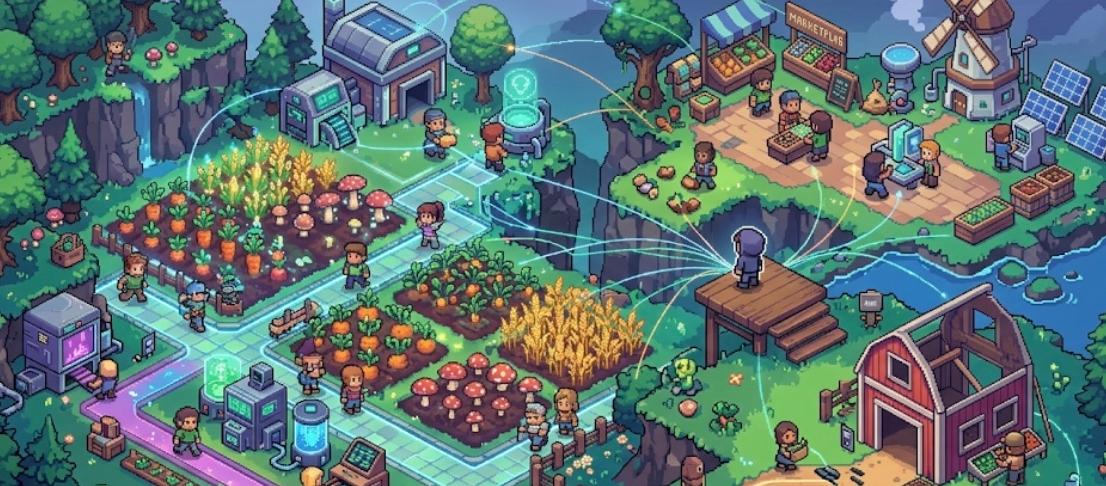
Technically, the experience feels smooth — almost invisible. But that smoothness hides a lot of complexity underneath. It raises an important thought: if even small parts of the system start to struggle, how quickly would that invisible stability start to crack? In systems like this, what you don’t see matters just as much as what you do.
Then there’s the question of scale. As more players join and interact, the system doesn’t just grow — it becomes less predictable. More actions overlap, more unintended patterns appear, and the meaning of mechanics can slowly shift without any direct changes. Scale doesn’t break the system instantly, but it can quietly reshape it.
The long-term engagement loop feels balanced right now — somewhere between curiosity and routine. But that balance feels fragile. If curiosity fades even slightly, or if routines become too predictable, the system might start changing in ways that aren’t immediately obvious.
And real-world behavior makes it even more uncertain. Players don’t stay consistent forever. They take breaks, step away, lose interest, then sometimes return. If Pixels depends on continuous participation to keep its rhythm, then those absences don’t just affect individuals — they subtly influence the entire system.
So the impression I’m left with is this: Pixels feels stable not because it’s fixed, but because it’s constantly in motion.
And the real question isn’t whether it works now — it’s whether that motion can sustain itself when the patterns behind it start to shift.