
Недавнее заявление о повторном открытии Ормузского пролива создало оптимизм, но ситуация гораздо более сложна и хрупка, чем кажется. Вот более четкий, ясный и мощный разбор с логикой и ключевыми причинами:
Ормузский пролив является критически важным мировым маршрутом для нефти, по которому проходит почти 20% мировых энергетических ресурсов.
Любое нарушение мгновенно влияет на цены на нефть, инфляцию и мировую экономику.
Иран объявил маршрут «открытым», но с жесткими условиями и контролем.
Проход не полностью свободен — корабли могут требовать разрешения и ограниченные маршруты.
Это означает, что повторное открытие частичное, а не абсолютное.
США не сняли свою морскую блокаду, создавая неопределенность.
Из-за этого риска многие судоходные компании могут избегать маршрута.
Результат: Поставка нефти остается нестабильной, несмотря на «открытые» заявления.
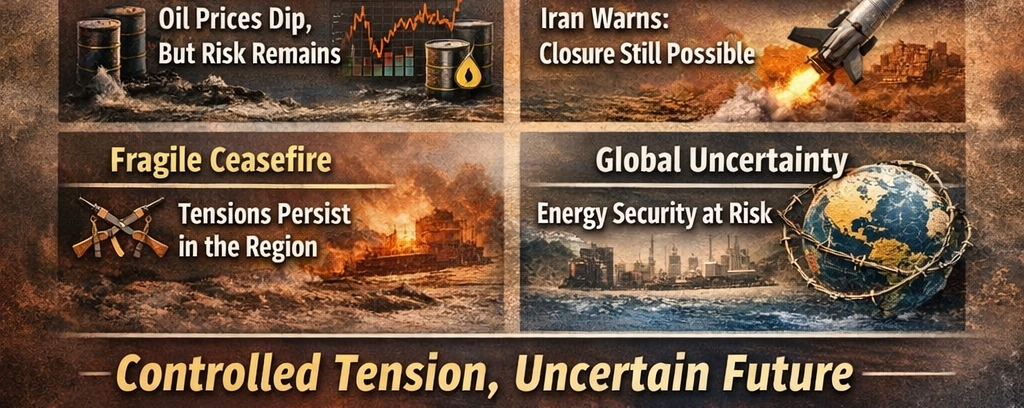
Цены на нефть временно упали из-за оптимизма на рынке, а не из-за реальности.
Трейдеры реагируют на новости, но условия на местах все еще рискованные.
Иран четко предупредил: если давление продолжится, пролив может снова закрыться в любое время.
Это делает ситуацию крайне непредсказуемой.
Временное прекращение огня в регионе немного снизило напряженность.
Тем не менее, конфликты с участием региональных держав не решены полностью.
Военное присутствие и угрозы все еще существуют в близлежащих водах.
Глобальные державы сейчас обсуждают международные планы безопасности.
Это показывает недостаток доверия к долгосрочной стабильности.
Судоходные организации все еще проверяют условия безопасности.
Без уверенности полный торговый поток не может возобновиться.
Энергетические рынки остаются чувствительными к политическим решениям, а не только к поставкам.
Даже небольшая эскалация конфликта может снова вызвать резкий рост цен.
Инфляция во всем мире напрямую связана со стабильностью нефти.
Развивающиеся страны пострадают больше всего от шоков цен на топливо.
Экономическое восстановление в мировом масштабе зависит от безопасных энергетических маршрутов.
Текущую ситуацию лучше всего описать как «контролируемое напряжение».
Не война, не мир — а хрупкий баланс.
Истинная стабильность требует постоянных соглашений, а не временных заявлений.
Без доверия рынки останутся волатильными.
Будущее пролива зависит от дипломатии, а не от доминирования.
До тех пор глобальная энергетическая безопасность остается под угрозой.
#Стрет_Гормуз #ГлобальныйНефтянойКризис #НапряженностьНаБлижнемВостоке #ЭнергетическаяБезопасность #ЦеныНаНефть #Геополитика #ИранСША #ГлобальнаяЭкономика #Перемирие #ТорговыеМаршруты #ЭкономическоеВоздействие #МировыеНовости