I didn’t set out to look at Pixels that day.
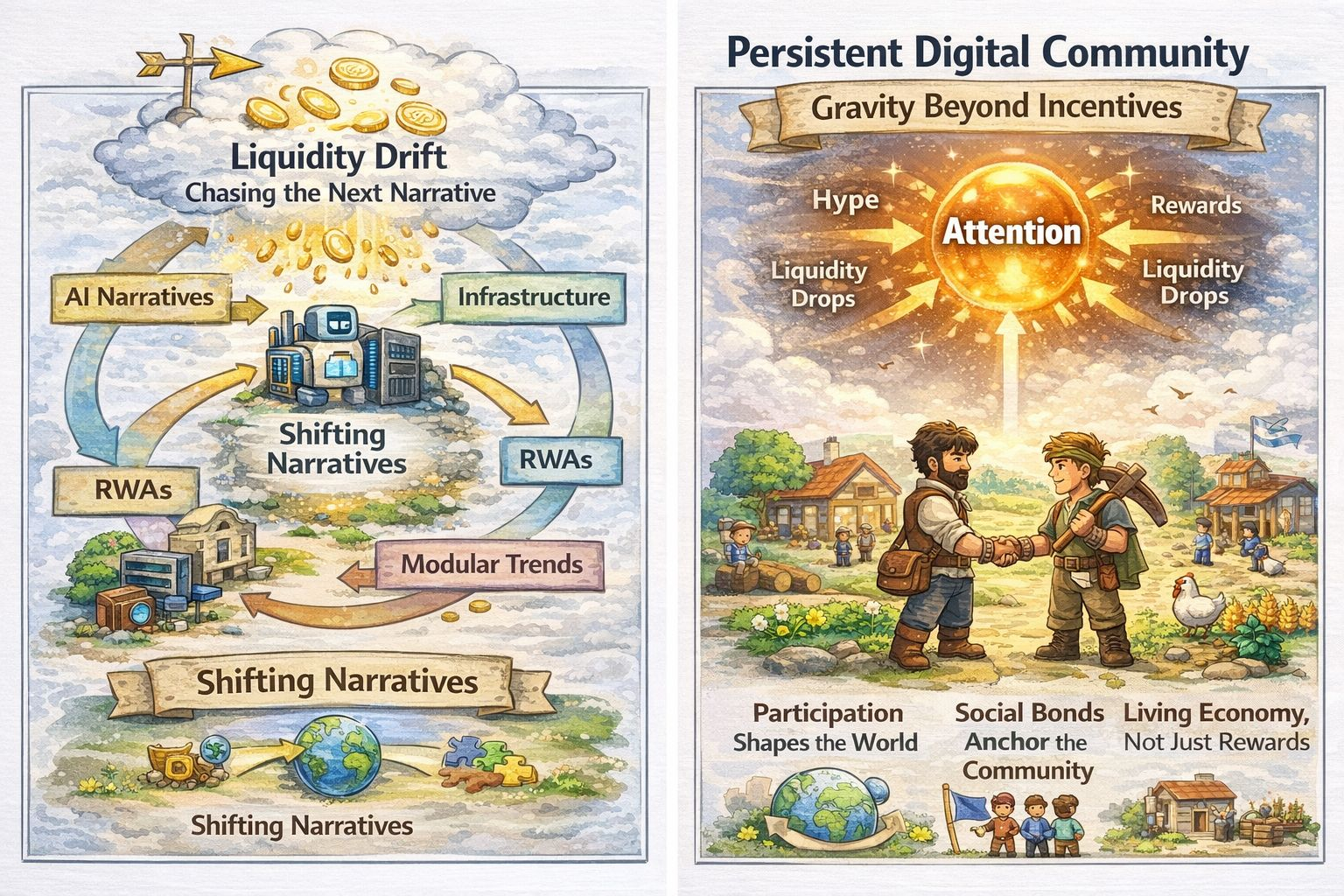
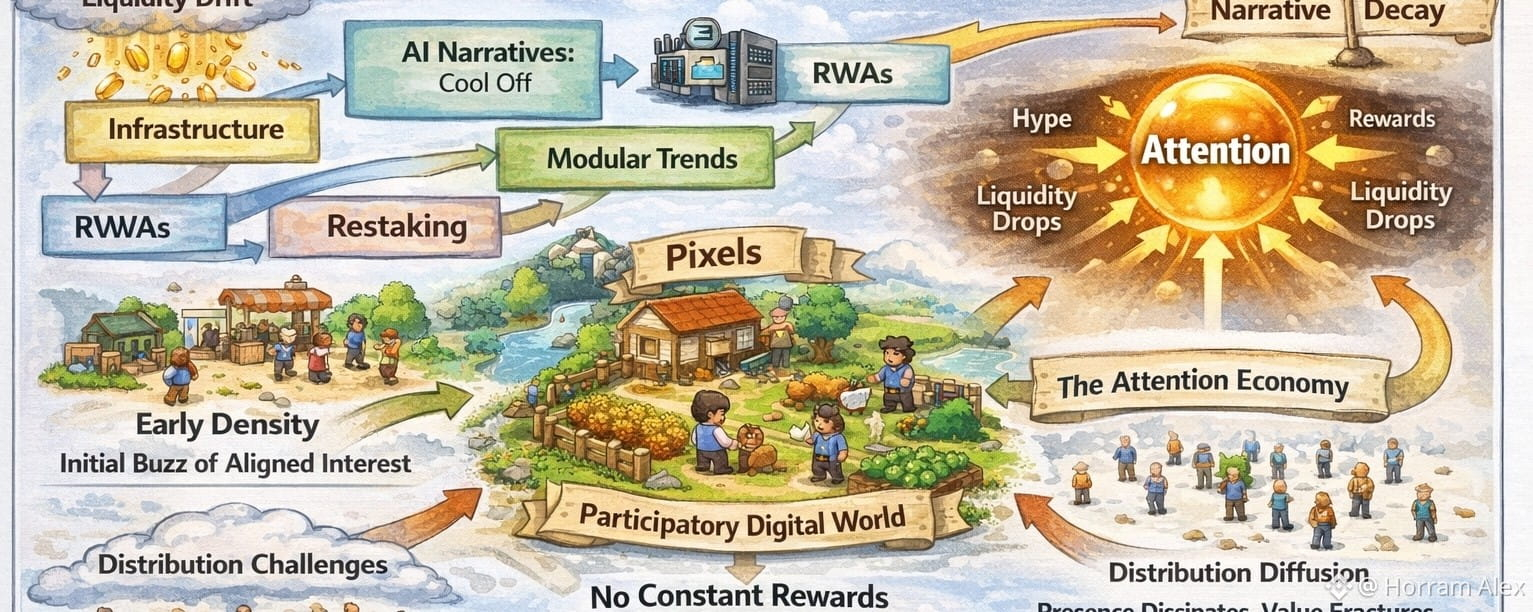
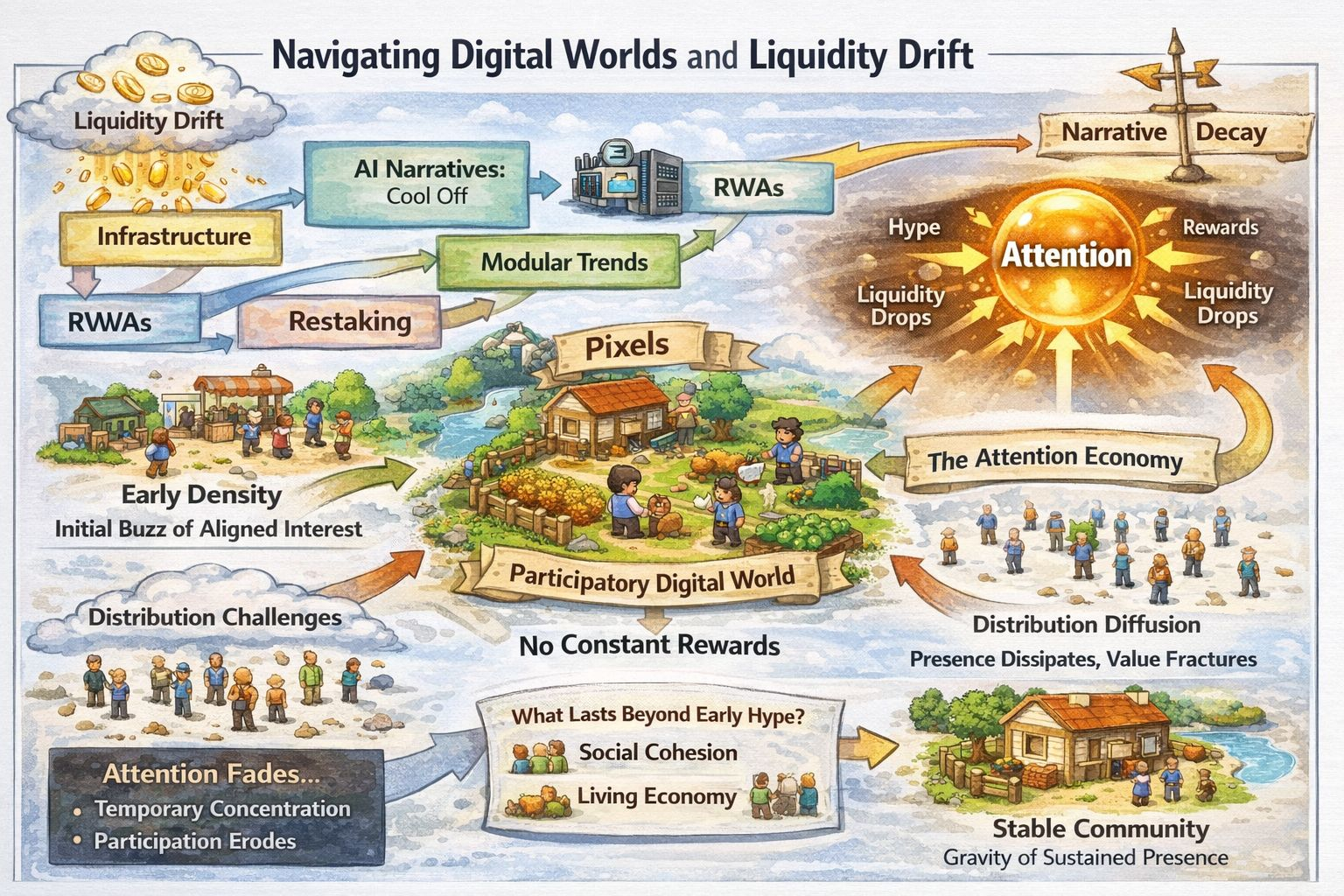
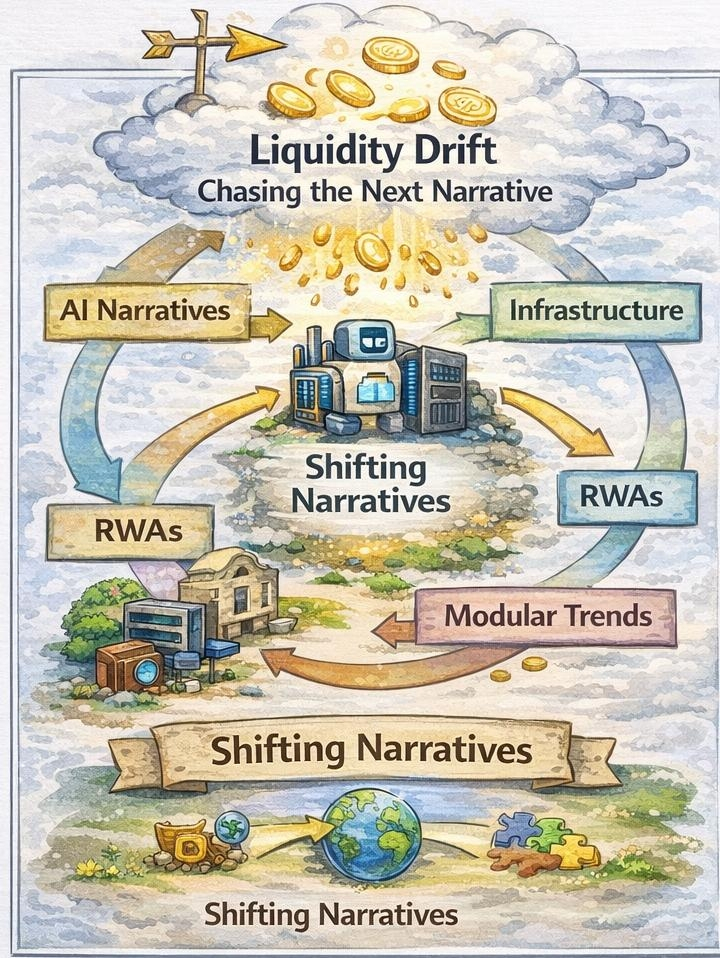
It started the way most things do in this market lately half distraction, half habit. I was tracking how liquidity was rotating again, watching the same familiar pattern where AI narratives cool off just enough for capital to peek back into infrastructure, then drift toward RWAs, then modular plays, then restaking ideas that never really die, just wait for the next window. Nothing feels fully dominant anymore. Everything feels like it’s borrowing attention rather than owning it.
And in the middle of that rotation noise, Pixels kept surfacing. Not loudly. Not in the way projects usually try to force themselves into your awareness. More like it was already there, quietly embedded in conversations that weren’t even about it.
That’s usually worth a second look.
When I actually started digging in, I didn’t approach it like “a game token” or “a Web3 experiment.” I approached it the way you approach anything in this cycle you ask what problem it’s quietly trying to solve, because every surviving project in crypto right now is, in some way, reacting to the same underlying issue: attention is unstable, and liquidity is impatient.
Pixels is trying to solve something that sounds simple but rarely is in practice. It’s trying to make a digital world persist without constantly paying people to stay inside it.
Most crypto games don’t survive the moment incentives normalize. They rely on rewards to manufacture activity, and that activity collapses as soon as the reward curve flattens or the market rotates somewhere else. It’s a familiar pattern now. You can almost feel when a game is alive because of participation, and when it’s alive because of emissions.
Pixels feels like it’s leaning into a different idea. Not perfectly. Not convincingly in every moment. But differently enough that you notice.
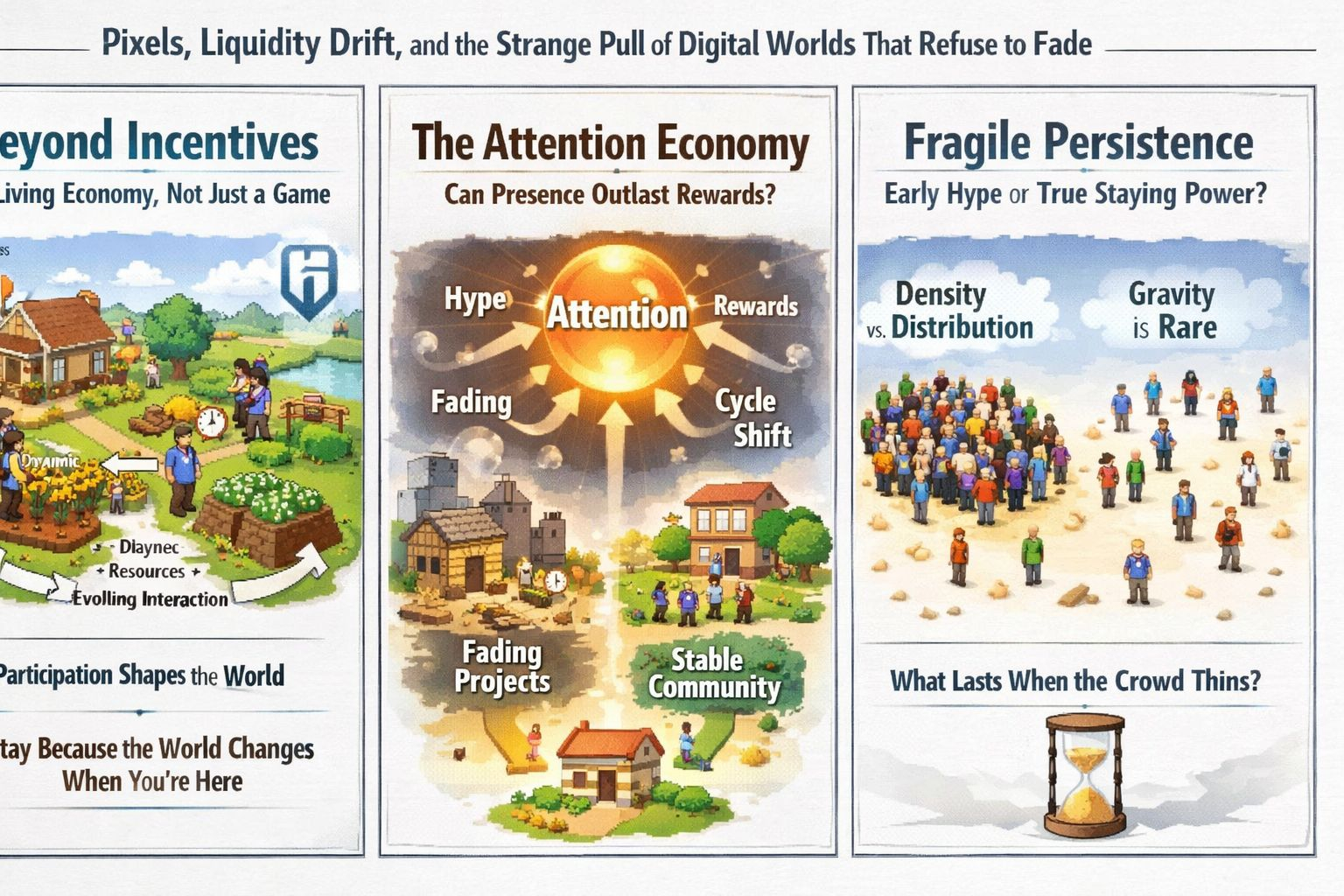
The core loop is almost intentionally understated. You move through a shared world, gather resources, build, expand. Nothing about that is new. What matters is how those actions interact with the environment and with other players. Resources don’t behave like static rewards. They circulate. Their availability shifts depending on how many people are active, how clustered they are, and how they collectively engage with the system.
It creates something closer to a living economy than a traditional game loop. Not in a philosophical sense, but in a mechanical one. Activity affects supply conditions. Presence affects opportunity. The world responds instead of just dispensing.
The Web3 layer is what makes that structure possible, but it doesn’t feel like it’s being used as a marketing hook. Ownership and state changes are just part of how the system stays coherent. It’s less about “you own your assets” and more about “your actions persist in shaping the environment others interact with.” That distinction matters more than people usually admit.
Built on Ronin, the infrastructure choice also feels pragmatic rather than ideological. You can tell when a system is fighting its own chain versus when it’s quietly relying on it. Here, the chain fades into the background, which is exactly what you want if the goal is to keep interaction frictionless. The moment infrastructure becomes visible to users, the illusion of continuity breaks.
But even if the system works mechanically, that’s not the real question I keep coming back to.
The real question is whether it can sustain attention without external pressure.
Because attention is where everything collapses in crypto now. Liquidity doesn’t just chase returns it chases narratives that still feel alive. And narratives don’t die in dramatic ways. They fade. Slowly. Then suddenly.
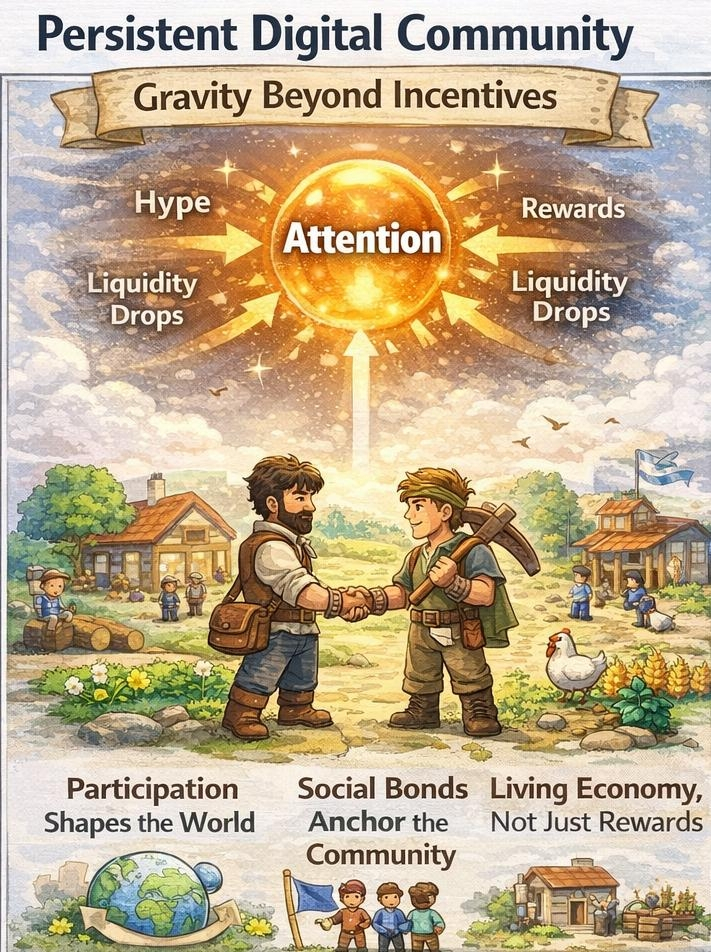
Pixels feels like it’s attempting retention through presence rather than incentives. That’s the subtle shift. Not “stay because you’re rewarded,” but “stay because the world changes when you’re here.” It’s a softer kind of pull, and in some ways, more ambitious.
The strength of that approach is obvious when it works. The world feels less transactional. More continuous. More socially anchored. You get the sense that people aren’t just extracting value and leaving they’re participating in something that persists beyond their individual cycle.
But that only works if the social layer develops real gravity.
And gravity is the hardest thing to manufacture in crypto.
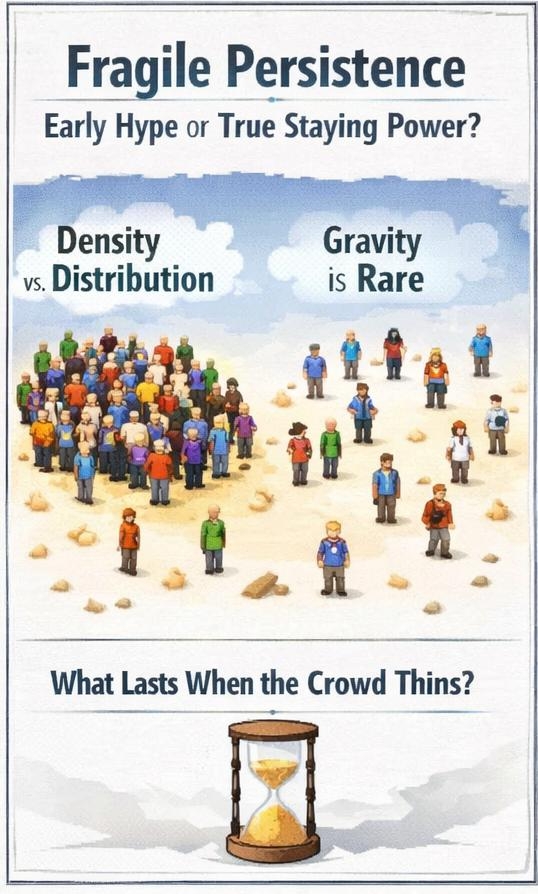
Because it isn’t just about mechanics or token design. It’s about whether enough people start treating the space as meaningful in a way that survives market cycles. Most projects underestimate how fragile that is. Early activity always looks like adoption, but a lot of it is just concentration. You gather enough aligned participants in one window, and everything feels coherent. Then distribution expands, and coherence starts to leak.
That’s usually where the real test begins.
The token incentives in systems like this tend to sit in a delicate position. Too strong, and they dominate behavior. Too weak, and nothing holds attention. Pixels seems aware of that tension, trying not to over-optimize either side. But that balance is unstable by nature. It depends on market conditions as much as design.
What I find most interesting and slightly uncomfortable is that Pixels might not actually be competing in the “game” category at all. It might be competing in the attention economy disguised as a game. And that distinction is important, because it reframes everything from gameplay to economics to retention.
Here’s the part that doesn’t get talked about enough: even decentralized worlds can centralize attention outcomes. You can distribute ownership, distribute assets, distribute participation but still end up with attention clustering around certain behaviors, groups, or moments. The system can be open and still asymmetrical in how value flows through it.
That contradiction sits underneath almost every “persistent world” experiment right now, and Pixels isn’t exempt from it.
If anything, it makes me more cautious.
Because what looks like organic persistence can sometimes just be early-cycle density. Everyone is close together, aligned in interest, generating the illusion of stability. But as the system scales, that density disperses. And what remains is what actually had staying power not what looked active at the beginning.
Still, I can’t dismiss what Pixels is attempting. There’s something genuinely different about a system that tries to make participation itself the source of continuity rather than relying on constant incentive refresh cycles. Even if it doesn’t fully solve it, it’s pointing at a real problem in this market cycle.
Maybe the most honest way to see it is this: it’s not trying to be a game in the traditional sense. It’s testing whether a digital environment can stay “alive” when attention is the only real fuel left.
And that brings me to a thought I keep circling back to, something slightly uncomfortable but hard to ignore.
In a market where liquidity is increasingly selective and narratives decay faster than they used to, maybe the real competition isn’t between projects anymore. Maybe it’s between systems that can make people feel present, and systems that can’t. And presence is a fragile thing. It doesn’t scale cleanly. It doesn’t survive every rotation.
So I keep asking myself, without really finding a clean answer:
Is Pixels quietly showing us what persistence in digital economies might look like when incentives stop being the main reason people stay or is it just early enough that we’re mistaking temporary concentration for something that was never meant to last?