

In the world of Web3, many ideas come and go. Some grow fast, some fade, and some stay but change their meaning over time. Privacy is one of those ideas. It is always discussed, often promised, but rarely fully understood.
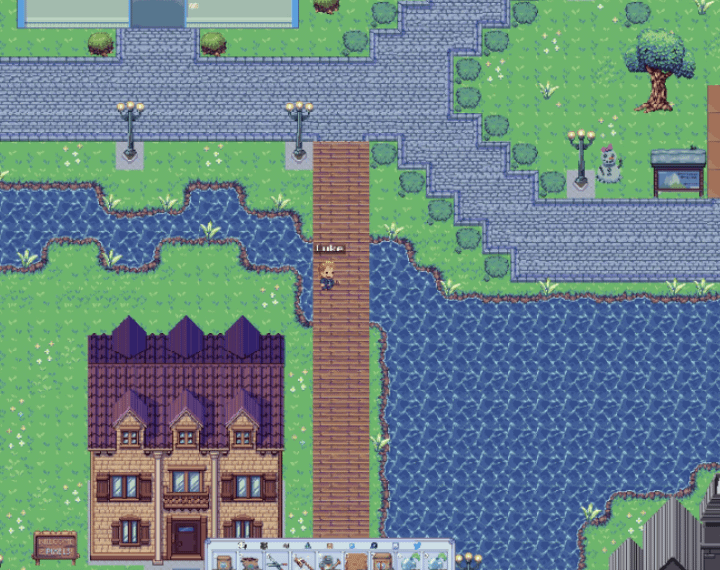
When you first see Pixels, it feels calm and easy. You plant crops, collect items, and explore a friendly world. It doesn’t feel complex or serious. It feels like a normal game. But if you look a little deeper, you start to notice something important—every action still exists on a system that records it.
That is where the real story begins.
🌱 A Soft Game with a Strong System Underneath
At first, everything in Pixels feels light and simple. You don’t need to think too much. You just play and enjoy. But behind the scenes, there is still a blockchain system working. This means your actions are tracked, stored, and sometimes visible in ways you may not fully understand.
So even if the game feels casual, the system is not.
🔐 What “Privacy” Really Means Here
In Web3, privacy is often explained as “control.”
Control over your data. Control over what others can see.
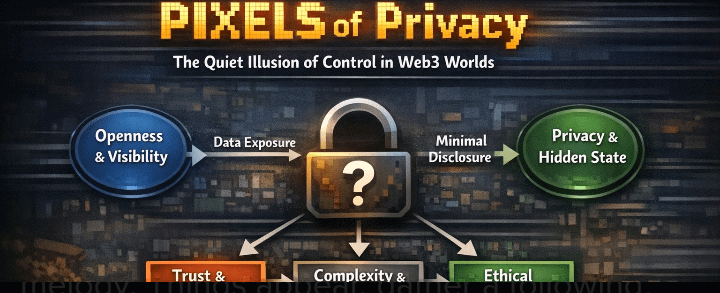 But in reality, it is not that simple.
Instead of removing responsibility, these systems give more responsibility to you. You are expected to manage what you share, what you hide, and how you interact. The problem is—most users don’t even realize they are doing this.
There is a big difference between:
Not wanting others to watch you
And actively managing what others can see
The second one takes effort. And most people don’t want extra work while playing a game.
⚖️ The Hidden Trade-Off
Privacy has two sides:
✅ It protects users
❌ It can also hide bad behavior
This creates a balance problem. If everything is hidden, it becomes harder to trust others. If everything is open, users may feel exposed.
Web3 systems, including Pixels, try to balance this—but the balance is never perfect.
🧠 Simple Design, Complex Reality
Pixels is designed to feel easy. That is why many people like it. But behind this simple design, there are complex rules:
What data is stored
What data is visible
Who controls these rules
Most users never think about these things. They just play. But these rules still affect them.
Even “minimal sharing” is not always clear.
What is “necessary” to share?
Who decides that?
Usually, it is not the player.
⏳ Small Frictions That Add Up
Privacy features often come with small costs:
Extra steps
Slight delays
More decisions
Each one feels small. But over time, they can change how users behave. People may choose easier options instead of safer ones, just to save time.
This is how systems quietly shape user behavior.
🤝 Trust: The Most Important Factor
In the end, everything depends on trust.
Not big promises or technical words—but simple trust:
Does the system feel safe?
Does it work smoothly?
Does it stay fair?
Good systems don’t force users to think too much.
But privacy systems often do the opposite—they make users more aware, more careful, and sometimes more confused.
🏛️ Who Is Really in Control?
Web3 talks a lot about decentralization. But decisions are still made by someone:
Developers
Governance groups
System designers
They decide:
How privacy works
What users can see
What remains hidden
So even in a “decentralized” world, control still exists—it is just less visible.
🌍 Final Thought
Pixels shows us something important.
A system can feel simple on the surface but still be complex underneath. Privacy does not remove problems—it moves them. It changes where the responsibility sits and how users experience it.
Most people may never fully understand these systems. And maybe they don’t need to.
But one question will always remain:
Are we truly in control… or just feeling like we are? #pixel @Pixels $PIXEL