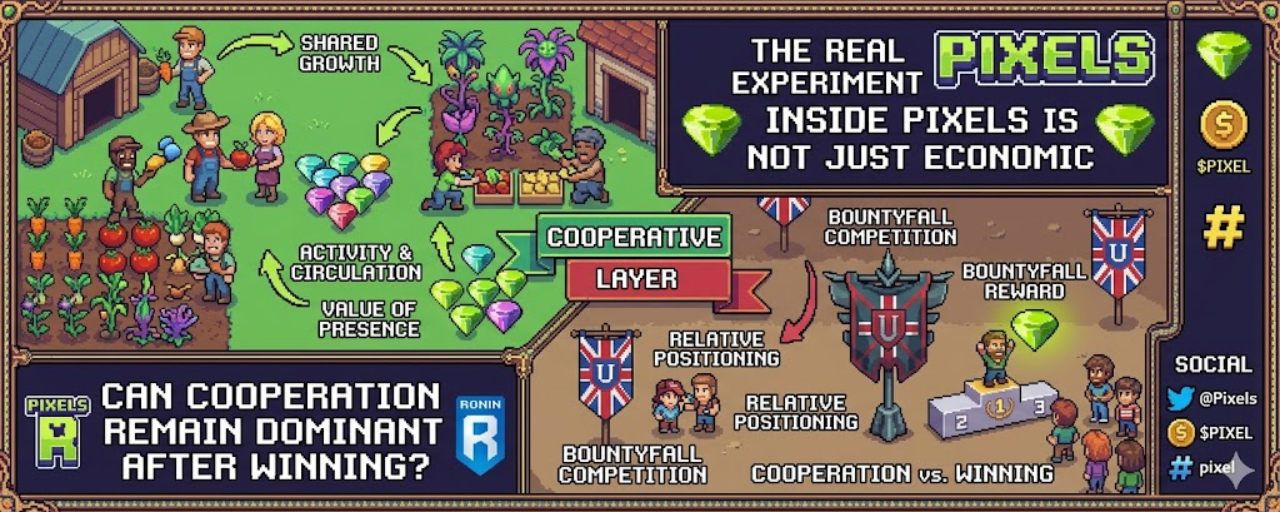
The more I look at Pixels, the less I think the most important question is whether the economy works in a technical sense. The more interesting question is what kind of player mindset the system is training over time.
That distinction matters.
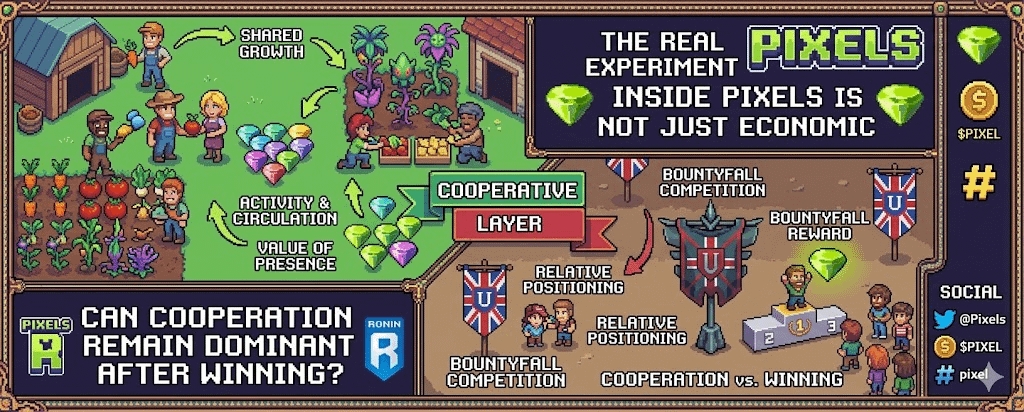
A cooperative farming world teaches one kind of instinct. It teaches players to value activity, circulation, presence, and shared growth. More people means more depth in the market, more life in the world, and more reasons for production to stay meaningful. In that environment, other players feel useful even when they are not directly helping you. Their existence inside the loop is already part of your advantage.
That is why the competitive layer introduced by Bountyfall stands out so much to me.
It does not erase the cooperative foundation. The foundation is still there. But it adds a second logic that points in another direction. Once rank matters, once Unions matter, once seasonal outcomes matter, you begin to read the world differently. You start thinking in relative terms. You start caring not just about progress, but about position. And once that becomes natural, the social atmosphere of the game shifts even if the world itself still looks peaceful on the surface.
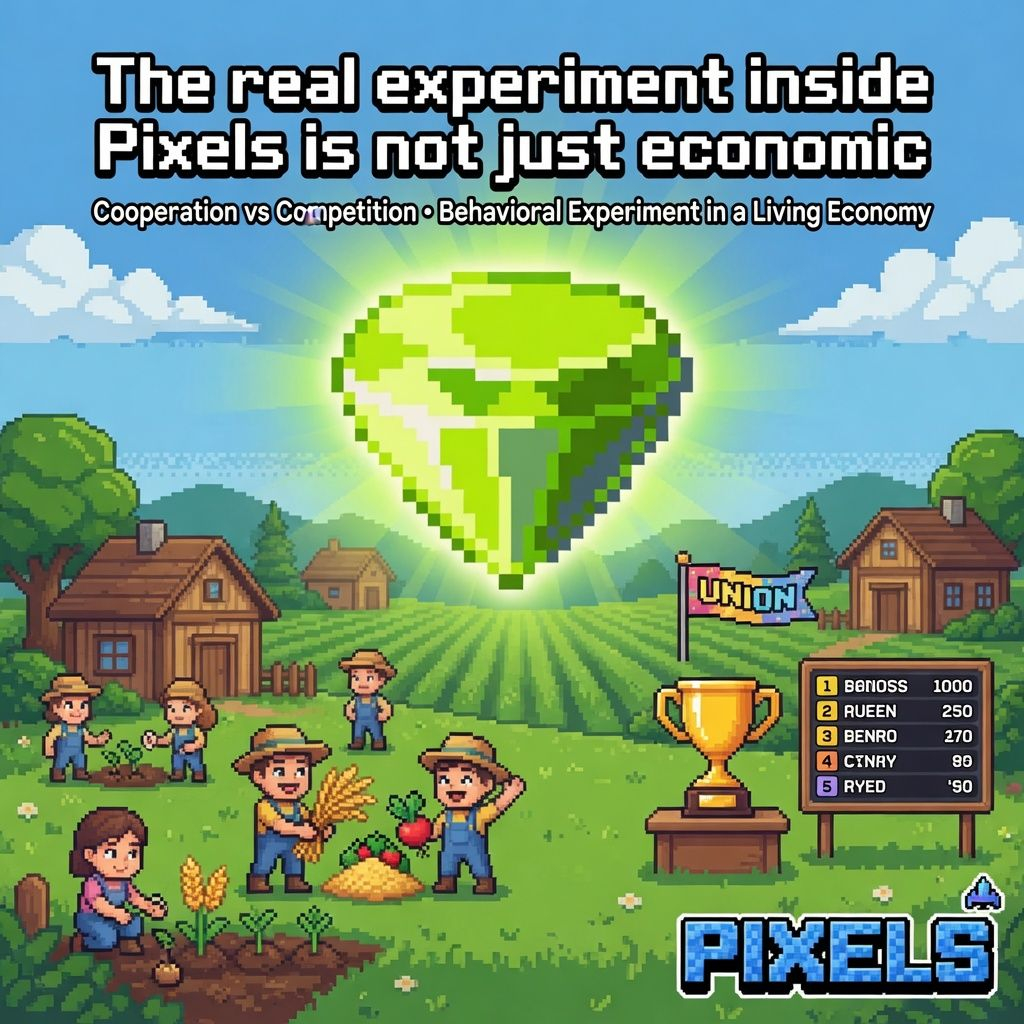
That is what makes Pixels compelling to me right now. It feels like more than a farming game with token incentives. It feels like a behavioral experiment inside a living economy. The real test is not just whether competition can create engagement. The real test is whether cooperation can remain culturally dominant after players learn that cooperation and winning are not always the same thing.