
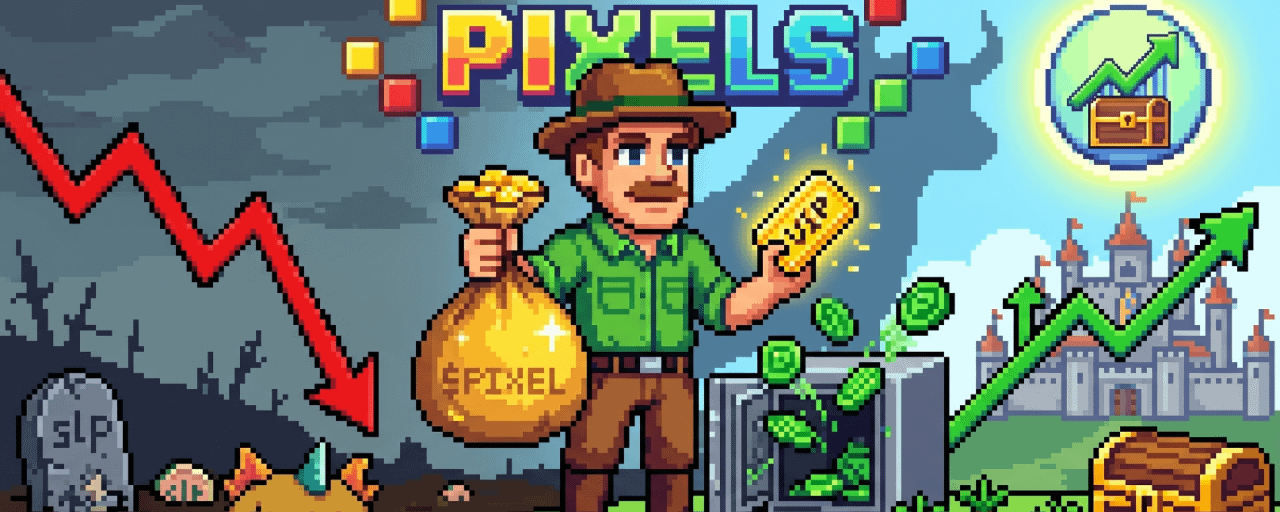
Let’s be brutally honest: the first generation of Web3 gaming was a beautiful, unsustainable lie.We all remember the euphoria of 2021. You buy an NFT, click a few buttons, earn a magical inflationary token, and cash out to pay your rent.
We all remember the euphoria of 2021. You buy an NFT, click a few buttons, earn a magical inflationary token, and cash out to pay your rent. But then economics took over. The "Death Spiral" hit, rendering native tokens worthless and leaving late investors holding the bag. So, when Pixels—a retro-style 16-bit farming simulator—started making noise, the collective groan from the crypto community was audible. “Not another farming Ponzi,” we thought.
Yet, here we are. Pixels didn’t just survive the bear market; it thrived, dominated the charts, secured a Binance Launchpool listing, and became the undisputed king of Social Web3 Gaming. Here are the three fundamental reasons why Pixels is rewriting the GameFi playbook.
1. The Courage to Kill the "Golden Goose" (Executing $BERRY)
The original sin of Axie Infinity and early GameFi was the dual-token model: a capped governance token and an infinitely minted reward token. It’s a hyper-inflationary trap. Players print the reward token and immediately dump it on decentralized exchanges, driving the price to zero.
Pixels started with this exact model using $BERRY. But instead of watching their economy bleed out, CEO Luke Barwikowski and the team did the unthinkable: they amputated the infected limb.
They deprecated $BERRY entirely, migrating to a single-token economy powered by $PIXEL. In-game coins were moved entirely off-chain.
By cutting off the endless supply of dumpable tokens, Pixels regained absolute control over its economic levers. This wasn't just an update; it was a rescue mission that proved the devs understood real-world economics.
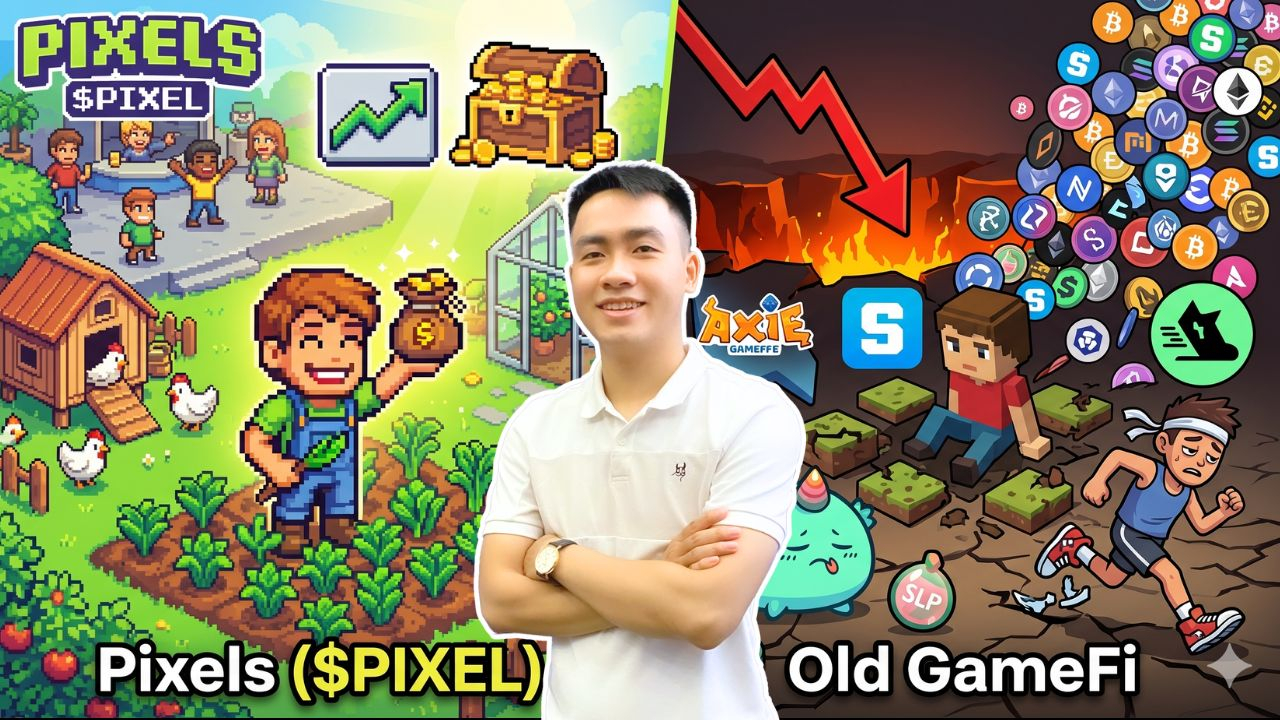
2. The Migration Masterstroke: Entering the Ronin Empire
Pixels initially launched on Polygon. While Polygon is a solid network, it wasn't a dedicated gaming hub.
The pivot to Sky Mavis’s Ronin Network was the catalyst that ignited Pixels' explosive growth.
Ronin is battle-tested. It survived the highest highs of Axie Infinity and the lowest lows of a massive bridge hack, emerging stronger and deeply optimized for gaming transactions.
By migrating, Pixels didn't just get cheaper gas fees; they inherited Ronin's massive, liquidity-rich, and game-hungry user base. It was the perfect symbiotic relationship: Ronin needed a flagship game post-Axie, and Pixels needed a dedicated Web3 gaming infrastructure.
3. Engineering "Real Yield" Through Vicious Sinks
A token is only as valuable as the demand for it. If the only utility of a token is to sell it, the price will inevitably crash.
The genius of Pixels lies in its aggressive "sink" mechanisms—ways to permanently remove PIXEL from circulation or lock it up. To actually make meaningful money in Pixels, you need a VIP membership. How do you buy it? With PIXEL. Want to speed up your crafting? Pay in PIXEL. Want to upgrade your Land NFT?
The game forces "farmers" to reinvest their earnings back into the ecosystem to maintain their yield. It restricts mindless grinding through an Energy system, effectively neutralizing 24/7 bot farms.
Furthermore, the reward emissions aren't static. The "Task Board" dynamically adjusts token payouts based on the overall health of the game's economy. If there's too much $PIXEL circulating, the algorithm tightens the faucet.
Pixels succeeds because it treats Web3 gaming like a real economy, not a charity. It is backed by heavyweights like Animoca Brands, but it relies on a "Build in Public" ethos, directly engaging with players to iterate fast. $PIXEL #pixel
