
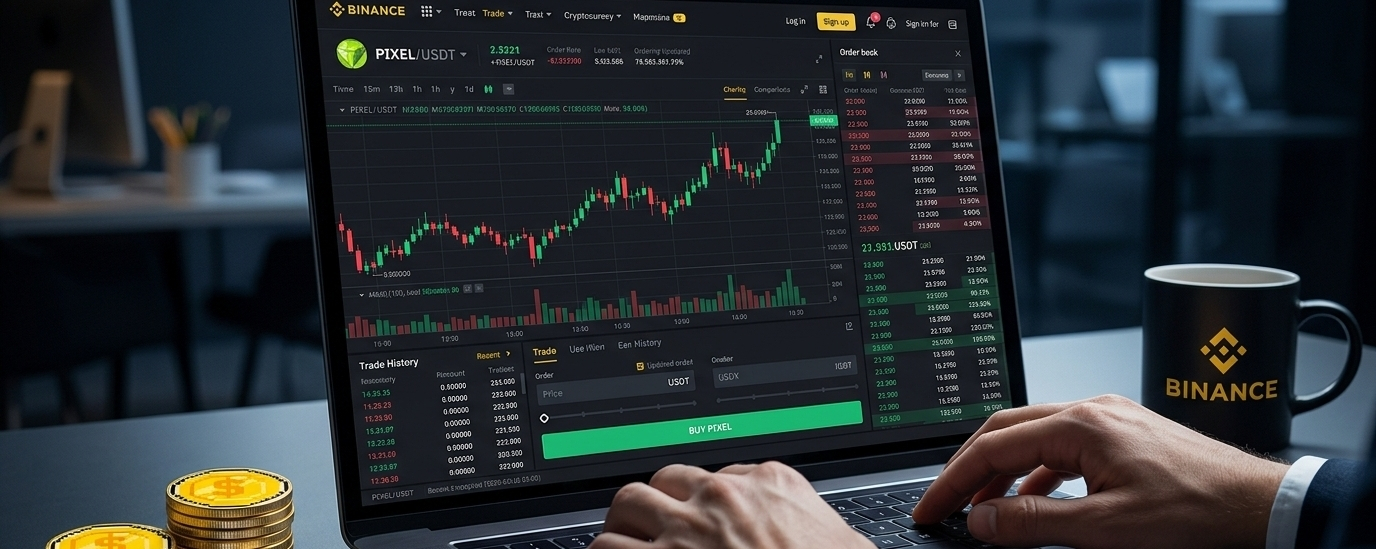
In the volatile landscape of Web3 gaming, few projects have demonstrated the staying power and adaptive capacity of Pixels @Pixels $PIXEL .Originally a social farming RPG that captured the imagination of the crypto community on the Polygon network, its strategic migration to the Ronin Network—the blockchain ecosystem home to Axie Infinity—proved to be a masterstroke. As of April 2026, Pixels has matured from a simple "Play-to-Earn" (P2E) experiment into a sophisticated decentralized metaverse, boasting over 1 million daily active users (DAU) and a redefined economic model.
1. Core Fundamentals and Project Ecosystem
At its heart, Pixels is an open-world, browser-based exploration game that pays homage to classics like Stardew Valley and Harvest Moon. It utilizes a "pixel-art" aesthetic that lowers the technical barrier for entry, allowing users on diverse hardware to participate without high-end GPUs.
Key Ecosystem Components:
The Ronin Advantage: By leveraging the Ronin Network, Pixels ensures near-instant transaction speeds and negligible gas fees. This is critical for a game where players perform hundreds of micro-interactions, such as planting, watering, and harvesting.
Chapter 3 Evolution: In 2026, the project moved into its "Chapter 3" phase. This update shifted the game from a pure farming loop to a broader exploration RPG, introducing Combat Mechanics and Procedurally Generated Exploration Realms. This expansion is designed to address player fatigue and create a more "fun-first" environment rather than a "yield-first" grind.
The "Stacked" Infrastructure: A groundbreaking development in early 2026 was the launch of Stacked, an AI-powered reward infrastructure. This system helps external studios integrate with the Pixels ecosystem while optimizing reward distribution to prevent the "death spiral" common in early P2E models.
2. Tokenomics and Utility of $PIXEL
The $PIXEL token serves as the premium currency and governance lifeblood of the ecosystem. Unlike many gaming tokens that suffer from infinite inflation, the Pixels team has implemented aggressive utility sinks to maintain demand.
Current Token Utility:
In-Game Currency: Required for purchasing VIP memberships, high-tier crafting materials, and cosmetic upgrades.
NFT Minting: All future NFT mints within the ecosystem require $PIXEL, ensuring that as the game expands, the token remains essential.
Governance: Token holders participate in the Pixels DAO, voting on community treasury allocations and game development priorities.
Multi-Game Staking: Users can stake PIXEL into specific "game pools" to earn a share of ecosystem rewards, currently capped at 28 million $PIXEL per month.
Supply Dynamics (2026 Update):
As of Q2 2026, approximately 66% of the total 5 billion supply is in circulation. This is a significant milestone, as the majority of early investor and team "cliffs" have been surpassed. The reduction in large, scheduled unlock events has historically decreased sell-side pressure, allowing the price to reflect organic player demand rather than market dilution.
3. Technical Analysis and Market Outlook
Market performance in early 2026 has been characterized by high-beta volatility. After a massive parabolic rally in March 2026—fueled by a 6,000% spike in trading volume—the token entered a consolidation phase.
Price Levels: As of mid-April 2026, PIXEL is trading around the $0.008 to $0.014 range. Analysts suggest that holding above the 50-day and 200-day moving averages is crucial for maintaining the bullish structure.
Bullish Indicators: The RSI remains in a neutral zone, suggesting room for growth without being overbought. Positive sentiment is further bolstered by the transition toward USDC payouts for certain rewards, which reduces the immediate need for players to sell their PIXEL to realize profits.
Future Projections: While price predictions remain speculative, optimistic targets for the end of 2026 range between $0.05 and $0.15, contingent on the continued growth of the Ronin gaming ecosystem and the successful rollout of the "Chapter 3" combat features.
4. Conclusion: Is PIXEL a Sustainable Asset?
The "Great Pivot" of 2026—moving from a pure inflationary reward model to an AI-driven, USDC-integrated ecosystem—sets Pixels apart from its predecessors. By focusing on Return On Reward Spend (RORS), the team is treating the token as a tool for user acquisition and retention rather than just a digital handout.
The charts show a period of consolidation. While the price is currently navigating a neutral RSI zone (30-70), we are seeing:
Support Levels: Strong buyers are stepping in around the $0.0078 – $0.0080 range.
Resistance Targets: A breakout above $0.0086 could open the door for a move toward the $0.0098 level.
Trend: The token is currently holding above its short-term moving averages (MA50/EMA50), signaling a cautious but underlying bullish sentiment.
Key Developments & Bullish Catalysts
Tokenomics Maturation: Pixels has successfully phased out its inflationary soft currency, $BERRY, consolidating the entire economy around $PIXEL. The introduction of off-chain "Coins" for daily tasks requires players to spend PIXEL for progression, directly tying token demand to active gameplay.
Reduced Sell Pressure: With roughly 66% of the total supply now in circulation, the market has absorbed the "low float, high FDV" risk that plagues many new GameFi projects. Future unlocks are becoming smaller and more manageable.
Ecosystem Resilience: In a sector where many Web3 games have struggled, Pixels continues to be cited as a success story, generating significant revenue through VIP passes, land ownership, and guild access.