
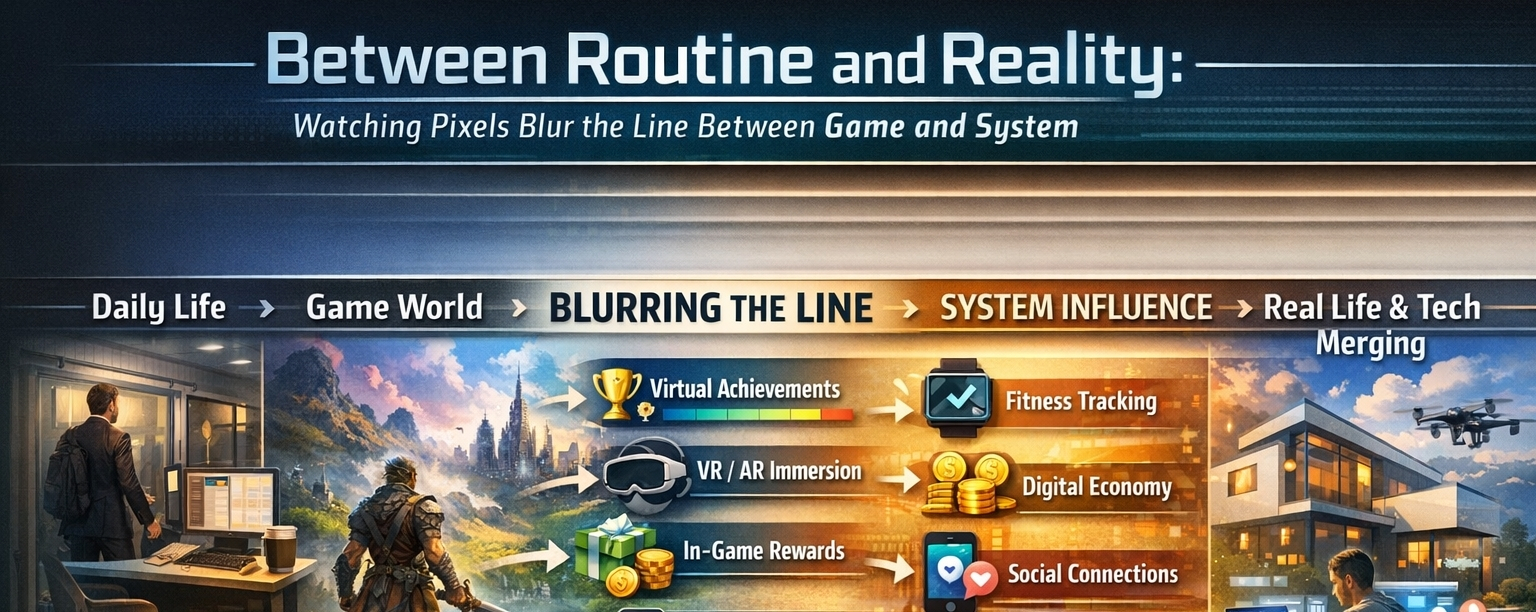
Some days I don’t even notice when something turns into a routine. It just happens quietly. You open an app once, then again the next day, and before long it becomes part of your rhythm without you ever deciding it should be. It feels harmless at first—almost comforting. But over time, I’ve learned that repetition in this space usually comes with a hidden structure behind it.
That’s the feeling I get when I spend time in Pixels.
At a glance, it’s easy to understand. A soft, open world where you farm, move around, interact, and slowly build something of your own. It runs on the Ronin Network, which already tells me this isn’t an experiment happening in isolation. I’ve watched similar ideas come and go—projects that tried to turn simple gameplay into sustainable economies. Most of them started the same way: light mechanics, strong early engagement, and a promise that time spent might actually mean something.
Pixels doesn’t feel entirely different—but it doesn’t feel identical either.
There’s something about the pacing. It’s slower, less aggressive. It doesn’t push too hard, and maybe that’s why people keep coming back. It feels more like a space you pass through than something demanding your attention. And I think that’s intentional. In a market where everything competes for urgency, something that feels optional can actually be more sticky.
Still, I can’t separate the experience from what I’ve seen before.
These systems often rely on a delicate balance. As long as new users come in and activity stays high, everything feels alive. But the moment that flow slows down, the cracks start to show. The economy tightens, rewards feel thinner, and suddenly the same actions that once felt relaxing start to feel repetitive. I’ve watched that transition happen more than once.
Right now, Pixels feels like it’s somewhere in the middle of that journey.
It’s not in the early excitement phase anymore, but it hasn’t reached a point where it’s fully tested either. There are updates, expansions, small signs that the team is trying to deepen the experience rather than just maintain it. And that matters. Because without that evolution, these worlds tend to collapse into their own mechanics.
What keeps it interesting to me isn’t the token or the numbers—it’s the behavior.
People are still logging in. Still moving through the same loops. And I keep asking myself why. Is it because the world is actually engaging? Or because the routine has already settled in?
There’s a difference, even if it’s subtle.
A real world pulls you in without needing to justify itself. A system, on the other hand, keeps you there by giving you reasons to stay—rewards, progress, accumulation. Pixels seems to exist somewhere between those two ideas. It hasn’t fully crossed into either side yet.
And maybe that’s why I haven’t dismissed it.
I don’t feel convinced, but I also don’t feel ready to walk away from it completely. It sits in that uncertain space where things could either stabilize into something meaningful… or slowly drift into the same pattern we’ve already seen play out before.
I keep checking back in, not out of excitement, but out of curiosity.
I can’t tell yet what it wants to become.
And that’s what makes it hard to ignore.