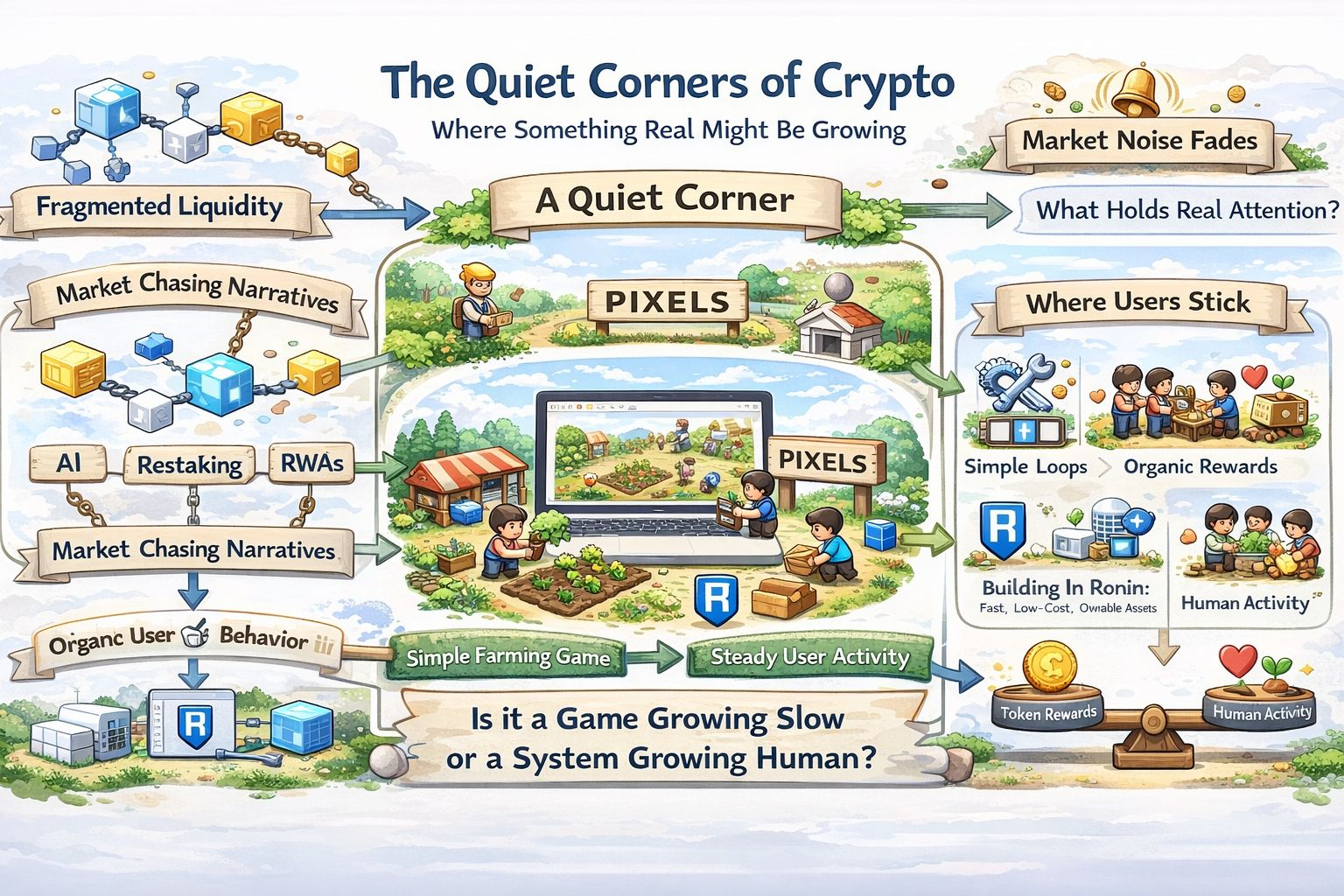
I came across Pixels while I was deep in a completely different rabbit hole trying to understand where attention was actually sticking in this market. Not where people say it is, but where it quietly stays when the noise fades.
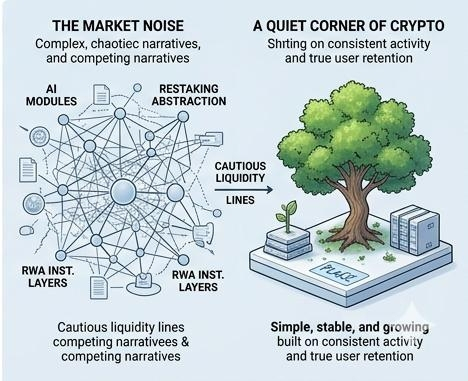
Lately, everything feels a bit fragmented. Liquidity isn’t gone, but it’s cautious. It moves in bursts AI one week, restaking the next, RWAs getting institutional narratives layered on top. But none of it feels sticky. It’s like the market is constantly searching for something to believe in, without really committing.
That’s usually when I start looking away from the obvious.
Ronin wasn’t even on my radar that day. But then I noticed something odd. While most gaming ecosystems feel deserted unless incentives are being pushed aggressively, Pixels kept showing up with consistent activity. Not explosive. Not viral. Just there.
So I checked it out.
At first, it almost felt underwhelming. A farming game. Simple loops. Plant, harvest, trade. If you’ve been around long enough, you’ve seen versions of this before. And honestly, most of them didn’t end well. They attracted users for the wrong reasons and lost them just as quickly.
But something felt different here, and it took a bit of time to understand why.
I stopped looking at it like a game and started looking at behavior.
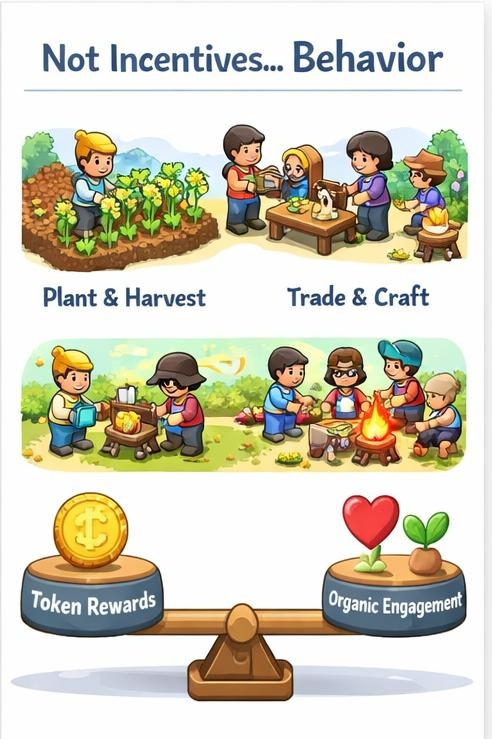
People weren’t rushing through it. They weren’t treating it like a short-term opportunity. They were just participating. Trading items, organizing small workflows, finding their own roles inside the system. It didn’t feel optimized. And in crypto, that’s almost suspicious.
Because optimization usually means extraction.
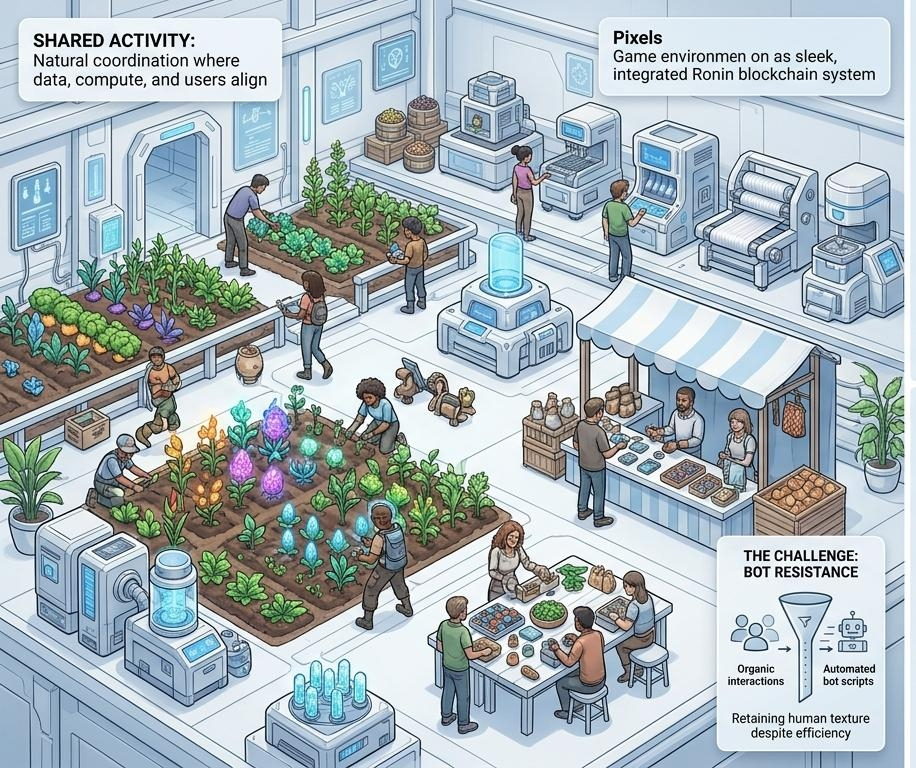
That’s when the core idea started to click. Pixels isn’t trying to win by complexity or by promising some massive technological leap. It’s doing something more subtle trying to create a space where data, compute, and users align naturally through shared activity rather than forced incentives.
That’s a harder problem than it sounds.
Most Web3 systems struggle with coordination. Not in theory, but in practice. You can design token models, emission schedules, governance layers but if the underlying behavior isn’t sustainable, the whole thing becomes a temporary loop. Users come for rewards, not for the system itself.
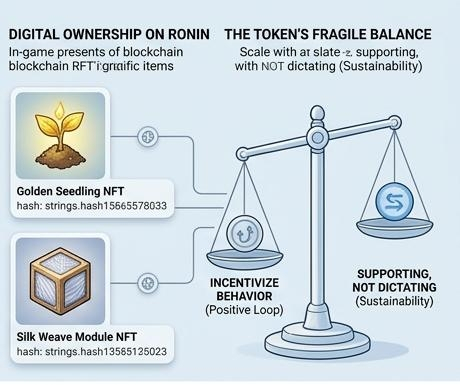
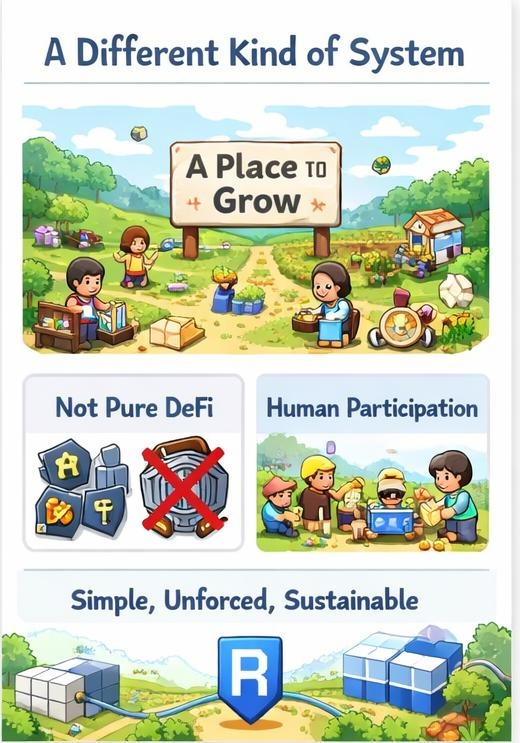
Pixels feels like it’s experimenting with a different approach. The game mechanics are simple on purpose. That simplicity lowers the barrier to entry, but more importantly, it leaves room for users to shape the experience. Assets are owned, actions matter, and interactions feed into a shared environment that isn’t tightly controlled.
It’s not pure decentralization, but it doesn’t need to be. It just needs enough openness for people to feel like participants instead of users.
Running on Ronin helps smooth everything out. Transactions are fast, costs are low, and there’s already a base of users who understand digital ownership without needing it explained. But infrastructure alone doesn’t explain why people stay.
What keeps people there is that the system doesn’t feel like it’s constantly asking something from them.
That’s rare.
The token plays its role, of course. It incentivizes activity, creates loops of earning and spending. But right now, it feels like a layer supporting behavior rather than dictating it. That’s a fragile balance, though. If incentives become too dominant, the system risks turning into another extraction engine. If they’re reduced too quickly, engagement could fade.
And then there’s the usual question every on-chain system faces what happens when efficiency arrives?
Because it always does. Bots, scripts, optimization strategies. They creep in slowly, then all at once. And when they do, they tend to flatten the kind of organic behavior that makes systems like this interesting in the first place.
I don’t think Pixels has fully solved that. I’m not sure anyone has.
But what stands out is that, for now, it still feels human.
And that’s where I keep coming back to something slightly uncomfortable. Maybe the reason Pixels works isn’t because it’s particularly advanced, but because it’s not trying too hard to be.
In a market obsessed with complexity modular stacks, layered abstractions, restaked everything we might be overlooking the fact that most users don’t want to think in systems. They want to exist inside them.
Pixels doesn’t present itself as infrastructure. It presents itself as a place. And in doing so, it quietly becomes a kind of coordination layer without announcing it.
That’s not the narrative people are chasing right now. It’s too subtle. Too slow. It doesn’t fit neatly into a category you can trade aggressively.
But maybe that’s exactly why it’s worth paying attention to.
Because if something this simple can hold real user attention while the rest of the market keeps rotating between narratives, it suggests that retention might not come from innovation alone. It might come from environments where users don’t feel like they’re being optimized.
I’m not convinced this scales. I’m not convinced it survives a full shift in market attention. And I’m definitely not convinced the token dynamics won’t get tested under pressure.
But I also can’t ignore that it’s one of the few places right now where activity feels unforced.
And in this market, that’s a signal you don’t see often.
So I keep checking in, not because I expect it to become the next dominant narrative, but because I’m trying to understand what kind of systems people actually stick with when there’s no immediate reason to.
Because if this is what quiet adoption looks like.
then how many other signals are we missing just because they don’t look like narratives yet?
And more importantly are we watching a game slowly grow, or a new kind of system learning how to exist without needing constant attention?