Nearly a decade on from the 2016 referendum, something quietly significant is happening between the UK and the European Union — and it deserves more attention than it's currently getting.
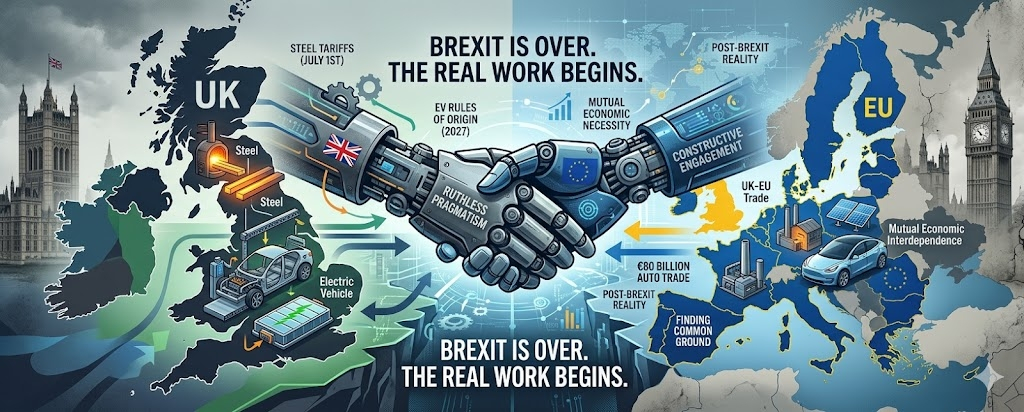
The UK is actively seeking deals with the EU on steel and electric vehicles. Not as a headline political gesture, but out of hard economic necessity. And the timing, the context, and the stakes involved tell a much bigger story than two sectoral agreements.
Let me unpack why this matters.
The steel situation is urgent and arriving fast.
The EU has just agreed new trade restrictions on steel imports — a direct response to a flood of artificially cheap Chinese steel that has been depressing global prices. The UK isn't the target of these measures, but it will feel the consequences regardless. Higher tariffs come into force on 1 July, and the clock is already ticking.
The UK has moved to protect its own domestic steel industry — slashing tariff-free quotas by 60% and imposing a 50% tariff on imports above that threshold, also from 1 July. But without a bilateral agreement with the EU, British steel exporters face being caught between two sets of trade restrictions simultaneously. That's an uncomfortable position for an industry that is already under structural pressure.
The EV rules of origin issue is arguably even more consequential.
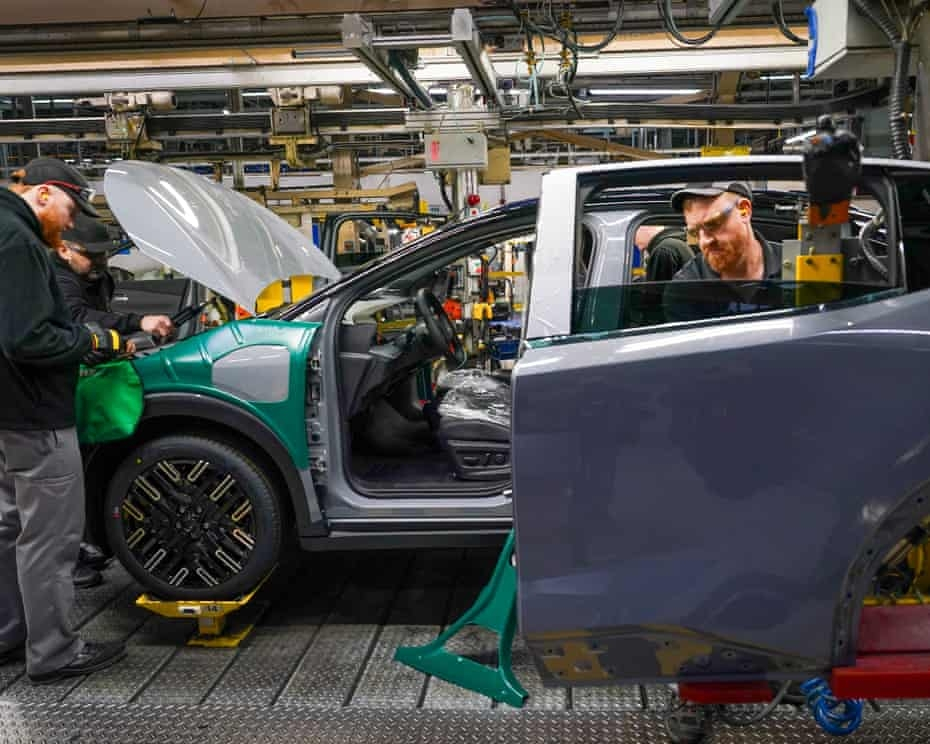
This one doesn't land until 2027, but the numbers are staggering. Under the EU-UK Trade and Cooperation Agreement, electric vehicles qualify for zero tariffs only if 40% of the car's value comes from parts made in the EU or UK. That threshold was already delayed once at industry request, because battery manufacturing capacity simply wasn't there.
The battery alone can represent up to 50% of an EV's total value. The Society of Motor Manufacturers and Traders puts the total automotive trade between the EU and UK at €80 billion annually. If a workable solution isn't found, both sides end up imposing tariffs on the very cars their own governments are trying to get consumers to buy. As their CEO put it plainly — those would be self-defeating tariffs.
Both sides know this. Neither side benefits from letting it happen.
The broader context is what makes this moment genuinely interesting.
The UK is navigating this push for closer EU ties against a backdrop of real economic turbulence — the ongoing conflict in the Middle East, disruption to global energy markets, and a strained relationship with the US under the current administration. For Keir Starmer's government, the calculus has shifted. Economic pragmatism is now the frame, and the EU is the most natural partner to lean into.
Cabinet Office minister Nick Thomas-Symonds used the phrase "ruthlessly pragmatic approach" when describing how the UK intends to assess where alignment with EU rules serves the national interest. That's a deliberate choice of language — and it's the right one for this moment. It signals intent without reopening the ideological trench warfare of the Brexit years.
The EU side is responding carefully but not dismissively. EU Trade Commissioner Maroš Šefčovič has taken note of the UK's desire for closer alignment and has opened the door to a steel agreement. European Parliament President Roberta Metsola went further, calling for a uniquely "British model" of EU relations — acknowledging that the UK is not simply another third country and shouldn't be treated as one.
What's still missing is structure.
Experts point out that the broader conversation about deepening economic ties remains "unstructured." A youth mobility deal — one of the simpler items on the agenda — is reportedly still struggling. The EU-UK summit planned for this summer has food and drink, youth mobility, and energy on the agenda. But the harder economic questions, including the ones that affect real industries and real jobs, haven't been formally set.
Time is the problem. Steel tariffs arrive in ten weeks. EV rules of origin expire at the end of 2026. Both issues need resolution before the politics catches up.
My honest read on this:
The Brexit debate consumed enormous energy arguing about sovereignty, identity, and ideology. What we're now seeing is the quieter, less glamorous, but far more consequential work of figuring out how two deeply intertwined economies actually function alongside each other in a world that has changed dramatically since 2016.
That work is neither re-joining nor retreating. It's something more pragmatic, more durable, and frankly more interesting — if both sides have the political will to see it through.
The strategic imperative is real. The question is whether the institutional machinery can move fast enough to meet it.
#Brexit #UKEURelations #TradePolicy #ElectricVehicles #BritishIndustry