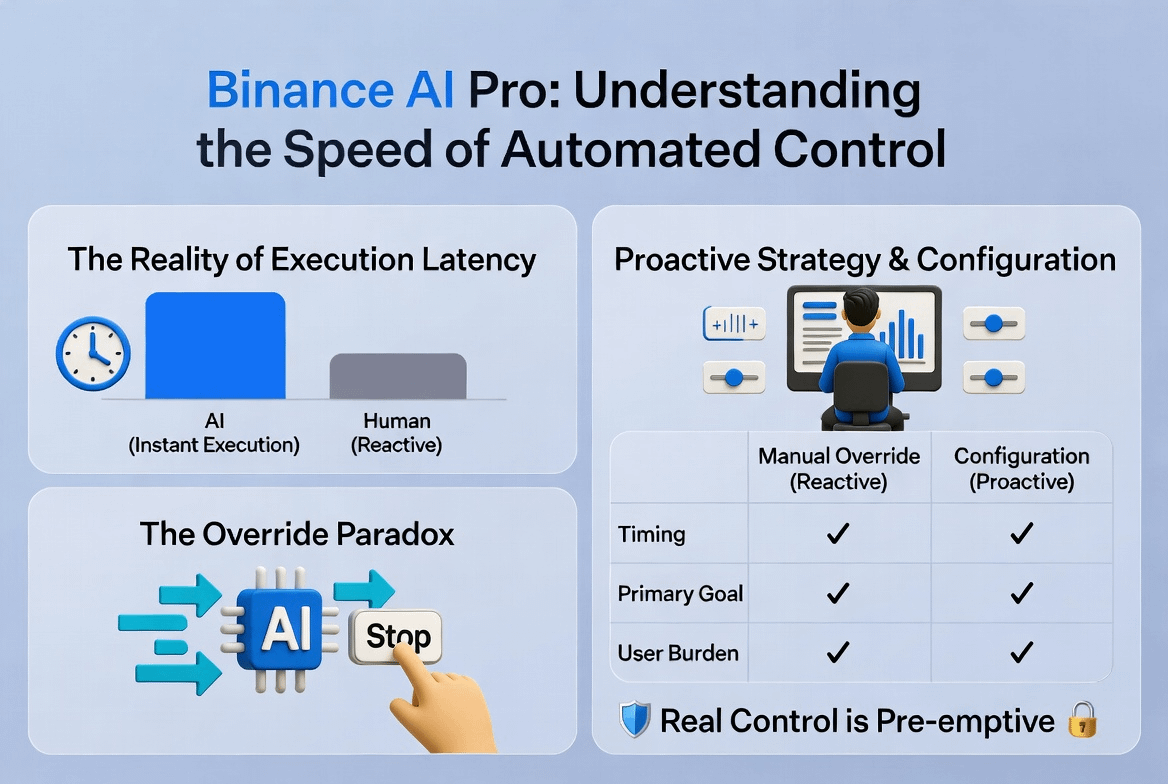
I thought manual override in Binance AI Pro would give me total peace of mind but after using it for a while, it actually made me think twice about what “being in control” really means.
When I turned on Binance AI Pro, the setup was really simple. Binance automatically created a separate AI sub account, so it stayed independent from my main account. I manually transfer funds in, choose the trading permissions (Spot, Futures, Margin, etc.), and the AI starts working within those rules. The big selling point is that I can intervene anytime, pause trading, adjust permissions, or close positions manually. The documentation even emphasizes that you’re always the one in charge.
At the beginning, I loved it. The AI is quick at scanning the market, finding signals, and executing trades without me having to stare at charts all day. It removed a lot of the emotional decisions that used to hurt me, no more FOMO buys or panic selling. For the first couple of weeks, everything felt smooth and efficient.
But then I started noticing the uncomfortable gap.
The AI doesn’t pause between decisions to ask for my approval. It simply follows the permission scope I set at the beginning. In calm markets, that’s fine. But when things get volatile, like during a sudden news event or a sharp price swing, the AI can keep executing based on rules that suddenly don’t feel right anymore.
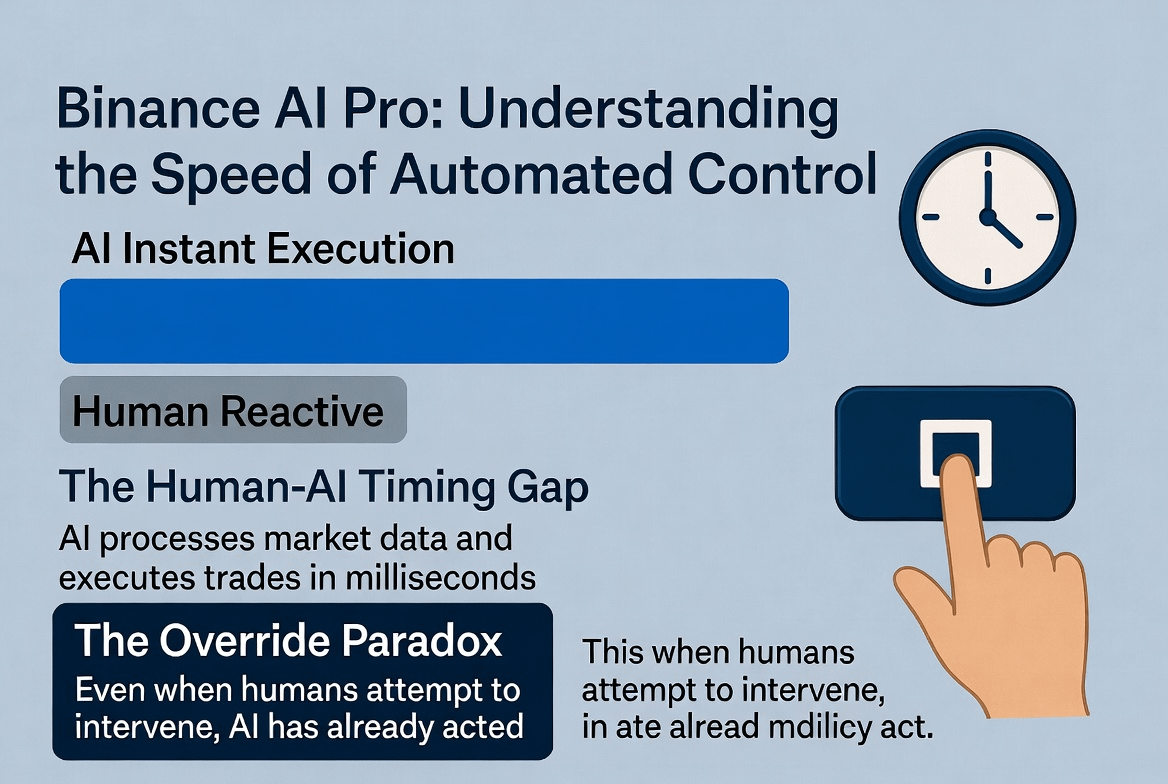
By the time I spot something off in the AI Account, the position is already open. I can still jump in and override it manually, but I’m reacting after the fact, not preventing it. That timing difference is small in theory, but it feels significant when real money is involved.
This made me change how I use the tool. I now treat the AI Sub Account like its own separate trading desk. Every few days (or whenever the market shifts noticeably), I go in and review the permissions. Is the position sizing still appropriate? Are the risk limits still suitable for current volatility? Should I tighten or loosen anything?
It’s extra work, but I’ve actually become more disciplined because of it. The automation handles the day to day execution and removes emotion, which is genuinely helpful. At the same time, it forces me to stay actively involved in risk management instead of just handing everything over and forgetting about it.
There’s a deeper tension here too. Binance AI Pro is designed to reduce emotional trading, and it does that very well. But the same system that protects me from my worst impulsive decisions is also the one that will keep executing without hesitation if my original configuration no longer matches the current market. The override is available, but it relies on me noticing the mismatch in time.
After using it for over a month, my takeaway is this: Binance AI Pro is powerful and effective, but it doesn’t make trading fully “hands off.” It moves the responsibility from constant chart watching to regular configuration review. If you treat setup as a one time thing, you might get surprised. If you treat it as an ongoing process, the tool becomes much more useful and safer.
For me, that balance has been worth it. I’m making fewer emotional mistakes, executing faster when conditions are good, and staying more aware of my overall risk.
Have you been using Binance AI Pro for a while? How do you handle the manual override and permission reviews in practice? Do you check the AI Account regularly, or has it felt truly automatic for you?
I’d love to hear your real experiences, especially the unexpected parts.
$XAU @Binance Vietnam #BinanceAIPro
Giao dịch luôn tiềm ẩn rủi ro. Các đề xuất do AI tạo ra không phải là lời khuyên tài chính. Hiệu quả hoạt động trong quá khứ không phản ánh kết quả trong tương lai. Vui lòng kiểm tra tình trạng sản phẩm có sẵn tại khu vực của bạn.