
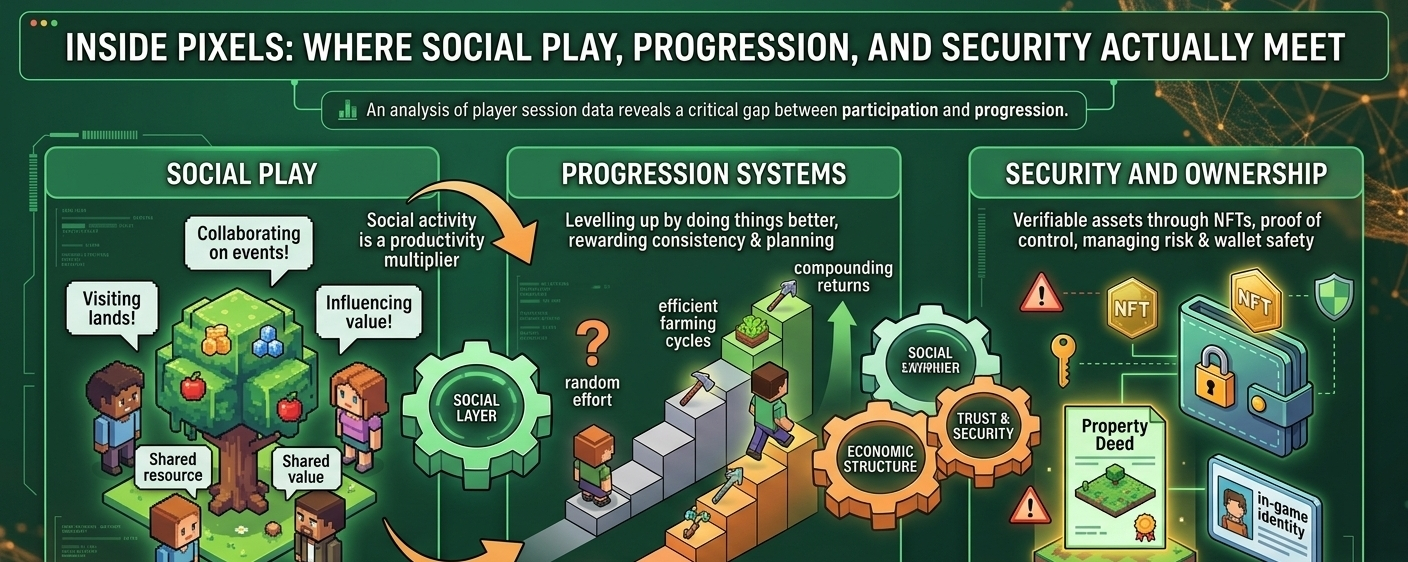


I realized something was off during a routine check on player sessions. Activity looked strong—lots of movement, interactions, and task completion—but when I traced deeper behavior, only a portion of players were actually progressing in a meaningful way. The rest were active, but not advancing. That gap between participation and progression is where Pixels becomes interesting.
Pixels does a good job encouraging social interaction on the surface. Players visit each other’s land, collaborate indirectly through shared spaces, and participate in events that feel communal. But this isn’t just a social layer—it’s part of the economic structure. When players interact, they influence how resources move, how quickly tasks are completed, and how efficiently value circulates. Social activity, in this sense, is a productivity multiplier.
Progression systems sit right in the middle of this. Players level up not just by doing more, but by doing things better @Pixels choosing efficient farming cycles, upgrading tools, and understanding which actions actually lead to compounding returns. The system rewards consistency and planning more than random effort. Over time, the difference becomes visible: some players build structured growth paths, while others remain stuck in repetitive loops without real advancement.
Then there’s the question of ownership and security. Pixels integrates NFTs not just as assets, but as proof of control over land, items, and in-game identity. This adds a layer of trust—players know that what they earn or build is verifiable and transferable. But that doesn’t eliminate risk. Like any Web3 system, there are concerns around account safety, asset loss, and potential exploits. The infrastructure reduces uncertainty, but it doesn’t remove it completely.
From a user perspective $PIXEL managing risk becomes part of the experience. Securing wallets, avoiding suspicious interactions, and understanding how assets are stored are all necessary behaviors. The game doesn’t always make this obvious, but it’s critical for long-term participation.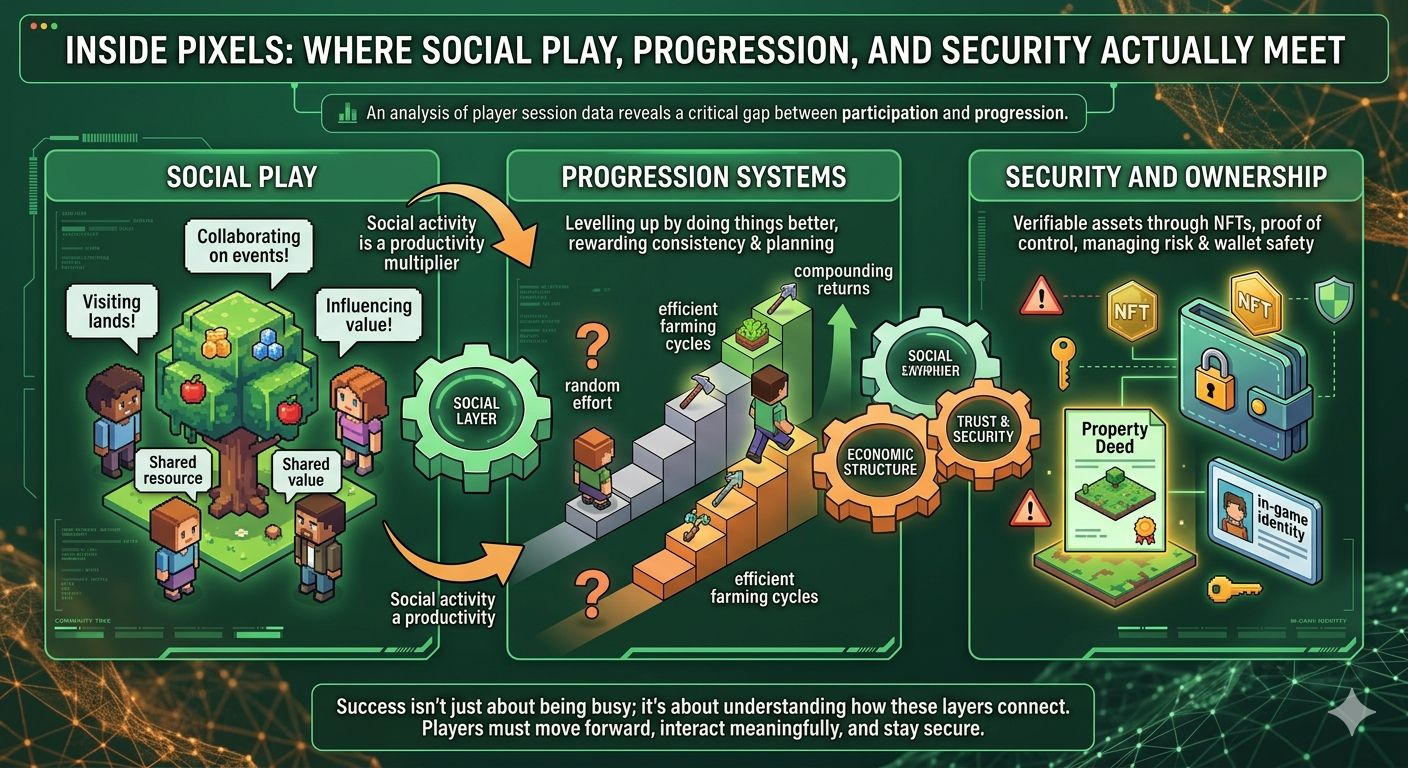
What stands out most is that Pixels doesn’t rely on a single mechanic to hold everything together. Social interaction, progression #pixel systems, and asset ownership all connect, but none of them work perfectly on their own. If one weakens—if players stop engaging socially, or if progression feels unrewarding—the whole system feels it.
So the real measure isn’t just how many players join or how active they are. It’s how many actually move forward, interact meaningfully, and stay secure while doing it.
And from what I’ve seen, the players who succeed aren’t the busiest ones—they’re the ones who understand how these layers fit together and adjust their behavior accordingly.