
i was sitting in front of my laptop reading through @Pixels approach to gradual decentralization, and what struck me was it's restraint.
In crypto right now, there’s a quiet pressure to decentralize everything immediately. You see it in token launches, governance votes, fully on-chain experiments. The logic sounds clean. If decentralization is the goal, why wait. But when I looked at Pixels’ model, the more interesting question showed up. What actually needs to be decentralized first for a system to work.
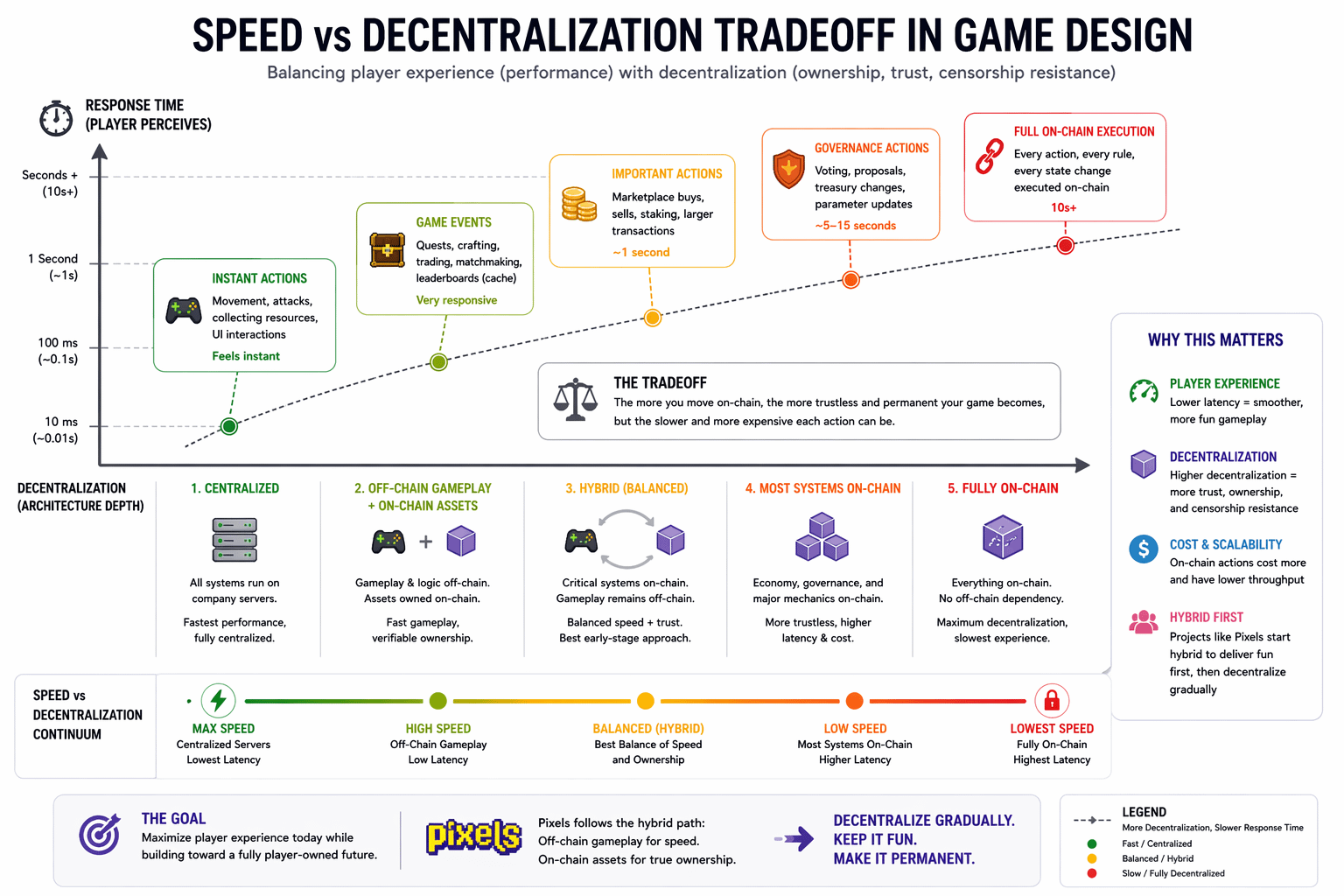
On the surface, their approach is simple. Keep ownership of in-game assets on-chain early, while running most gameplay mechanics off-chain. That sounds like a compromise, but underneath it’s a very specific tradeoff. Blockchain transactions today can take anywhere from a few seconds to several minutes depending on congestion, while game servers respond in milliseconds. That difference isn’t just technical, it shapes how a game feels. Delay breaks immersion. Speed builds it.
That helps explain why they’re prioritizing player experience first. If a farming action or combat move required a blockchain confirmation every time, even a 3-second delay repeated hundreds of times becomes unplayable. What they’re doing instead is anchoring ownership where it matters most. If you earn an item, it’s yours in a verifiable way. But how you use it moment to moment stays fluid and fast.
That momentum creates another effect. Development speed. They mention 10x faster iteration, which sounds like a marketing number until you think about what it means in practice. Smart contracts are slow to change and expensive to fix. One bug can lock assets permanently. Server-side logic, on the other hand, can be patched in hours. Early-stage games need that flexibility because most systems are still being discovered, not finalized.
When I first looked at this, I wondered if it undercut the whole point of decentralization. If the team still controls mechanics and decisions early on, isn’t it just a traditional game with blockchain elements. That’s the obvious counterargument. And it’s fair.
But then you zoom out. Right now, fully on-chain games still represent a tiny fraction of the market. Daily active users in blockchain gaming hover around 1 to 2 million depending on the week, while traditional gaming sits in the billions. That gap tells you something. The technology isn’t the bottleneck anymore. The experience is.
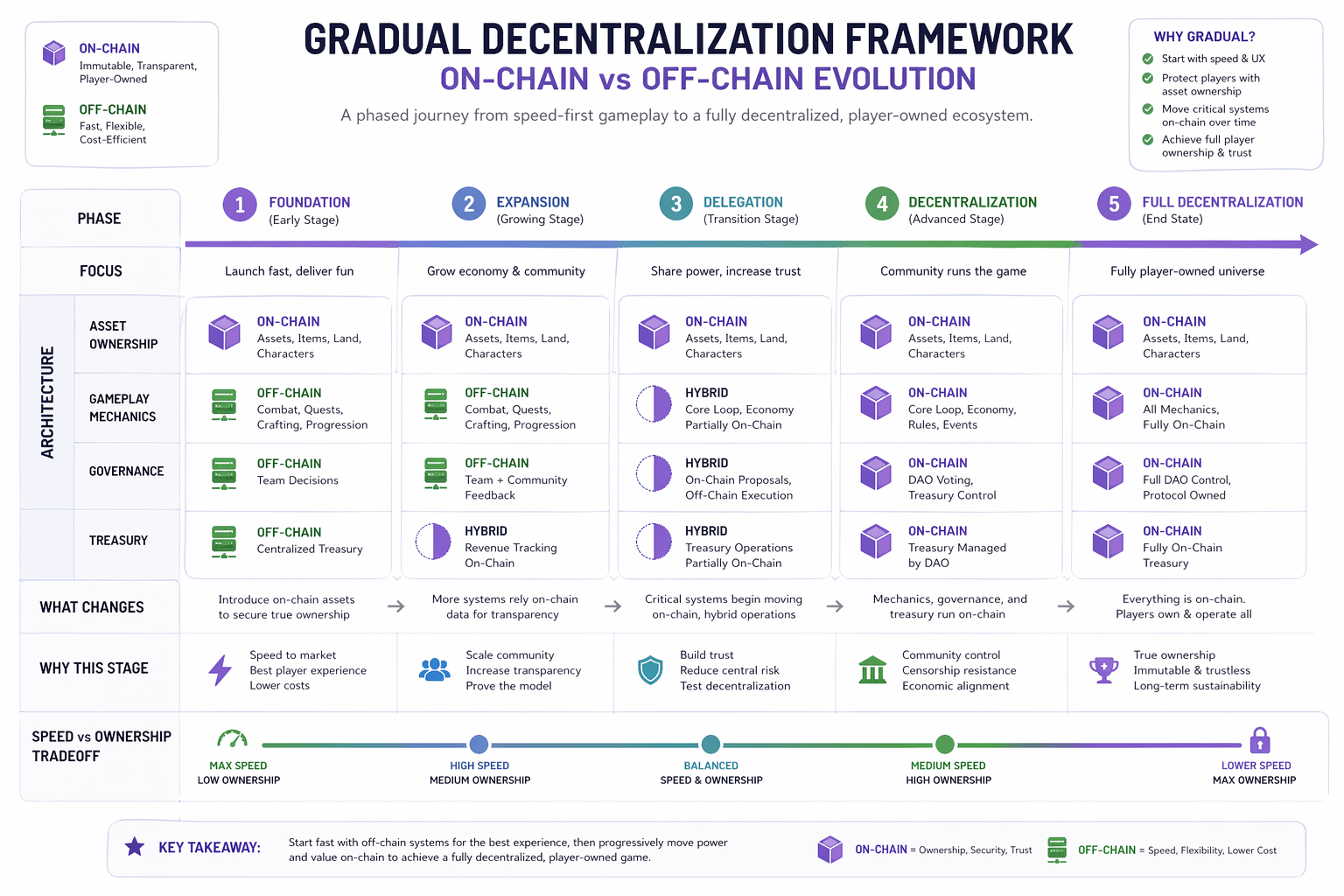
So Pixels is making a bet. That decentralization is something you grow into, not something you impose from day one. They’re centralizing decision-making early because speed matters more than ideology at that stage. At the same time, they’re laying the foundation for things like decentralized treasury management and economic governance later. The structure is being designed with that future in mind, even if it isn’t fully active yet.
Meanwhile, the market is shifting in a way that supports this approach. Gas fees on major chains have dropped significantly over the past year, and layer 2 adoption is climbing. That suggests the cost and speed barriers will keep improving. If that holds, migrating more mechanics on-chain later becomes realistic instead of theoretical.
Of course, there are risks. Trust is one. Players have to believe the team will actually follow through on decentralization over time. There’s also the risk of fragmentation. Moving systems from off-chain to on-chain isn’t just a switch, it can introduce inconsistencies or new attack surfaces if not handled carefully.
Understanding that helps explain why they’re not rushing it. Gradual decentralization isn’t just about technology maturity. It’s about social readiness too. Players need to understand what ownership means, how governance works, why it matters.
What this reveals is a broader pattern across crypto right now. The projects gaining traction aren’t the ones pushing purity. They’re the ones quietly balancing control and openness, speed and security, present reality and future intent.
And if that balance holds, the real shift won’t come from being fully decentralized on day one. It will come from systems that earn their way there over time.
