
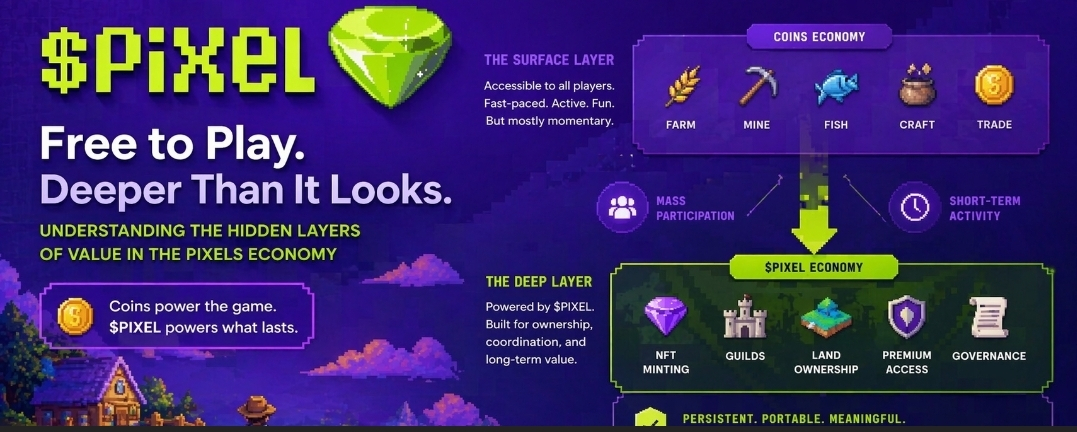
Pixels ($PIXEL) не торопится убедить вас в том, что это имеет значение. Он позволяет вам войти в тихую петлю — посадить что-то, собрать что-то, перемещаться — и только позже раскрывает, что каждое небольшое действие интерпретируется как сигнал. Не просто "вы играли", а "как вы играли, и добавило ли это что-то в мир?" Этот сдвиг — от активности к вкладу — это то, где проект начинает отделяться от более ранней волны игр Web3, которые вознаграждали присутствие без цели.
Работая в сети Ronin, Pixels наследует скорость и низкое трение, но настоящий дизайн живет выше цепочки. Мир структурирован меньше как карта игры и больше как экономика с памятью. Земля функционирует как производственный слой, а не как декор. Ресурсы — это не просто коллекционные предметы; они являются частью непрерывного цикла ввода и вывода. Прогрессия не линейна — она формируется тем, насколько эффективно игрок вписывается в этот цикл. Со временем игроки, которые понимают, где создается ценность, начинают двигаться иначе, чем те, кто этого не понимает, даже если они выполняют одни и те же видимые действия.
Токен $PIXEL аккуратно встроен в эту систему, почти как предохранительный клапан. Он не ограничивает доступ и не принуждает к участию. Вместо этого он находится на грани амбиций — ускоряя процессы, открывая более глубокие уровни, позволяя владеть или позволяя игрокам изменять свою среду так, как это не позволят механики free-to-play. Эта позиция важна, потому что она избегает ловушки превращения токена в обязательный элемент. Когда токен становится обязательным, он становится хрупким. Когда он становится опциональным, но желаемым, он становится устойчивым.
Его поток отражает эту философию. Новые токены поступают через участие, но они не остаются без дела надолго. Они постоянно возвращаются в систему через обновления, бусты, взаимодействия с землёй и другие премиум-решения, которые игроки выбирают. Результат — это не простая схема заработка и вывода, а модель циркуляции, где ценность продолжает двигаться. Держать $PIXEL , не взаимодействуя с миром, кажется неполным, что мягко подталкивает поведение к вовлеченности, а не извлечению.
Pixels также показал готовность подстроить свою собственную структуру, что редко в этом пространстве. Вместо того чтобы удваивать широкое распределение вознаграждений, он сузил стимулы и отделил повседневный геймплей от высокоценных взаимодействий с токенами. Этот шаг снижает шум. Он гарантирует, что не каждое действие заслуживает одинакового вознаграждения и что не каждое вознаграждение должно быть в цепочке. Со временем это создает более четкий сигнал: система начинает распознавать не только усилия, но и полезные усилия.
Недавние обновления делают ещё более очевидным, что Pixels экспериментирует с поведением в большом масштабе. Сезонные события и конкурентные структуры вводят общие цели, асимметричные вознаграждения и моменты, когда координация важнее индивидуальной добычи. Игроки больше не просто фармят — они выстраивают взаимодействие, соперничают и реагируют на меняющиеся условия. Эти изменения превращают экономику в нечто более близкое к живой системе, где результаты формируются совместно, а не распределяются равномерно.
На краях Pixels начинает выходить за рамки самого себя. Его подход к вознаграждениям, прогрессу и живой настройке намекает на нечто большее, чем просто одна игра — своего рода операционный уровень, который может повлиять на то, как другие Web3-опыты проектируют свои экономики. Если это направление продолжится, Pixels не будет измеряться только тем, сколько игроков он удерживает, но и тем, как его идеи распространяются в более широкой экосистеме.
Из всего этого emerges проект, который рассматривает внимание как ресурс, а поведение как инфраструктуру. Вместо того чтобы спрашивать, как вознаградить игроков, он задает вопрос, какие действия заслуживают вознаграждения и почему. Этот вопрос сложнее, медленнее и менее очевиден — но именно оттуда и исходит устойчивость. Если Pixels продолжит уточнять эту логику, ему не придется полагаться на хайп-циклы, чтобы оставаться актуальным. Он будет сохранять ценность, потому что сама система знает, как распознавать и усиливать то, что действительно имеет значение.