
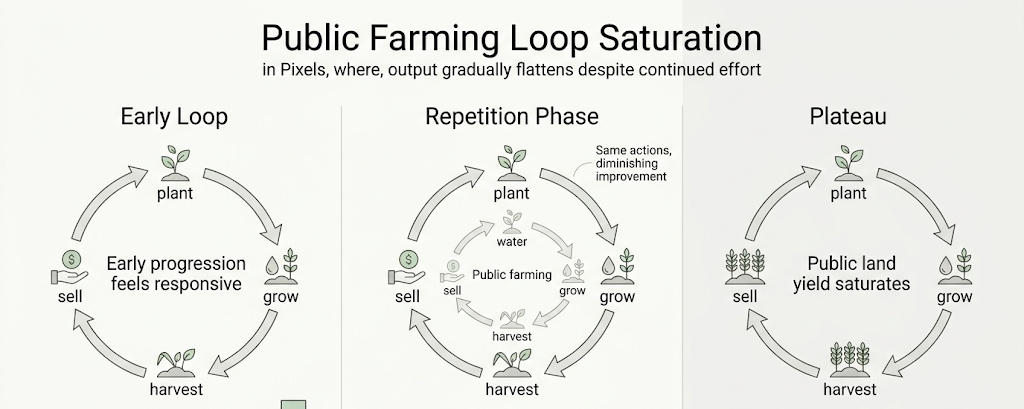
The first time I started taking the Pixels Task Board seriously, I think I was still reading it too innocently.
Just a board. Just Hazel. Just a pile of chores and deliveries and whatever else the day decided to hand me. Bring this item. Turn in that stack. Get some Coins, maybe some EXP, maybe if the day tilted my way, some PIXEL. The help page even frames it in exactly that soft way: regular tasks, regular refreshes, a mix of simple actions like farming, mining, or using the windmill. Nothing in that surface screams “economic risk management.” It looks like content. It looks like routine. It looks like Pixels giving me ordinary reasons to log in.
But the docs get weird the longer I sit with them.
Because the same help page also says the Task Board is the primary method used to earn PIXEL in the game, and then, a few lines later, it gets more selective than the cozy framing wants to admit. PIXEL tasks are not guaranteed on any given day. VIP can increase your chances. Land ownership can increase your chances. And the future reward pools they mention are even more revealing: high reputation, high skill levels, more spend within the game. That is not a neutral content menu anymore. That is Pixels openly describing a reward surface whose payouts can be conditioned by status, property, progression, and economic behavior.
That is the sentence where the whole thing changes shape for me.
Because once the Task Board is the main route to PIXEL, and once access to better chances can be tilted by VIP, land, reputation, skills, and spend, then the board is no longer just there to entertain me with tasks. It is there to decide what kind of player behavior is worth subsidizing. And that sounds harsh until you read the larger Pixels material, where targeted rewards, data science, and better incentive alignment are not hidden in the fine print at all. The litepaper says Pixels is building a hardened ecosystem designed to reward genuine player contributions and optimize long-term engagement. The BlockchainGamer interview then makes the economic logic much blunter: Return on Reward Spend, or RORS, is tracked by asking how many rewards were given out and how much revenue came back, with sustainability framed around getting that relationship to work.
So now when I open the Task Board in Pixels, I cannot really pretend I am just looking at content.
I am looking at a budget interface.
Not a budget interface in the obvious spreadsheet way. More like a disguised one. The board shows me the behaviors the system is willing to convert into paid outcomes right now. Deliver this resource. Finish that batch. Move through these loops. But behind that, the reward logic is not asking, “Would this be nice for the player?” It is also asking, “Is this safe to pay?” Safe economically. Safe behaviorally. Safe at scale. Pixels literally rebalanced the Task Board to favor higher-tier and higher-level tasks and said that the change was expected to increase demand for those items; in the same run of updates, it also said the board had been reconfigured to provide more consistent daily PIXEL earnings. That is not filler content tuning. That is an economic spine actively adjusting what kinds of production it wants to make more valuable.
And honestly, that is where RORS starts feeling less like a dashboard metric and more like the quiet judge behind the curtain.
Because if the central question is whether reward spend is coming back in ecosystem revenue, then the Task Board cannot stay generous in a dumb way for very long. It has to keep discriminating. It has to keep leaning. Maybe toward players with better retention profiles. Maybe toward players who spend more. Maybe toward players who are more reputable, more skilled, more invested, more legible. The docs do not hand me the exact ranking model for Task Board personalization, so I am making an inference there. But it is a pretty grounded one, because the public documentation already says chance of PIXEL tasks can rise with VIP and land ownership, and future reward pools may take reputation, skills, and spend into account. The board is already being described as selective infrastructure, not universal entitlement.
And then antibot logic has to sit right beside all of this, whether Pixels uses that exact phrase on the same page or not.
Because a reward surface this important becomes a farming machine for bad actors the second suspicion goes missing. The archived updates are full of little clues that the platform keeps policing exploit-shaped behavior around the economy: prevention of rapid clicking on AutoBuy to bypass cooldowns, a 24-hour land ownership requirement before getting Task Board benefits, the removal of the MAX button from stores, lag detection to prevent players from being booted for spam-like activity during lag, recaptcha URL changes, marketplace and backend fixes, and other quiet constraints that make more sense when you stop imagining the economy as a gentle sandbox and start imagining it as a live system under constant pressure from people trying to game it.
That is the workflow that keeps bothering me.
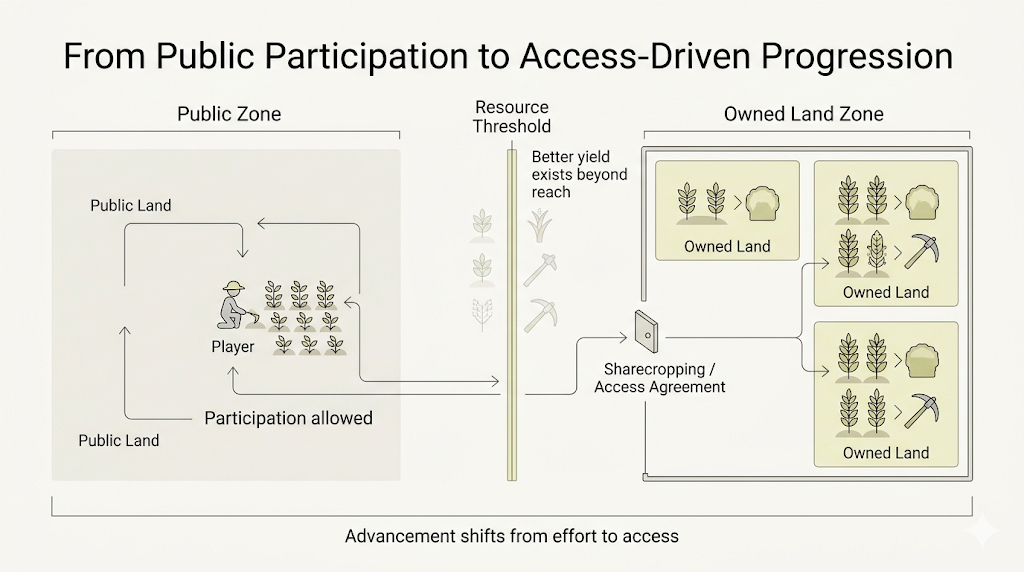
I log into Pixels. I see a board. I think I am choosing tasks. But the board is also choosing me, or at least choosing the version of me it feels comfortable paying. My odds of seeing PIXEL can be improved by owning land or paying for VIP. The archived changes show that Task Board benefits got a land-holding requirement, which tells me Pixels does not want instant opportunistic access to those advantages. The help docs say more spend in the game may become part of future reward pools. So my path through the board is not just “what can I do today?” It is also “what have I already proven, bought, owned, or become inside Pixels that makes the system trust me with better paid loops?”
That is what makes the Task Board feel less like progression and more like a firewall.
A normal quest system asks whether I completed the task.
This one is starting to ask whether rewarding me is economically sensible and behaviorally safe.
And the thing that makes this very Pixels-native is that the game does not really hide the broader philosophy. The litepaper says rewards are being shaped through data science and token mechanics to align incentives better and harden the ecosystem against the usual play-to-earn failure modes. The RORS discussion makes clear that reward budgets are judged against returned revenue. The Task Board docs make clear that not everyone gets the same reward probabilities. The update logs show the board being rebalanced, gated, and tied more tightly to progression tiers. Put all that together and the board stops being a cute to-do list and starts looking like the place where Pixels decides which activity is worth turning into paid behavior without poisoning the system that pays for it.
And I think that is the part I would not smooth out, even if I wanted to.
Because this is why the Task Board is more interesting than ordinary content design.
It is where Pixels has to make a very annoying decision over and over again: reward engagement enough to keep the world alive, but refuse to subsidize the wrong behavior so hard that the whole economy turns into a bot-shaped hole. The Pixels's Task Board still looks like a board. Hazel still looks like Hazel. The tasks still look like chores, requests, little loops of ordinary play. But the backend sitting under that surface feels a lot less sentimental. It feels like a filtering system for economic safety. A place where Pixels keeps asking whether this player, this pattern, this output, this spend path, this level of legibility, is the kind of behavior the ecosystem can afford to pay for today.
And maybe that is the real uncomfortable thing with Pixels now.
The Task Board can still feel like opportunity from the front.
But from the backend, it increasingly feels like permission.