
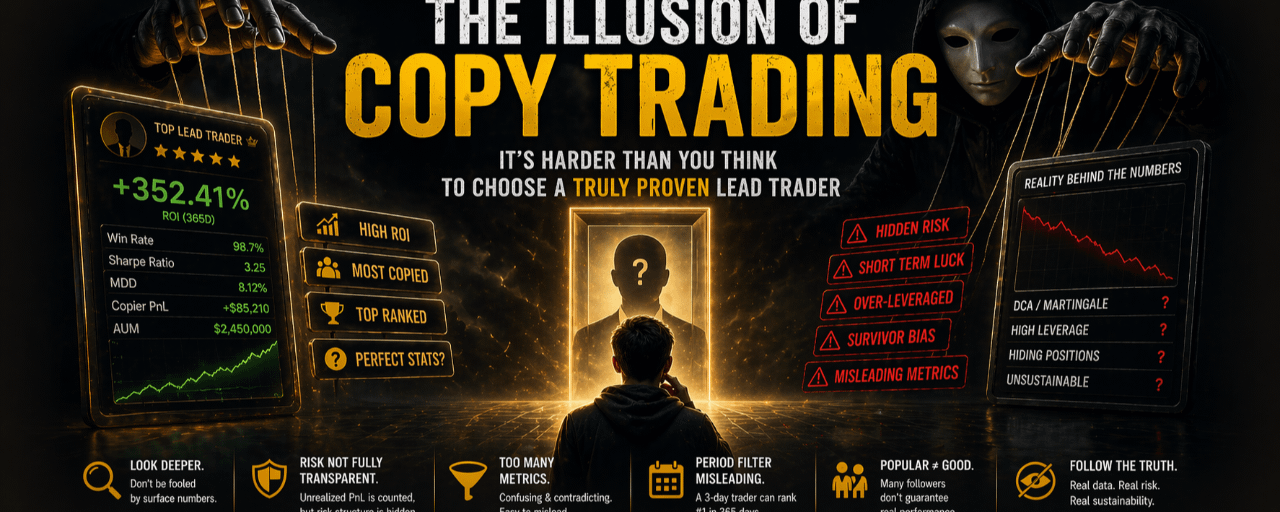
Копи-трейдинг выглядит просто: выбери трейдера → скопируй → получи прибыль.
Но как только ты начнёшь исследовать систему на Binance Copy Trading, ты поймёшь нечто важное:
Найти действительно надёжного, проверенного трейдера гораздо сложнее, чем кажется.
Этот гайд объясняет всё понятно и без воды.
📊 1. Предвзятость в «Рекомендованных» категориях
Категории, которые ты увидишь:
Высокая прибыль (PnL)
Высокая доходность (ROI)
Самые копируемые
Наивысшая прибыль копировщика (PnL)
🔹 Высокая прибыль (PnL)
✅ Плюсы:
Показывает реальную прибыль в абсолютных значениях
Полезно для выявления трейдеров, которые могут генерировать большие доходы
❌ Минусы:
Предвзятость к большому капиталу
Не показывает эффективность
📌 Пример:
Трейдер A:
Капитал: $1,000,000
Прибыль: $50,000
Трейдер B:
Капитал: $1,000
Прибыль: $300
➡️ Трейдер A занимает более высокую позицию
➡️ Но Трейдер B на самом деле более эффективен
🔹 Высокая доходность
✅ Плюсы:
Измеряет эффективность (% возврат)
Хорошо для сравнения разных размеров счетов
❌ Минусы:
Легко надувается высоким рычагом
Может быть чисто краткосрочной удачей
Не учитывает, как долго трейдер активен
📌 Пример:
Трейдер C:
Торгуя 5 дней
ROI: +120%
➡️ Выглядит удивительно
➡️ Но может быть просто удачной серией
🔹 Наиболее скопированные
✅ Плюсы:
Показывает социальное доверие
Указывает на популярность
❌ Минусы:
Двигается под давлением ажиотажа и FOMO
Не гарантирует производительность
📌 Пример:
Трейдер становится вирусным → быстро набирает подписчиков → занимает высокие позиции
Даже если производительность средняя
🔹 Большинство PnL копировщиков
✅ Плюсы:
Показывает влияние на подписчиков
❌ Минусы:
Предвзятость по количеству подписчиков
Не отражает качество стратегии
📌 Пример:
1000 подписчиков, получающих небольшие прибыли
➡️ Общая сумма выглядит огромной
➡️ Индивидуальные результаты не впечатляют
🧠 Вывод
Эти категории подчеркивают то, что выглядит большим — а не тем, что на самом деле здорово или устойчиво.
⚙️ 2. “Все Портфолио” Метрики: Плюсы и Минусы
Доступные метрики:
PnL
ROI
MDD
AUM
Копировщики трейдеров
PnL копировщиков
Коэффициент Шарпа
🔹 PnL
✅ Плюсы:
Реальная прибыль
Легко для понимания
❌ Минусы:
Предвзятость капитала
Игнорирует риск
📌 Пример:
Большие счета доминируют в рейтингах, даже если они неэффективны
🔹 ROI
✅ Плюсы:
Измеряет эффективность
❌ Минусы:
Искажение рычага
Игнорирует риск
📌 Пример:
Трейдер с 3-дневным опытом и +80% обыгрывает трейдера с 200-дневным опытом и +70%
🔹 MDD (Максимальная просадка)
✅ Плюсы:
Показывает худшие исторические потери
Важно для выживаемости
❌ Минусы:
Отражает только прошлые события
Не гарантирует безопасности в будущем
📌 Пример:
Трейдер с низким MDD мог просто не столкнуться с плохими рыночными условиями
🔹 AUM
✅ Плюсы:
Показывает уровень доверия
❌ Минусы:
Предвзятость популярности
Не основано на навыках
📌 Пример:
Известный трейдер привлекает капитал даже при средней производительности
🔹 Копировщики трейдеров
✅ Плюсы:
Социальная валидация
❌ Минусы:
Поведенческий эффект стада
📌 Пример:
Люди следуют за трендами, не всегда за производительностью
🔹 PnL копировщиков
✅ Плюсы:
Показывает реальное влияние на подписчиков
❌ Минусы:
Зависит от времени входа
Предвзятость по количеству подписчиков
📌 Пример:
Подписчики, присоединяющиеся поздно, зарабатывают меньше, даже если трейдер работает хорошо
🔹 Коэффициент Шарпа
✅ Плюсы:
Измеряет доходность с учетом риска
Указывает на последовательность
❌ Минусы:
Могут выглядеть хорошо на “сглаженных” стратегиях
Не учитывает экстремальный риск
📌 Пример:
Стратегии усреднения могут приносить гладкие доходы → высокий Шарп
🧠 Вывод
Ни одна метрика не достаточна. Вам нужен контекст и комбинации.
⏱️ 3. Большая Проблема: Временные фильтры
Доступные фильтры:
7 / 30 / 90 / 180 / 365 дней
❗ Проблема
Это окна производительности — НЕТ возраста трейдера
📌 Пример
🔴 Случай:
Трейдер X:
Торгуя 3 дня
ROI: +80%
➡️ Появляется в:
Топ 30Д
Даже 365Д ранжирования
🔴 Другой случай:
Трейдер Y:
Торгуя 200 дней
ROI: +70%
➡️ Получает более низкие позиции
🧠 Вывод
Система не может отличить:
Опытные трейдеры
Краткосрочные удачливые трейдеры
🕳️ 4. Нереализованный PnL: Полезен, но недостаточно
✅ Ключевой факт
Binance включает нереализованный PnL.
Это означает:
Плавающие убытки УЧИТЫВАЮТСЯ
Производительность более реалистична
✅ Плюсы
Уменьшает фальшивые “идеальные” кривые
Делает производительность более честной
📌 Пример:
Трейдер с -30% плавающим убытком покажет слабую производительность
❌ Ограничения
Даже с нереализованным PnL, вы все равно не можете видеть, КАК риск формируется.
📌 Пример 1: Риск размера позиции
Плавающий убыток: -5%
➡️ Выглядит маленьким
➡️ Но позиция может быть огромной
📌 Пример 2: DCA / Мартингейл
Трейдер продолжает добавлять позиции
Плавающий все еще мал
➡️ Выглядит стабильно
➡️ Риск на самом деле накапливается
🧠 Вывод
Нереализованный PnL делает данные более честными — но не полностью прозрачными.
🚨 5. Красные флаги рискованных трейдеров (DCA / Мартингейл)
🔴 1. Win-рейты 95–99%
📌 Пример:
100 сделок → 98 побед
➡️ Вероятно, держат убытки вместо того, чтобы закрывать их
🔴 2. Скрытые позиции
📌 Пример:
Вы не можете видеть открытые сделки
➡️ Вы не знаете реальную экспозицию
🔴 3. Высокий ROI + Низкий MDD
📌 Пример:
ROI: 120%
MDD: 8%
➡️ Слишком идеально → вероятно скрытый риск
🔴 4. Супер гладкая кривая капитала
📌 Пример:
Постоянная восходящая линия с почти без падений
➡️ Вероятно, стратегия усреднения
🔴 5. Очень короткая история торговли
📌 Пример:
7 дней → 90% ROI
➡️ Не тестировалось
🔴 6. Популярный, но низкий прибыль копировщиков
📌 Пример:
Много подписчиков, но низкие прибыли копировщиков
➡️ Сложно воспроизвести результаты
🔥 6. Общая картина
Все в совокупности:
Предвзятость категории
Конфликты метрик
Вводящие в заблуждение временные фильтры
Ограниченная прозрачность
🎯 Результат
Трейдеры, которые выглядят лучше всего… часто НИКОГДА не являются самыми безопасными.
🧠 7. Умный способ выбирать трейдеров
✅ Сосредоточьтесь на:
Длительный период (90–180+ дней)
Низкий MDD
Стабильный коэффициент Шарпа
Положительный PnL копировщиков
❌ Избегайте:
Экстремальная доходность
НереалистичныеWin-рейты
Очень короткая история производительности
🔚 Финальная мысль
Binance предоставляет много данных — и даже включает нереализованный PnL.
Но все же:
Хорошо выглядящие статистические данные не всегда означают безопасные стратегии.
🔥 Финальная правда
Самый привлекательный трейдер в списке…
может быть самым опасным для копирования.
🤝 Прозрачный подход к копированию трейдинга (да, включая мой собственный)
После всего, что вы только что прочитали, один справедливый вопрос:
“Итак… вы тоже один из этих рискованных трейдеров?”
Честный ответ?
Да — частично. И нарочно так.
⚠️ Давайте будем реалистами
Я использую DCA (усреднение по доллару) — но только на длинных позициях.
Не в шортах.
И более важно:
Я не использую мартингейл
Я не бесконечно увеличиваю размер
Я не позволяю позициям дрейфовать к риску ликвидации
🧠 Что делает мой подход другим
DCA само по себе не является проблемой.
Настоящая проблема в том, как это используется.
Вот как я это контролирую:
Размер позиций планируется, а не эмоционально
Есть четкий предел тому, насколько далеко я буду усреднять
Риск контролируется, а не слепо нарастает
👁️ Полная прозрачность — без скрытия
Это именно то, что имеет значение.
Я не буду скрывать свои открытые позиции.
Это означает:
Вы увидите мои плавающие убытки
Вы увидите, когда я ошибаюсь
Вы увидите, когда я спешу
Вы увидите все
🔥 Компромисс (И почему это важно)
Большинство “идеально выглядящих” трейдеров:
скрывать позиции
сглаживать свою кривую
показывать нереалистично высокие Win-рейты
Я этого не делаю.
Так что да — моя производительность может:
выглядеть более запутанно
показывать просадки
чувствоваться более “реально”
Но это именно суть.
🆕 Начинать с малого — и почему это важно
Я также только начинаю.
Мой капитал относительно мал — около 500 USDT, в основном минимум, необходимый для присоединения.
И честно?
Это знак чего-то важного:
Мне тоже некомфортно терять много.
Это означает:
Я осторожен с риском
Я все еще доказываю свою состоятельность
Я торгую с реальными последствиями, а не эго
🎯 Философия
Я не пытаюсь выглядеть как:
“Лучший трейдер на лидерборде”
Я пытаюсь быть:
Трейдер, который выживает — и остается последовательным с течением времени
🤔 Итак… стоит ли копировать меня?
Не слепо.
Но если вы ищете кого-то, кто:
не фальсифицирует совершенство
не скрывает риск
комфортно быть оцененным в реальном времени
все еще на начальном этапе — и растет
Тогда, возможно, меня стоит понаблюдать.
🔚 Финальная мысль
Если я буду хорошо работать — вы это увидите.
Если я буду плохо работать — вы также это увидите.
Без фильтров. Без иллюзий.
И именно так это и должно быть.
Присоединяйтесь к моему ведущему копировщику
$BTC $ETH $BNB #StrategyBTCPurchase #BinanceLaunchesGoldvs.BTCTradingCompetition #CopyTradingDiscover