
Автор: Харис (Создатель FCA)
В мире трейдинга простота – это высшая форма изысканности. Многие новички теряются в сложных индикаторах, но самые прибыльные движения часто исходят из понимания базовой рыночной структуры. Сегодня я представляю свою основную торговую концепцию: FCA (Найти Центральную Зону).
Что такое FCA?
FCA означает Найти Центральную Зону. Эта концепция предназначена для того, чтобы помочь трейдерам определить, где рынок отдыхает перед следующим значительным движением. Хотя она применима к различным рыночным структурам, она наиболее эффективна и проста в использовании с N-образным паттерном.
3 столпа паттерна N
Чтобы торговать концепцией FCA, вы должны искать форму N на своих графиках. Этот паттерн состоит из трех различных фаз:
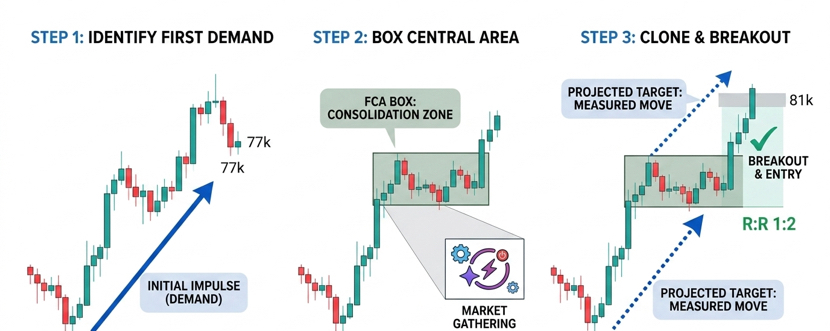
1. Первая demanda (начальное движение): Это сильное восходящее движение цен, показывающее, что покупатели контролируют рынок.
2. Консолидация (Центральная зона): После начального движения рынок начинает двигаться в боковом диапазоне. Это FCA - двигатель, где рынок собирает силы для следующего скачка.
3. Вторая demanda (измеренное движение): Это последний этап N, где рынок повторяет свое первое движение после выхода из Центральной зоны.
Как торговать концепцией FCA
Следуйте этим простым шагам, чтобы выполнить сделку:
• Шаг 1: Найдите импульс: Найдите сильный восходящий тренд (Первая demanda).
• Шаг 2: Обозначьте Центральную зону: Нарисуйте коробку вокруг зоны консолидации, где цена движется в боковом направлении.
• Шаг 3: Клонируйте движение: Ключевой секрет FCA в том, что рынок часто повторяет себя. Скопируйте длину Первой demanda и проецируйте ее вверх от верхней части вашей консолидационной коробки. Это ваша прогнозируемая цель.
Управление входом и риском
Для новичков безопасность является приоритетом. Стратегия FCA предлагает высоковероятный вход:
• Вход: Ждите четкого прорыва. Входите в сделку только тогда, когда свеча закрывается выше Центральной зоны (коробки).
• Цель (Take Profit): Стремитесь к соотношению риск-вознаграждение 1:2. Это означает, что ваша цель по прибыли должна быть вдвое больше вашего потенциального убытка.
• Стоп-лосс (SL): Установите свой стоп-лосс чуть ниже зоны консолидации, чтобы защитить свой капитал, если прорыв не удался.
Заключение
Стратегия FCA (Поиск Центральной Зоны) основана на логике, что рынки движутся волнами. Определяя Центральную зону, вы перестаете гоняться за рынком и начинаете предвосхищать следующий большой ход. Это просто, визуально и очень эффективно для всех, кто начинает свой торговый путь.
Заметка создателя: В торговле Центральная зона - это место терпения; прорыв - это место прибыли.