
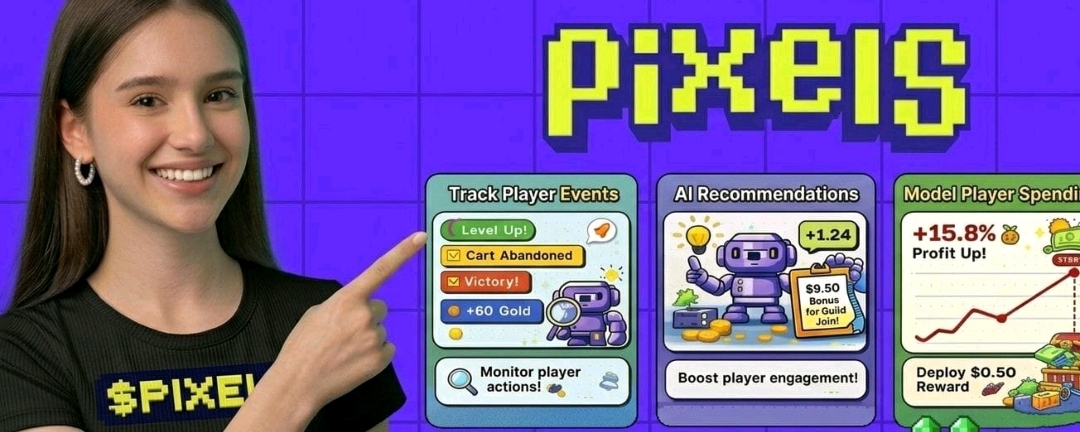
Why did I never think about player retention… until Pixels made me see it clearly?
For the longest time, I believed games grow because of content. More updates, more features, more hype — that’s the formula everyone talks about. New seasons, new mechanics, new announcements. It all looks like progress from the outside.
But after spending real time inside Pixels, I started noticing something different.
It wasn’t the constant flow of new content that kept pulling me back. In fact, there were moments where nothing major changed… yet I still logged in. Still played. Still cared.
That’s when the perspective shifted.
Game growth isn’t just about what’s added. It’s about what’s sustained.
The real strength of a game like Pixels comes from systems that don’t demand attention but quietly shape behavior. Systems that track how players interact, understand patterns, and adjust incentives without making it obvious. Rewards feel natural. Progress feels earned. Engagement feels almost effortless.
This is where most people miss the point.
New players see content. They see features, updates, events — the visible layer.
But experienced players feel the system underneath. They recognize how the game responds to them, how it guides them, how it keeps them invested even when there’s nothing flashy happening.
And that difference is everything.
Because content can attract players… but systems are what retain them.
In GameFi, this matters even more. Attention is short. Narratives change fast. New projects launch every day. If retention isn’t built into the core design, even the most hyped project can fade quickly once the excitement cools down.
Pixels doesn’t rely only on hype cycles. It leans into behavioral design, subtle progression loops, and consistent engagement mechanics. That’s why it feels different. Not louder — just smarter.
And honestly, it changed how I look at Web3 gaming.
Now the question isn’t just “what’s next?”
It’s “what’s already working — and how well is it being managed?”
Because maybe success in GameFi isn’t about endlessly building more.
Maybe it’s about refining what exists, optimizing player experience, and creating systems that make people stay without forcing them to.
That’s the shift.
And once you see it, you can’t unsee it.