
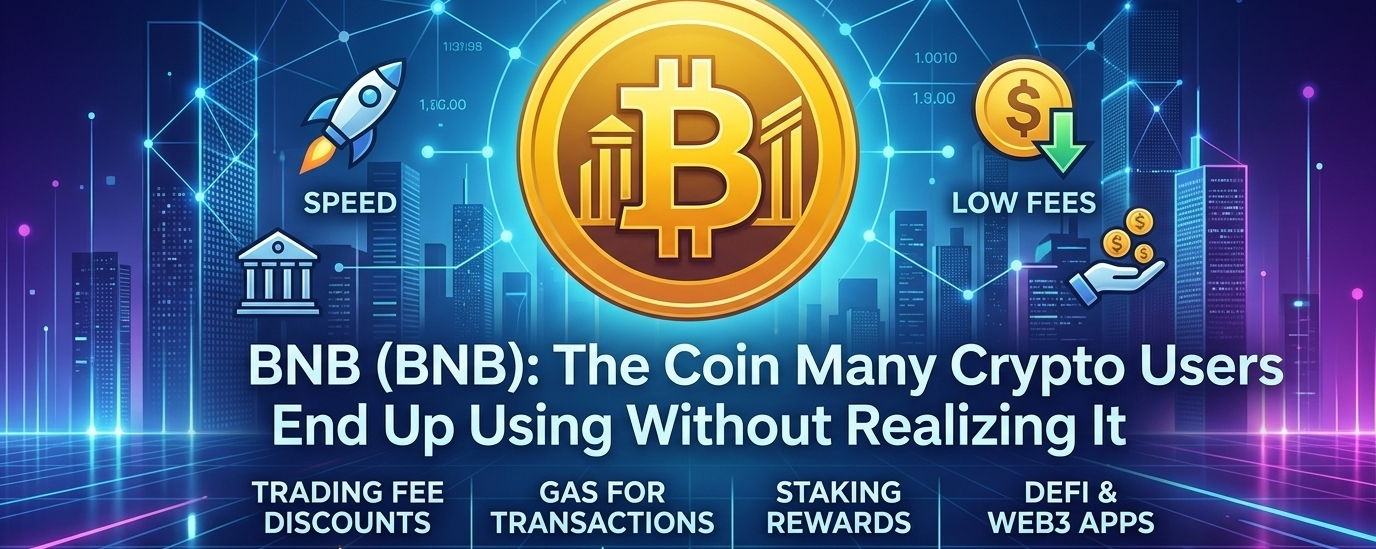
@Binance Academy Indonesian @Binance Earn Official @BNB Chain #Binance $BNB
Introduction
When most people enter crypto, they usually hear about Bitcoin or Ethereum first. But after spending some time trading, transferring funds, or trying decentralized apps another name keeps showing up BNB.
That’s honestly how it happened for me too.
At first, I only used BNB to save a little money on Binance trading fees. Nothing serious. I didn’t think much about the project itself. But over time I noticed I was using it more often than expected for wallet transfers token swaps, staking, even trying random DeFi apps late at night just to see how they worked.
And that’s probably the reason BNB stayed relevant while many other exchange tokens slowly disappeared. People actually use it.
Not just investors. Regular users too.
So What Exactly Is BNB?
BNB was launched in 2017 by Binance before the exchange became one of the biggest names in crypto.
Originally, the token lived on Ethereum as an ERC 20 asset. Later it moved onto its own blockchain ecosystem called BNB Chain.
At the beginning, BNB mainly focused on one thing: reducing trading fees on Binance.
Simple idea. But eventually the ecosystem expanded far beyond that.
Today, BNB is connected to:
DeFi platforms
NFT marketplaces
Blockchain games
Staking systems
Smart contracts
Web3 apps
Payments and transfers
Honestly, that evolution happened faster than many people expected.
The First Time I Used BNB Chain
I still remember one moment that changed my opinion about the network.
I was trying to move funds during a busy period on Ethereum and the gas fee felt ridiculous for such a small transaction. I ended up waiting because paying that much just didn’t make sense.
Later, I tested the same kind of transfer on BNB Chain.
It was faster. Cheaper. Less frustrating.
That’s when I understood why so many smaller traders and beginners were moving toward it. Sometimes people don’t care about technical debates first they just want something that works smoothly without draining half their balance in fees.
And to be fair, BNB Chain became popular partly because of that practical experience.
What Is the BNB Chain?
The BNB Chain is the blockchain network that powers the BNB ecosystem.
It mainly includes:
BNB Beacon Chain for governance and staking
BNB Smart Chain (BSC) for smart contracts and decentralized apps
One smart move was making the network compatible with Ethereum tools. Developers could build apps more easily or migrate existing projects without starting completely from scratch.
That helped the ecosystem grow quickly.
You suddenly had:
Decentralized exchanges
Yield farming apps
NFT projects
Web3 tools
Blockchain games
All running on the same ecosystem.
Why Do People Actually Use BNB?
This is where things get interesting.
A lot of crypto tokens sound important on paper but don’t have much real usage. BNB avoided that problem because it became part of everyday crypto activity.
Trading Fee Discounts
This is still the feature many people know first.
If you use BNB to pay trading fees on Binance, you usually get reduced costs. It may not sound huge initially, but active traders definitely notice the difference over time.
I noticed it too after months of trading. Small savings quietly add up.
Paying Network Fees
BNB is also used as the gas token for transactions on BNB Chain.
So whether someone is:
Swapping tokens
Sending crypto
Minting NFTs
Using DeFi apps
BNB is usually involved somewhere in the process.
Staking
Some users stake BNB to support network validators and earn rewards.
Personally, I’ve always preferred staking over chasing random hype trades every week. It feels slower, calmer, and honestly less stressful.
DeFi and Liquidity
BNB became heavily connected to decentralized finance during the big DeFi growth phase.
People used it for:
Liquidity pools
Farming rewards
Lending
Decentralized trading
A big reason was cost. Lower fees made experimenting easier for smaller users.
Speed, Fees, and User Experience
One thing I think crypto communities sometimes underestimate is user experience.
Most beginners don’t care about complicated blockchain theories on day one. They care about questions like:
“Did my transaction go through?”
“Why is this fee so high?”
“Why is this taking so long?”
BNB Chain focused heavily on speed and lower transaction costs, and that made the ecosystem feel more approachable.
That doesn’t automatically make it perfect, of course.
Some critics argue the network is more centralized compared to blockchains like Ethereum. And honestly, that debate still matters. But from a usability perspective, many people simply enjoy using a network that feels quick and affordable.
The Burn Mechanism
BNB originally launched with a total supply of 200 million coins.
Over time, Binance introduced regular token burns, permanently removing part of the supply from circulation. The long-term goal is reducing supply to 100 million BNB.
A lot of people focus heavily on burns because they see them as positive for token economics.
My view is a little different.
Burns are interesting, but long-term value usually comes from real usage. If people stop using an ecosystem, token burns alone won’t save it. BNB stayed relevant mainly because activity around the network kept growing.
What Makes BNB Different?
Crypto has become extremely competitive now.
Every project claims to be faster, cheaper, or more scalable. But BNB managed to stay near the center of the conversation because it built an ecosystem people actually interact with daily.
Some of its biggest strengths include:
Large exchange integration
Fast transactions
Lower fees
Active DeFi ecosystem
Ethereum compatibility
Strong Web3 activity
In my opinion, accessibility became BNB’s biggest advantage.
For many users, especially beginners, it simply feels easier to use compared to some more expensive blockchain environments.
And honestly, that simplicity matters more than people think.
Conclusion
BNB started as a simple exchange utility token, but it slowly grew into the foundation of a much larger blockchain ecosystem.
Today, it powers everything from DeFi apps and staking systems to NFT projects, gaming platforms, and Web3 applications. It isn’t perfect, and like every major blockchain, it still faces challenges around decentralization, competition, and long-term scalability.
But after personally using multiple networks over the years, I can understand why BNB continues attracting both beginners and experienced crypto users.
Sometimes people don’t need the most complicated system.
They just want a blockchain that feels fast, practical, and easy to use.