

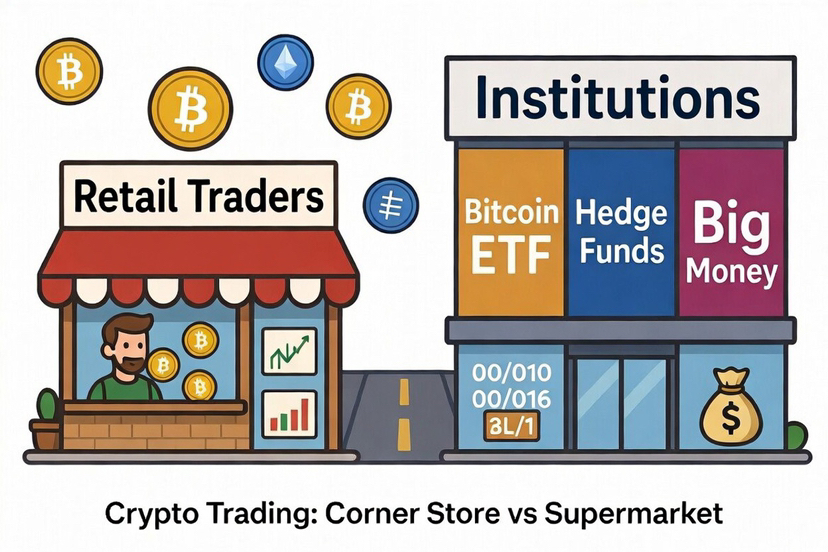
In the early days of crypto, retail traders were kings of the wild west. It felt like running a small neighborhood grocery store — agile, full of hidden gems, and full of quick opportunities. Spot a meme coin, ride the volatility, and exit before the crowd.
Then the institutions came with billions.
Hedge funds, Bitcoin & Ethereum ETFs, and corporate treasuries opened a massive supermarket right next door. Deeper liquidity, ultra-fast algorithms, and macro flows changed the game.
Short-term scalping and easy momentum plays have lost their edge. Whale moves can fake out charts, and the crazy 10x-100x moonshots of 2021 feel like ancient history.
But it’s not all bad news.
Institutions brought real benefits: higher overall liquidity, tighter spreads, and more legitimacy to the space. Volatility is still there but has become more tied to fundamentals.
Retail traders still hold strong advantages: 24/7 access, lightning-fast decisions on new narratives, DeFi yields, and no compliance headaches. The supermarket dominates Bitcoin, but the corner store can thrive on specialty items and speed.
Conclusion:
The institutional wave didn’t kill retail trading — it professionalized it. The easy-money era is over, but the game isn’t over. Those who adapt with better risk management and treat crypto as a real asset class will keep finding edge.
The supermarket is here to stay.
Question is: Will you upgrade your corner store, or keep competing on the same old terms?#RetailVsInstitution #BTCETFSPOT #InstitutionalAdoption $BTC