
There was a time when Bitcoin ETF headlines felt like temporary hype cycles. Big numbers would hit the market, traders on X would celebrate for a few hours, Bitcoin would spike, and then everyone would move on to the next shiny thing. Lately though, the mood feels different. Quieter. More calculated. Almost like traditional finance has stopped asking whether crypto belongs in the room and started figuring out how much exposure it wants before everyone else gets there first.
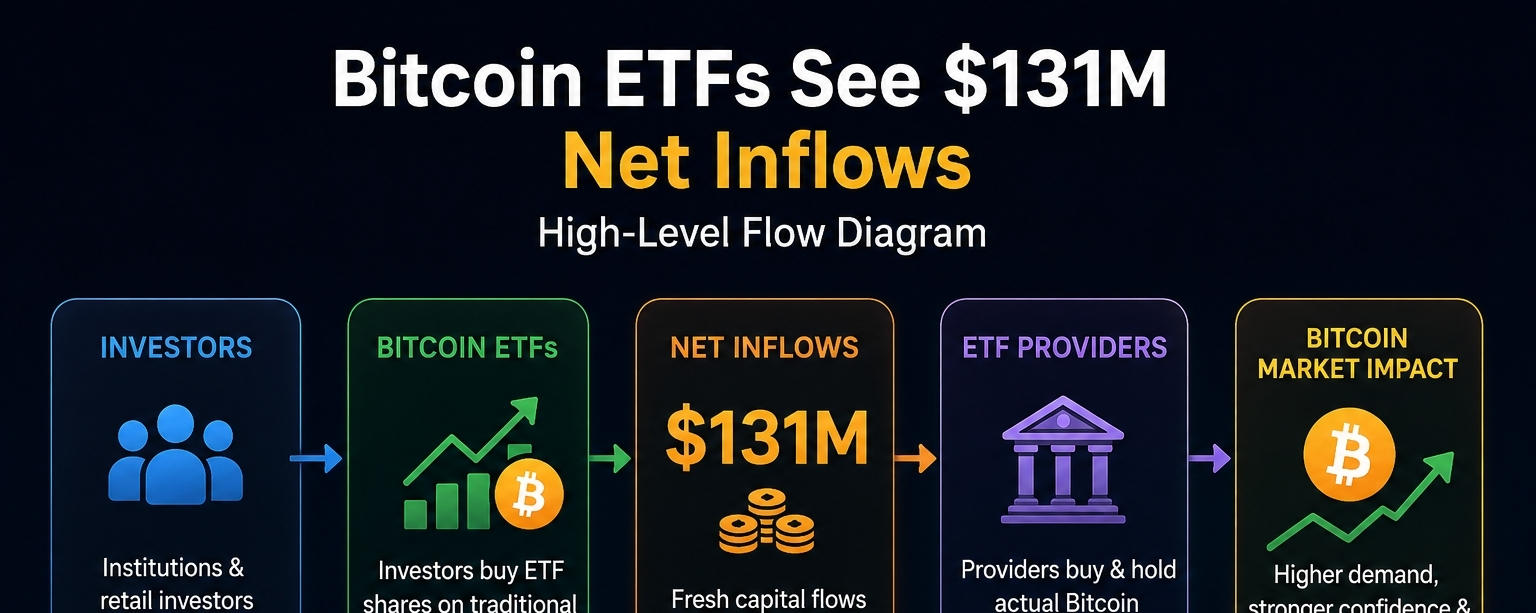
The latest signal came with another $131 million flowing into Bitcoin ETFs, and honestly, that number says more about investor psychology than it does about a single trading day. Money doesn’t drift into these products accidentally. Especially institutional money. These firms move slowly, overanalyze everything, sit through endless compliance meetings, and still manage to make investing look painfully boring most of the time. So when fresh capital keeps entering Bitcoin ETFs week after week, people pay attention.
And they should.
Bitcoin has spent years surviving things that were supposed to kill it. Exchange collapses. Government crackdowns. Brutal bear markets. Endless obituaries from economists and finance veterans who insisted crypto was little more than internet gambling dressed up as innovation. Yet here it is again, sitting inside regulated investment products offered by some of the biggest financial firms on the planet.
That’s the part that still feels surreal if you’ve been around crypto long enough.
A few years back, convincing traditional investors to even discuss Bitcoin seriously felt impossible. Most institutions treated it like radioactive speculation. Portfolio managers laughed it off publicly while privately trying to understand why younger investors wouldn’t stop talking about it. The technology confused people. The volatility scared them. Then came the scandals, the hacks, the exchange disasters, and for a while it genuinely looked like the critics might win the argument.
Instead, Wall Street adapted.
Bitcoin ETFs changed everything because they removed the friction that kept cautious investors away from crypto in the first place. No wallets. No seed phrases scribbled onto pieces of paper. No navigating exchanges that looked intimidating to anyone outside the crypto bubble. Investors can now buy Bitcoin exposure the same way they buy shares in Apple or an S&P 500 fund. A few clicks. Done.
That convenience matters more than hardcore crypto users sometimes want to admit.
Most people do not care about decentralization philosophy or self-custody principles. They care about accessibility. They want exposure without technical headaches. ETFs solved that problem almost overnight, and once the infrastructure became familiar enough, institutional capital started creeping in faster.
Not explosively. Gradually. That’s usually how real adoption works.
There’s also a strange irony unfolding here. Some of the same financial giants that dismissed Bitcoin years ago are now deeply involved in the ETF race. Firms like BlackRock and Fidelity Investments didn’t suddenly become crypto evangelists because they fell in love with blockchain culture. They saw demand. Client interest kept growing. Younger investors kept allocating capital toward digital assets. Eventually, ignoring Bitcoin became harder than offering a regulated way to access it.
That shift alone says a lot about where crypto sits today.
The market itself has matured too, even if crypto still behaves like crypto whenever volatility kicks in. Bitcoin remains unpredictable. A nasty correction could arrive next week and nobody in this industry would be genuinely shocked. But compared to earlier cycles, the structure around the asset feels more stable now. Liquidity is deeper. Custody services are more sophisticated. Institutional trading desks are more active. Large firms are building products around Bitcoin instead of pretending it doesn’t exist.
That doesn’t make the market safe. It just makes it harder to dismiss as a passing trend.
Part of what’s fueling ETF demand is the growing belief that Bitcoin may actually have a long-term role inside modern investment portfolios. Not everybody agrees on what that role is, which makes the conversation fascinating. Some investors still see Bitcoin as digital gold. Others treat it as a hedge against inflation or currency debasement. Plenty of traders simply see it as a high-risk asset capable of delivering aggressive returns during favorable market conditions.
Then there’s the younger generation of investors who grew up during economic instability and naturally distrust traditional financial systems. For them, Bitcoin feels less like speculation and more like an alternative.
Whether all those narratives hold up forever is another debate entirely. Crypto has a habit of humbling people who become too certain about anything. Still, perception drives markets just as much as fundamentals do, sometimes even more. And right now, institutional perception around Bitcoin is clearly evolving.
The ETF inflows reflect that.
There’s also a psychological effect that rarely gets discussed enough. Retail investors watch institutional money closely. When large firms allocate capital toward Bitcoin products, smaller investors interpret it as validation. Suddenly crypto feels less fringe. Less reckless. More acceptable in mainstream finance circles. That confidence spreads quickly online, especially during bullish periods when sentiment starts feeding itself.
You can already feel the shift happening across crypto communities again. Conversations aren’t centered around survival anymore. People are talking about adoption, integration, and long-term positioning. That’s a major difference from the atmosphere during the brutal downturns of 2022 when every second headline predicted the collapse of the entire industry.
Still, there’s a level of skepticism worth keeping intact here because crypto markets have always been masters of exaggeration. ETF inflows are bullish, sure, but they don’t magically erase the risks surrounding Bitcoin. Volatility hasn’t disappeared. Regulatory uncertainty still exists globally. Institutional investors can amplify market swings just as easily as they can stabilize them. If sentiment flips hard enough, those same inflows can become aggressive outflows.
And honestly, that’s something newer investors probably underestimate.
Markets tend to look strongest right before they remind everyone how fragile momentum can be. Crypto especially operates on emotion. Fear and greed move faster here than almost anywhere else in finance. One week institutions are racing into Bitcoin exposure. The next week a macroeconomic shock or regulatory headline can wipe billions from the market before lunch.
That unpredictability is still part of Bitcoin’s identity whether ETF investors like it or not.
There’s another layer to all this that longtime crypto users have mixed feelings about. Bitcoin was originally designed to operate outside traditional financial systems. ETFs pull it deeper into those systems instead. Some people see that as mainstream victory. Others think Bitcoin is slowly being absorbed by the same institutions it was meant to challenge in the first place.
Truthfully, both arguments make sense.
For traditional investors, ETFs are probably the easiest gateway into crypto they could ask for. Retirement accounts, wealth management portfolios, even conservative investment strategies now have cleaner access to Bitcoin exposure without touching actual crypto infrastructure. That alone opens the market to enormous pools of capital that previously stayed on the sidelines.
But ETF buyers aren’t really interacting with Bitcoin itself. They’re buying exposure to price movement through traditional financial wrappers. That distinction matters in crypto circles, especially among people who care deeply about decentralization and self-custody.
Most mainstream investors probably won’t care about that debate though. Convenience wins more often than ideology in financial markets.
And that’s partly why these inflow numbers matter.
The $131 million entering Bitcoin ETFs isn’t just another statistic floating across crypto Twitter for a few hours before disappearing into the next news cycle. It reflects a larger transition happening in real time. Bitcoin is slowly becoming embedded into mainstream financial infrastructure. Not fully accepted yet. Not universally trusted either. But undeniably harder to ignore than it was even two or three years ago.
That shift feels permanent now.
Maybe that doesn’t guarantee endless upside for Bitcoin. Markets never move in straight lines, and crypto definitely doesn’t. There will be corrections, regulatory fights, periods of ugly volatility, and probably a few more industry scandals because this space still hasn’t completely outgrown its chaos.
But the institutional participation is real now. That much is becoming difficult to argue against.
And for better or worse, Wall Street’s relationship with crypto no longer looks temporary.