#Investing is not a guaranteed path to wealth. Asset prices can fall as well as rise, and there are no guarantees that you will make money on your investment.
That's why saving cash is considered a safe option. You earn interest from a bank or savings group, your savings grow slowly, and the risk of losing any money is extremely low.
However, low risk usually comes with low returns. If the interest you receive is less than the prevailing inflation rate, the real value of your cash savings diminishes. For example, suppose you deposit £1,000 into a savings account that grows at 1% per year. After a year, you will have £1,010. But if inflation rises by 2%, you will need £1,020 to maintain the same purchasing power you started with.
Stocks have historically yielded higher returns than cash over the long term, but stock prices fluctuate wildly, and some companies may fail altogether. While you invest with the expectation of positive returns, you must also accept the possibility of losing your initial capital.
Did you know?
Although investing in individual companies is common, a balanced portfolio includes a variety of other assets. As you may have learned, you can also benefit from the potential growth of exchange-traded funds (ETFs), mutual funds, and many other assets. You can build your portfolio yourself or hire a professional or company to do it for you.
Understanding your risk tolerance is a crucial part of investing. Ask yourself how much you are willing and able to take on the risk, and how much you can afford to lose if the markets move against your expectations.
Diversification
One of the most effective ways to manage risk is to diversify your investment portfolio. This involves allocating funds across different asset classes, such as stocks, bonds, gold, and real estate.
For example, government bonds are a much lower-risk investment than stocks and are expected to generate relatively stable returns. This will reduce the negative impact on your investment portfolio if the value of your individual stocks declines.
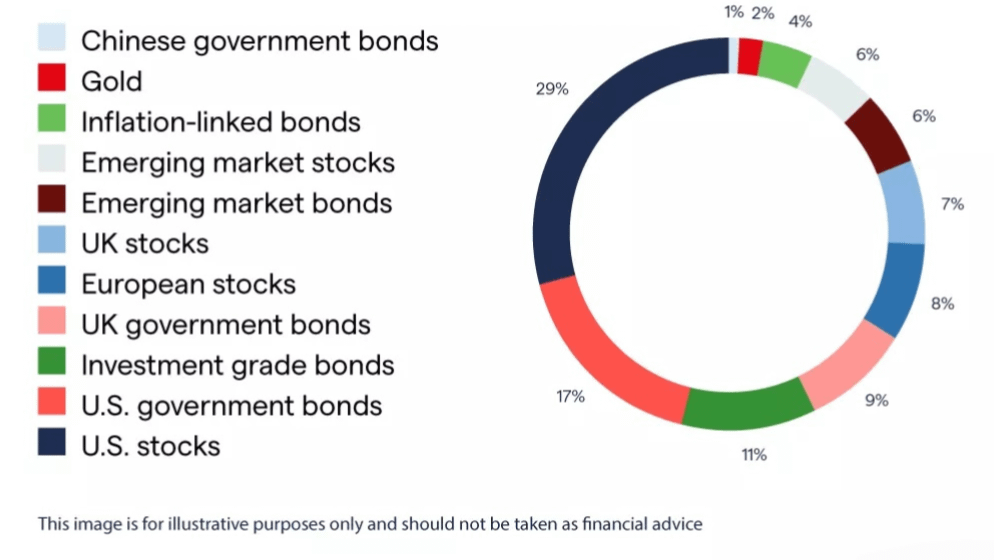
Below is an example of a balanced investment portfolio with diversified assets spread across multiple sectors.
Building a diversified investment portfolio helps you manage your exposure to market volatility. For example, if you invest in the stock market, you might want to own shares in different companies from various economic sectors to diversify your investments. This helps spread risk across your portfolio, making it less dependent on the performance of a single company or sector.
For example, during an economic downturn, companies that deal directly with consumers, such as retailers, may see their stock value decline as consumers cut back on spending, resulting in lower revenues and profits. In contrast, pharmaceutical and utility companies are expected to perform much better during similar periods because their products are considered essential and are less susceptible to economic fluctuations.
Therefore, buying individual stocks is a high-risk strategy and could expose you to significant losses if their performance declines. Building a diversified investment portfolio of varying sizes is generally considered a safer option.