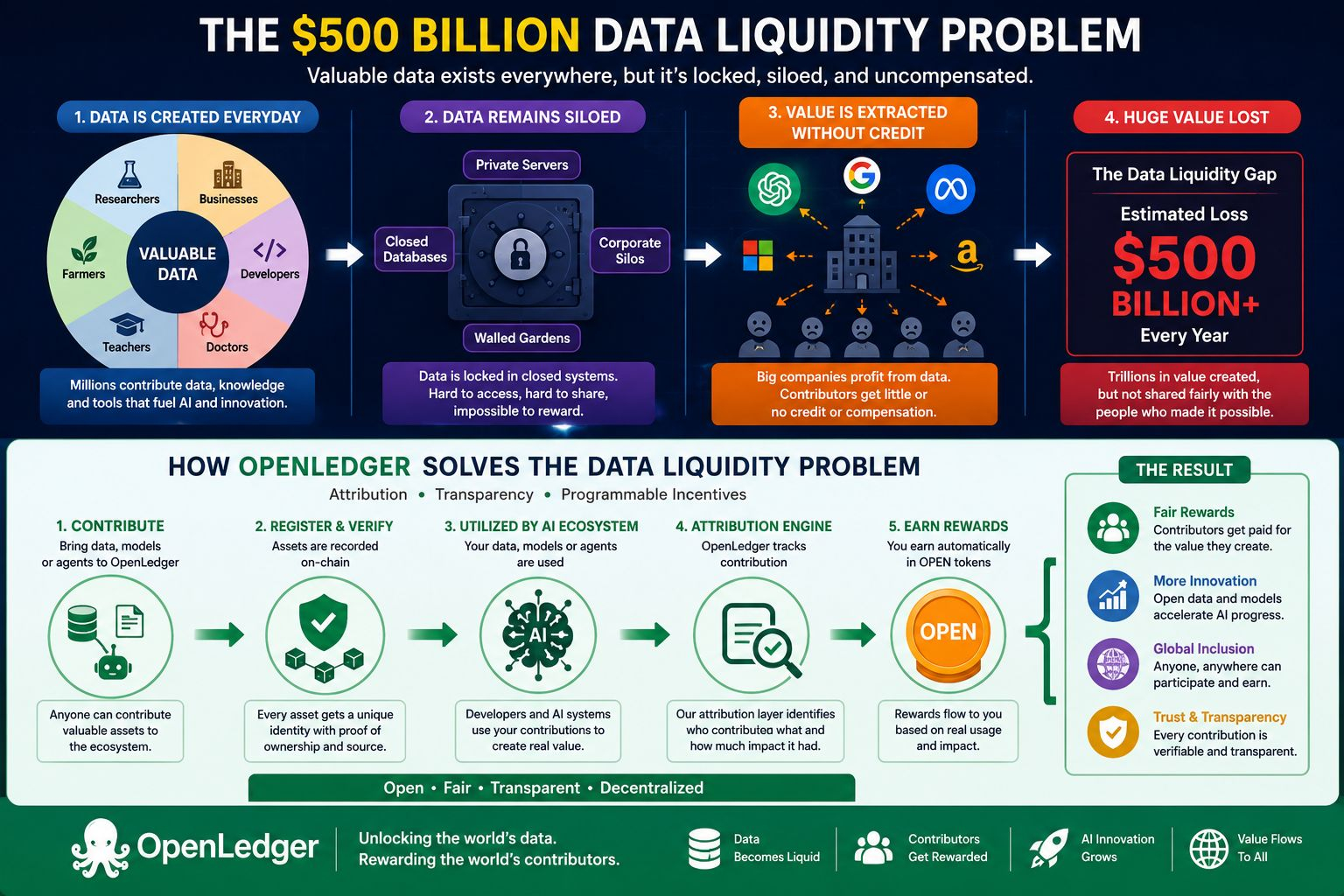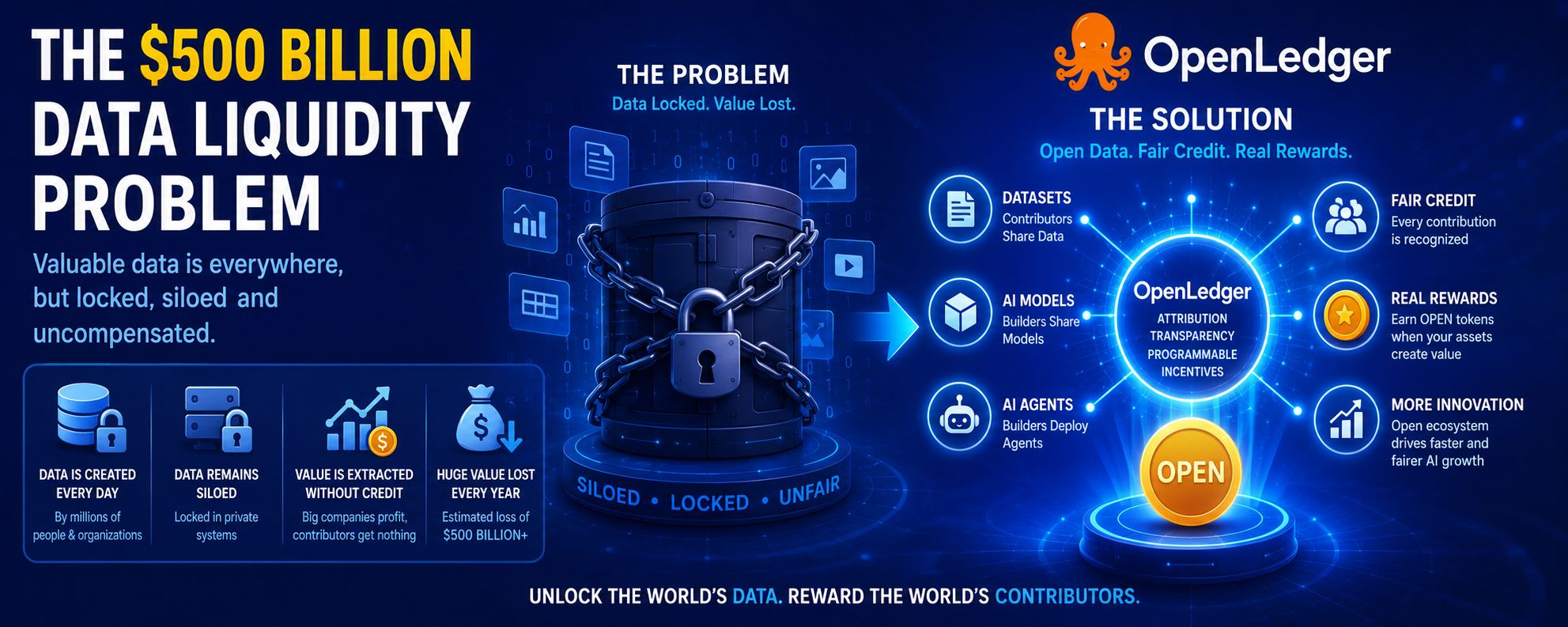
The Locked Library Worth $500 Billion
Most people think the world's most valuable treasure is gold.
Some say it is oil.
Some say it is land.
But I think one of the biggest treasures in our time is something we cannot even hold in our hands.
Data.
Tiny pieces of information. Numbers, words, pictures, records, and notes. They are everywhere. Quiet and invisible, like grains of sand on a beach.
One grain seems useless.
But when billions of grains come together, they can build something enormous.
That is exactly what happened with artificial intelligence.
AI did not become smart by magic. It learned by reading the work of millions of people. Teachers wrote lessons. Doctors recorded findings. Farmers noted weather patterns. Students asked questions. Writers shared stories. Researchers spent years collecting facts.
Each person added one small page to a giant library.
And that library may now be worth more than $500 billion.
The strange part is that many of the people who filled the library never got paid.
That is the problem OpenLedger is trying to solve.
A Library with Locked Doors
Imagine you spend years writing a beautiful book.
You fill it with ideas and knowledge.
One day, someone copies your book and uses it to build a huge school. Thousands of students learn from it. The school earns money every day.
But nobody tells you.
Nobody thanks you.
Nobody shares the rewards.
Your book helped build the school, yet your pockets remain empty.
That sounds unfair, doesnt it.
This is what happens with data all over the world.
People create valuable information, but the value often stays locked inside big companies and private systems.
The library is full, but the doors are closed.
The Data Liquidity Problem
Liquidity is a big word, but the idea is simple.
Water flows.
If water is trapped in a bottle, it cannot help a field grow.
Data is similar.
When information is locked away in folders and servers, it cannot move freely and it cannot reward the people who created it.
There is value inside, but the value does not flow.
That is why people call it the data liquidity problem.
A huge amount of useful knowledge exists, but it remains frozen like a lake in winter.
Still beautiful. Still valuable. But not moving.
Why Contributors Receive Nothing
This part always surprises me.
Almost every useful AI model is trained using knowledge created by real people.
Researchers spend years collecting data.
Doctors write detailed notes.
Teachers prepare explanations.
Farmers record crop conditions.
Developers build tools and models.
Yet when AI products generate money, many contributors receive nothing at all.
It is like hundreds of villagers baking bread together, only to watch one person sell all the loaves and keep every coin.
Something about that story feels wrong.
OpenLedger Opens the Gates
OpenLedger wants to unlock the library.
It creates a system where data, models, and AI agents can be registered and used openly.
More importantly, the system tries to remember who contributed what.
When value is created, rewards can be sent back to the people whose work helped make it possible.
It is a bit like placing your name inside every seed you plant.
When the tree grows and bears fruit, the orchard knows which seeds were yours.
And then, some fruit comes back to you.
The Magic of Attribution
Attribution means giving credit where it belongs.
That sounds like a school lesson, but it is actually very powerful.
If your dataset helps an AI answer important questions, the system should recognize your contribution.
If your model improves the final result, your work should be remembered.
If your AI agent performs useful tasks, it should be part of the reward flow.
OpenLedger turns credit into something practical.
Not just a thank you.
A real economic reward.
Programmable Rewards
One of the most interesting ideas is that rewards can be distributed automatically.
No manager needs to sit with a calculator.
No one needs to send emails asking for payment.
Rules are built into the network.
When your contribution is used, rewards may flow to you in OPEN tokens.
It feels like planting a mango tree and waking up each season to find ripe fruit already waiting in a basket.
You did the work once, but the rewards can continue.
Small Creators, Big Opportunities
This idea matters because it gives ordinary people a chance to benefit.
A student with a useful dataset.
A developer with a specialized model.
A researcher with years of carefully collected information.
Even a small contribution may become valuable if it helps solve real problems.
In the old system, these people were often invisible.
In the new system, they have a chance to be seen.
And perhaps, finally, rewarded.
Why This Could Change AI
The future of AI may depend on trust and fairness.
People are more willing to share knowledge when they know their contributions will be respected.
Builders are more motivated when they can earn from what they create.
Communities become stronger when value flows back to the people who made it possible.
OpenLedger is trying to build that kind of world.
A world where knowledge is not trapped.
A world where credit is not forgotten.
A world where rewards can move as freely as ideas.
Final Thoughts
The $500 billion data problem is not really about money alone.
It is about recognition.
It is about fairness.
It is about millions of people whose work quietly powers the technologies of today.
For years, their contributions were like books locked in a hidden library.
OpenLedger is trying to unlock the doors.
To let the knowledge flow.
To let value move.
And to make sure that when the library changes the world, the authors are not left behind.