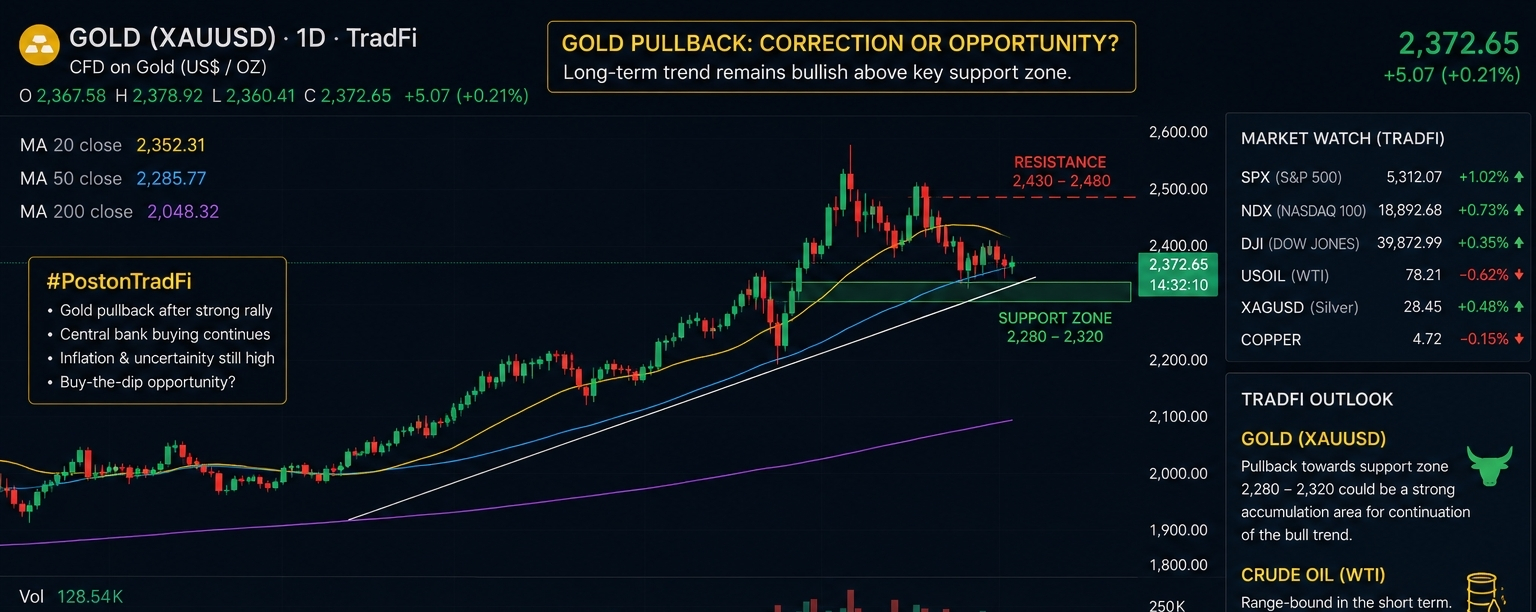
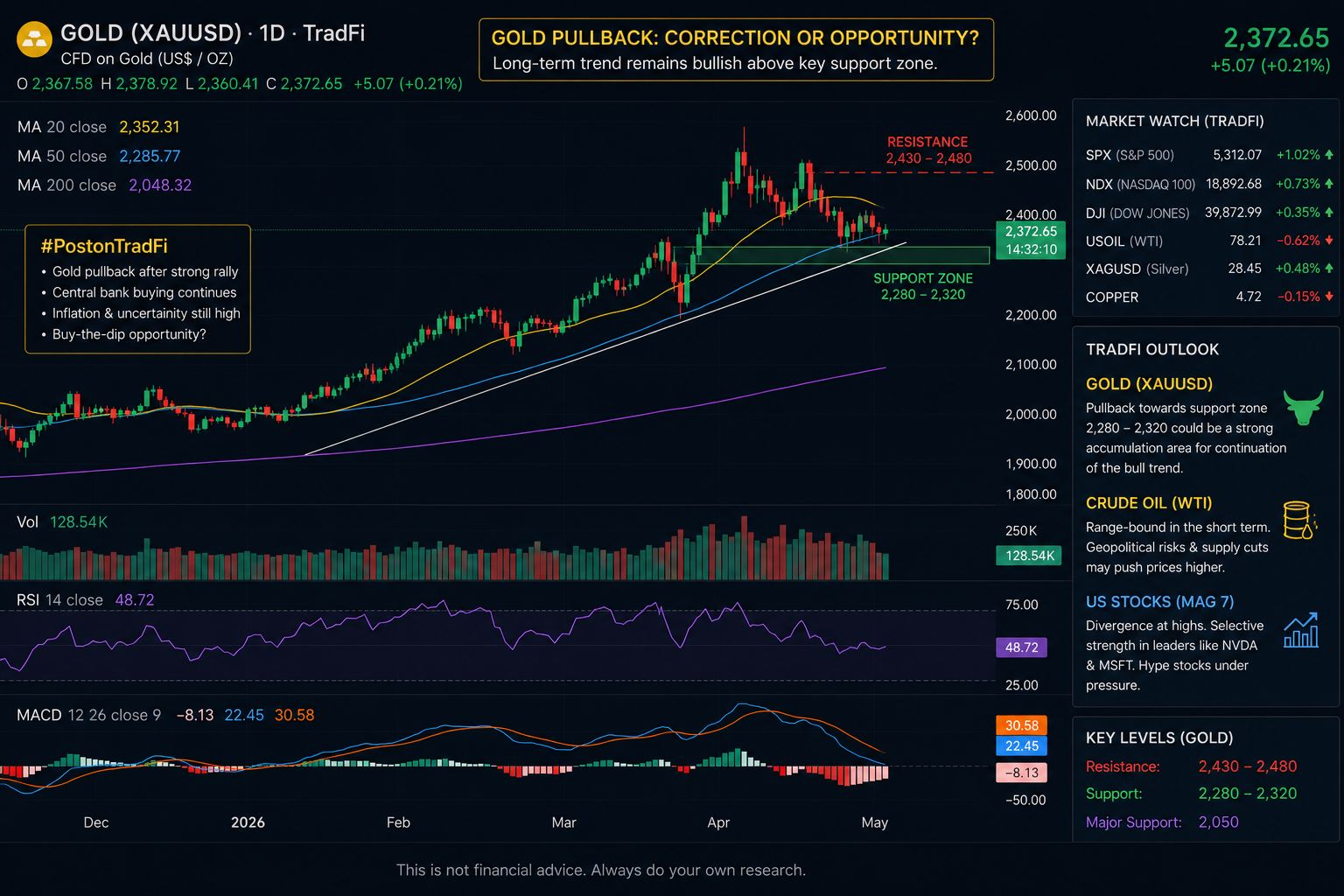
For most of 2026, gold has been one of the strongest assets in global markets. Rising geopolitical tensions, central bank buying, inflation concerns, and uncertainty around interest rates pushed prices toward historic highs. But now that gold is finally pulling back, many traders are asking the same question:
Is this the top, or just another opportunity to accumulate?
In my view, this correction looks more like a healthy reset than the end of the long-term trend. Markets rarely move in a straight line, especially after strong rallies. Profit-taking was expected once gold became overcrowded and sentiment turned extremely bullish.
What makes this cycle interesting is that traditional safe-haven demand is still very strong. Central banks continue increasing gold reserves, global debt levels remain elevated, and investors are still searching for protection against economic uncertainty. Even with tech stocks dominating headlines, gold continues to hold an important role in portfolio diversification.
At the same time, US tech giants are starting to diverge. Some companies continue delivering strong earnings and AI growth, while others appear heavily overvalued from pure market hype. This split inside the “Mag 7” could push more institutional capital back into defensive assets like gold and commodities over the coming months.
Crude oil is another market worth watching. Supply pressures and geopolitical risks could keep commodities volatile throughout the year. If energy prices rise again, inflation concerns may return quickly, which historically benefits precious metals.
Personally, I do not see the recent gold pullback as a bearish signal. I see it as a market cooling phase inside a broader macro uptrend. The next few months could become very important for both commodities and traditional financial markets.