
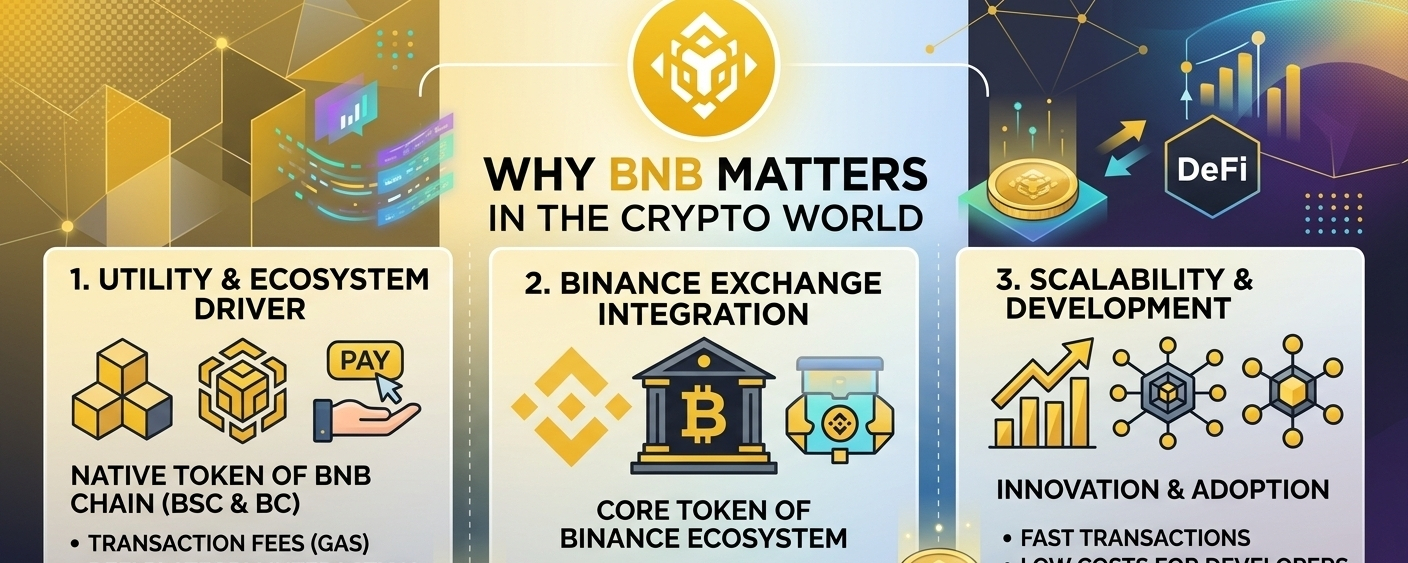

The cryptocurrency industry changes faster than almost any other financial market on earth. New projects appear every week, meme coins explode overnight, and thousands of digital assets fight for attention. Yet despite all the noise, a few cryptocurrencies continue to hold long-term relevance. One of those major players is BNB.
Many people first saw BNB as “just another exchange coin,” but over time it evolved into something much larger. Today, BNB powers one of the biggest ecosystems in crypto, supports decentralized applications, reduces transaction costs, and plays a central role in blockchain innovation. While critics sometimes compare it to temporary hype projects, BNB has survived multiple market crashes and continues expanding its influence.
The Origin of BNB
BNB was launched in 2017 by Binance, which quickly became one of the world’s largest cryptocurrency exchanges. At first, BNB was mainly used to give traders discounted fees on the Binance platform. Many investors assumed its usefulness would stay limited to exchange-related benefits.
However, the crypto market evolved rapidly. Binance recognized that blockchain ecosystems needed more than just speculative tokens. Developers wanted fast networks, lower costs, and scalable infrastructure. This pushed BNB beyond its original purpose.
As Binance expanded, BNB became integrated into multiple services including payments, staking, launchpads, decentralized finance applications, NFT platforms, and blockchain gaming ecosystems.
More Than Just an Exchange Coin
One reason BNB remains relevant is utility. A cryptocurrency without practical use usually struggles to survive during bear markets. BNB avoided that problem by becoming deeply connected to real blockchain activity.
Users can use BNB for:
Paying transaction fees
Participating in token launches
Staking rewards
DeFi lending and borrowing
NFT purchases
Cross-border transfers
Smart contract execution
This level of functionality helped BNB transition from a simple token into a broader ecosystem asset.
Unlike meme-based cryptocurrencies that rely mostly on internet attention, BNB has infrastructure supporting it. Developers continue building applications on the BNB Chain because of its relatively low fees and fast transaction speeds.
The Strength of the BNB Chain
A major factor behind BNB’s growth is the creation of the BNB Chain ecosystem. Blockchain networks compete heavily with one another. Ethereum dominates smart contracts, but high gas fees often frustrate users. BNB Chain positioned itself as a faster and cheaper alternative.
This attracted developers working on:
Decentralized exchanges
Yield farming platforms
Blockchain games
NFT marketplaces
Web3 applications
As more projects joined the network, the demand for BNB naturally increased because users needed it for transactions and ecosystem participation.
The network effect became powerful. More users attracted more developers, and more developers attracted more users.
Market Performance and Investor Confidence
BNB has experienced major volatility like every cryptocurrency, but it has also shown resilience. During several crypto cycles, many popular coins disappeared entirely, while BNB continued maintaining strong market capitalization rankings.
Investor confidence often comes from consistency. BNB benefits from:
A globally recognized exchange ecosystem
Continuous development
Strong liquidity
Real-world utility
Large community support
While no cryptocurrency is guaranteed to succeed forever, projects with strong infrastructure usually survive longer than those built purely on speculation.
BNB Burn Mechanism
Another interesting aspect of BNB is its token burn system. Binance regularly removes a portion of BNB from circulation permanently. This reduces supply over time.
In traditional economics, scarcity can influence value when demand remains strong. Many investors view the burn mechanism as a long-term positive factor because it gradually decreases available supply.
The strategy creates a deflationary element that separates BNB from inflationary digital assets with unlimited issuance.
Challenges and Criticism
Despite its success, BNB also faces criticism. Some crypto enthusiasts argue that the Binance ecosystem is more centralized compared to fully decentralized blockchain networks.
Regulatory pressure is another challenge. Governments worldwide continue increasing scrutiny on crypto exchanges and blockchain projects. Since BNB is strongly associated with Binance, legal or regulatory problems affecting the exchange can also impact the token’s reputation and market performance.
Competition is also intense. Networks like Solana, Cardano, and Avalanche constantly compete for developers and users.
Still, BNB has managed to remain relevant despite these pressures.
The Future of BNB
The future of BNB will likely depend on how successfully the ecosystem continues adapting. Crypto changes rapidly, and only flexible projects survive long term.
Several areas could shape BNB’s future:
Web3 development
Artificial intelligence integration
Blockchain gaming
Decentralized finance expansion
Global crypto adoption
Cross-chain interoperability
If Binance and the BNB Chain continue innovating, BNB could remain one of the leading digital assets for years to come.
However, like every cryptocurrency investment, risks remain high. Market crashes, regulations, security concerns, and competition can always affect performance.
Final Thoughts
BNB is no longer just a utility token tied to an exchange. It has evolved into a major blockchain ecosystem supporting millions of users worldwide. Its success comes from practical utility, ecosystem growth, developer activity, and strong market presence.
In an industry full of short-lived hype, BNB stands out because it built infrastructure rather than relying only on trends. Whether someone is a trader, developer, investor, or blockchain enthusiast, BNB continues to play an important role in the broader cryptocurrency landscape.
The crypto market will keep changing, but projects that combine technology, usability, and community support often have the best chance of surviving long term. BNB has already proven it can do that.#bnb