
I was half-awake scrolling through crypto timelines again when I realized something weird.
The market stopped pretending it cares about “revolutionary technology.”
Now it cares about survival.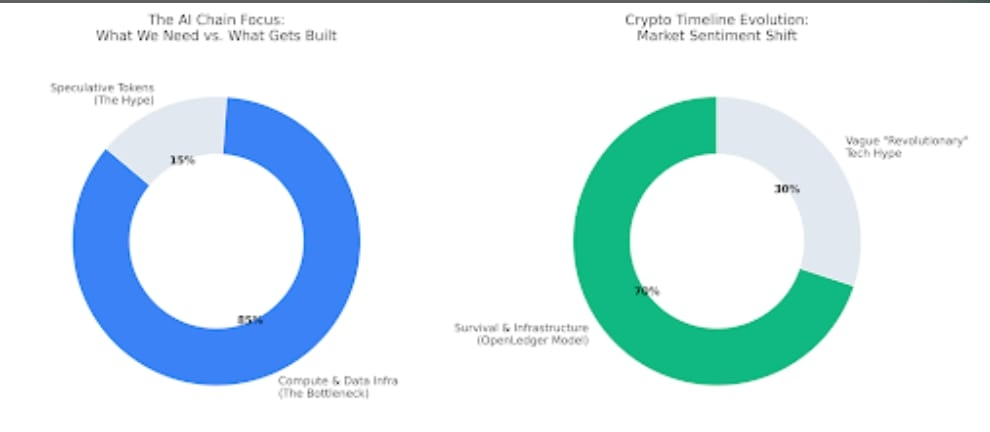
Not in the dramatic “Bitcoin fixes everything” way people used to scream in 2021. I mean literal survival. Chains surviving traffic. Tokens surviving unlocks. Communities surviving boredom. Founders surviving six months without inventing a new AI narrative every Tuesday.
Everything feels exhausted right now.
Every project is suddenly an “AI protocol.” Every Layer 1 claims it’s building infrastructure for agents, data, autonomous economies, decentralized intelligence, infinite scalability, whatever the current vocabulary package is. Half the whitepapers read like they were generated by an AI trained entirely on venture capital tweets and sleep deprivation.
And honestly, most of it collapses the second real users arrive.
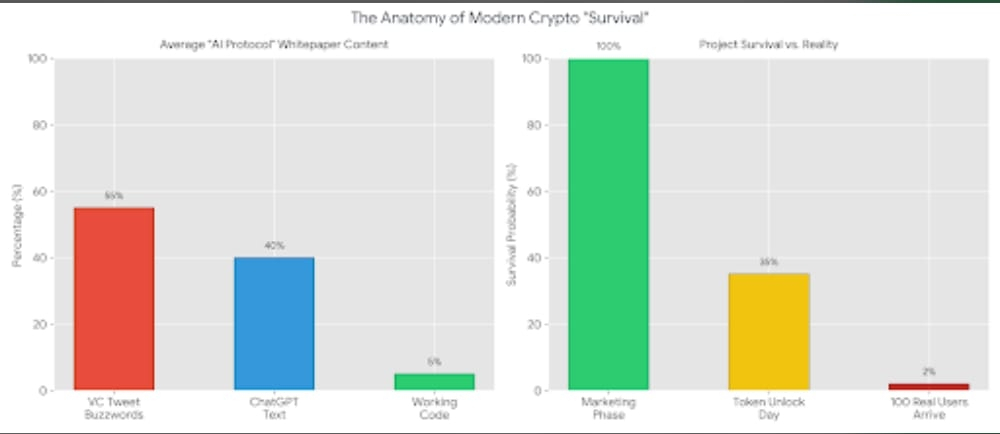
That’s still the funniest thing about crypto to me. Technology rarely dies because it technically fails. It dies because actual humans show up and stress the system in ways no benchmark test predicts.
Users are lazy. Liquidity is emotional. Communities are temporary. Speculators get bored faster than TikTok attention spans.
You can build the cleanest blockchain architecture on Earth and still watch the token bleed 90% because nobody knows why they should keep using it after the farming rewards disappear.
That’s the part most AI-blockchain projects quietly avoid discussing.
Which is why I ended up paying attention to OpenLedger.
Not because I think it’s guaranteed to win. Honestly, I don’t think anything in this sector is guaranteed anymore. But at least OpenLedger seems obsessed with a real problem instead of inventing fake futuristic language to pump a ticker.
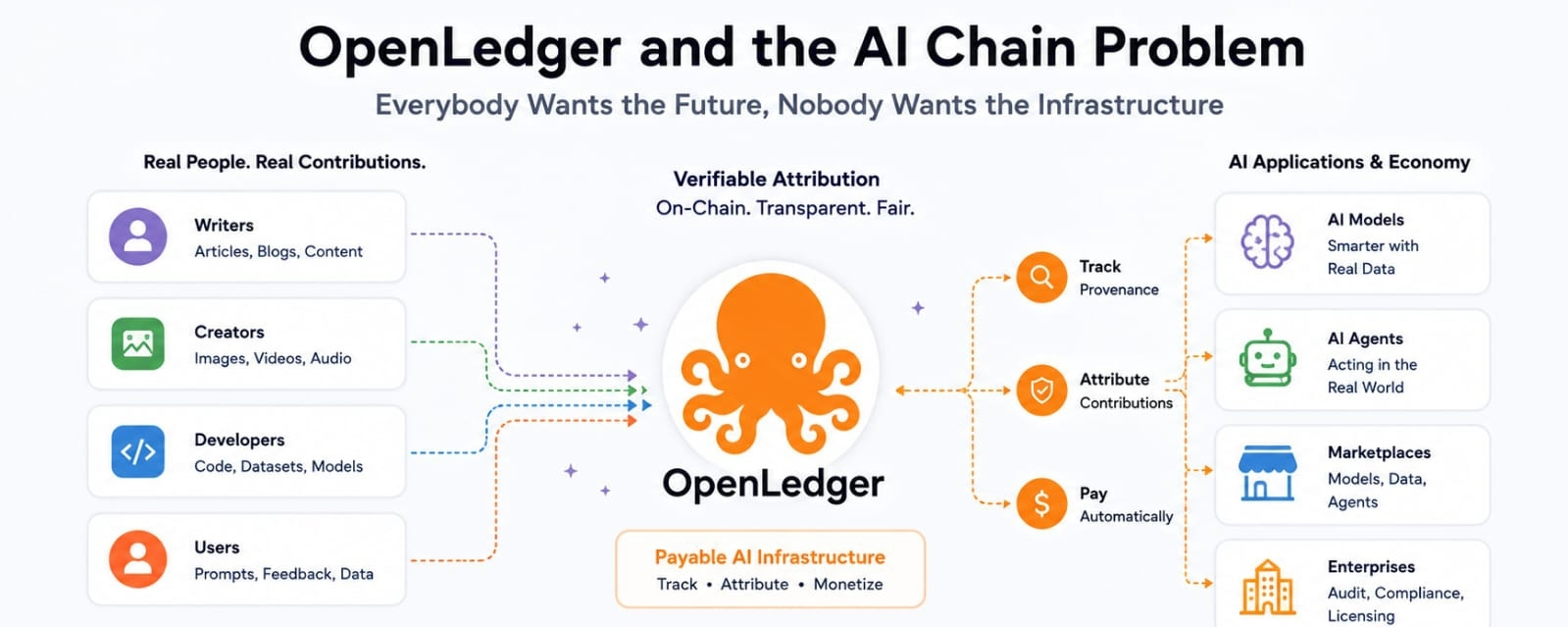
The core idea is pretty simple underneath all the crypto branding: AI systems are eating massive amounts of data, content, models, prompts, and human contributions, but almost nobody who contributes gets compensated properly.
Everything flows upward.
The models get richer. The platforms get richer. The infrastructure providers get richer.
Meanwhile the people whose data trained the machine usually get absolutely nothing except maybe a Terms of Service update nobody read.
OpenLedger is trying to build infrastructure where data, models, and AI agents can actually be tracked, attributed, and monetized on-chain. Their entire “Payable AI” idea basically revolves around proving where AI outputs came from and distributing value accordingly.
And weirdly enough, that problem feels more real than most crypto narratives right now.
Because AI has already entered the stage where nobody fully knows who owns what anymore.
Images get scraped. Articles get scraped. Code gets scraped. Voices get cloned. Models train on oceans of invisible labor.
Then billion-dollar companies appear pretending the machine created itself.
So when OpenLedger talks about attribution layers and automated payments for contributors, I at least understand the direction they’re aiming toward. Whether they can execute it is another story entirely.
That’s the thing with infrastructure projects in crypto.
The idea almost always sounds smarter than the adoption curve.
According to recent updates, OpenLedger already launched its mainnet back in late 2025 and pushed forward partnerships around AI licensing standards and creator compensation systems. They’re also building things like Datanets, OpenLoRA, and marketplaces for AI models and agents.
On paper, it sounds exactly like the kind of stack people think the future needs.
But crypto graveyards are filled with projects that sounded necessary.
That’s why I can’t fully join the cult around these AI chains yet.
Because I’ve watched this cycle too many times.
First comes the vision. Then the token pumps. Then everyone posts futuristic threads. Then liquidity rotates. Then unlock schedules hit. Then “community sentiment” becomes cope therapy.
And eventually everybody asks the same brutal question:
“Are real people actually using this thing?”
OpenLedger’s token situation already reflects that tension. The project exploded after listings last year, had huge speculative momentum, then got crushed like most AI narrative coins once reality and market structure kicked in. The token reportedly fell over 90% from all-time highs before stabilizing somewhat.
Honestly, that doesn’t even shock me anymore.
Crypto has become a machine that front-runs imaginary adoption five years early, then punishes projects for not becoming global infrastructure within six months.
The market behaves like venture capital mixed with casino addiction.
And AI crypto specifically feels even more unstable because nobody fully agrees on where value should live.
Should value accrue to compute? To data? To inference layers? To agents? To marketplaces? To token holders? To GPU providers? To model creators?
Everybody claims they’re building “the AI economy,” but the stack itself still looks unfinished.
Even outside OpenLedger, the entire sector is turning into a giant race for positioning.
You’ve got projects like 0G talking about blockchains for autonomous AI agents. Algorand is leaning into programmable payments and AI commerce infrastructure. Metis keeps talking about “agent economies.” Ontology is pivoting toward verified AI training data and monetization systems.
Everybody sees the same thing coming.
An internet flooded with AI-generated activity.
And honestly? They’re probably right.
The amount of AI interaction happening already is absurd. Recent studies analyzing massive real-world AI usage showed how quickly agentic systems and open models are spreading across actual applications.
The problem is that crypto people automatically assume “future importance” equals “future token value.”
History says otherwise.
Sometimes infrastructure becomes invisible. Sometimes users never care about decentralization. Sometimes enterprises use the tech without touching the token. Sometimes the protocol works perfectly while investors slowly bleed out.
That’s the uncomfortable part nobody likes discussing during bullish narratives.
OpenLedger could technically succeed while OPEN holders still suffer brutal volatility.
Because infrastructure adoption and token performance are not always the same story anymore.
And tokenomics matter. A lot.
OpenLedger still has major supply unlock discussions hanging around it, and traders already seem paranoid about long-term sell pressure. You can feel the market tension between “interesting infrastructure” and “please don’t dump another unlock on us.”
That tension exists across almost every modern crypto project now.
People say they want long-term innovation, but the market trades like a caffeine overdose.
Nobody has patience.
If user growth slows for two months, the timeline acts like the protocol died.
At the same time, though, I can’t completely dismiss what OpenLedger is attempting.
The idea of verifiable AI attribution feels increasingly unavoidable.
Governments are already circling AI regulation. Creators want compensation. Enterprises want audit trails. Nobody wants lawsuits over invisible training data forever.
And if AI agents actually become economically active online, they’ll probably need payment rails, ownership tracking, attribution systems, licensing frameworks, and automated settlement layers.
That part does make sense to me.
Maybe that’s where OpenLedger fits.
Not as some flashy consumer app everyone talks about daily, but as quiet backend infrastructure nobody notices until suddenly everything depends on it.
Crypto rarely rewards those projects early, though.
Usually the loudest narratives get attention first. Then reality arrives later.
What I find interesting is that OpenLedger seems aware of this problem. They keep focusing on monetization mechanics instead of pretending decentralization alone is enough.
Because decentralization without incentives is just philosophy with a token attached.
People only contribute data, compute, or models consistently if the economic loop actually works.
And building that loop is brutally hard.
Especially now.
Liquidity is thinner. Retail attention is fractured. Most users don’t even understand what chain they’re using anymore. AI itself moves faster than crypto infrastructure can adapt.
The entire market feels like builders sprinting across moving sand.
Some of these projects will disappear completely. Some will pivot three times. Some will survive quietly for years before suddenly becoming relevant.
Maybe OpenLedger becomes one of those. Maybe it turns into another “good idea, wrong market timing” story crypto specializes in producing.
I genuinely don’t know.
But I do know this: I’m more interested in projects trying to solve ugly infrastructure problems than another memecoin pretending to be an AI revolution because it added a chatbot to the homepage.
At least OpenLedger is aiming at a fracture that actually exists.
Whether people care enough to use it at scale is the real test.
Because in crypto, technology isn’t usually the final boss.
Humans are.
And humans are inconsistent, emotional, impatient creatures who will ignore world-changing infrastructure if the app feels annoying for six seconds.
That’s still the terrifying part.
OpenLedger might build exactly what the AI economy needs.
Or the future could arrive and nobody bothers showing up.