Look, the AI industry is finally entering the uncomfortable phase nobody wanted to discuss during the hype cycle.
The easy part is over.
Building flashy chatbots was easy. Raising billions from investors scared of missing the next OpenAI was easy. Now the real fight begins: data ownership, infrastructure control, and the growing reality that artificial intelligence is becoming concentrated inside a handful of powerful companies.
That’s where OpenLedger suddenly starts getting attention.
Not because it has solved the problem already. It hasn’t. But because the cracks in the current AI system are becoming impossible to ignore.
For years, AI companies treated the internet like free fuel. Scrape everything. Train on everything. Deal with complaints later. That worked while regulators stayed asleep and most people didn’t understand what was happening behind the scenes.
Now they do.
Writers are suing AI firms. Publishers want compensation. Developers are realizing their code may already be sitting inside commercial models they never approved. Everyone is asking the same question: if AI becomes a trillion-dollar business using everyone else’s data, who actually gets paid?
That’s the core problem OpenLedger claims it can fix.
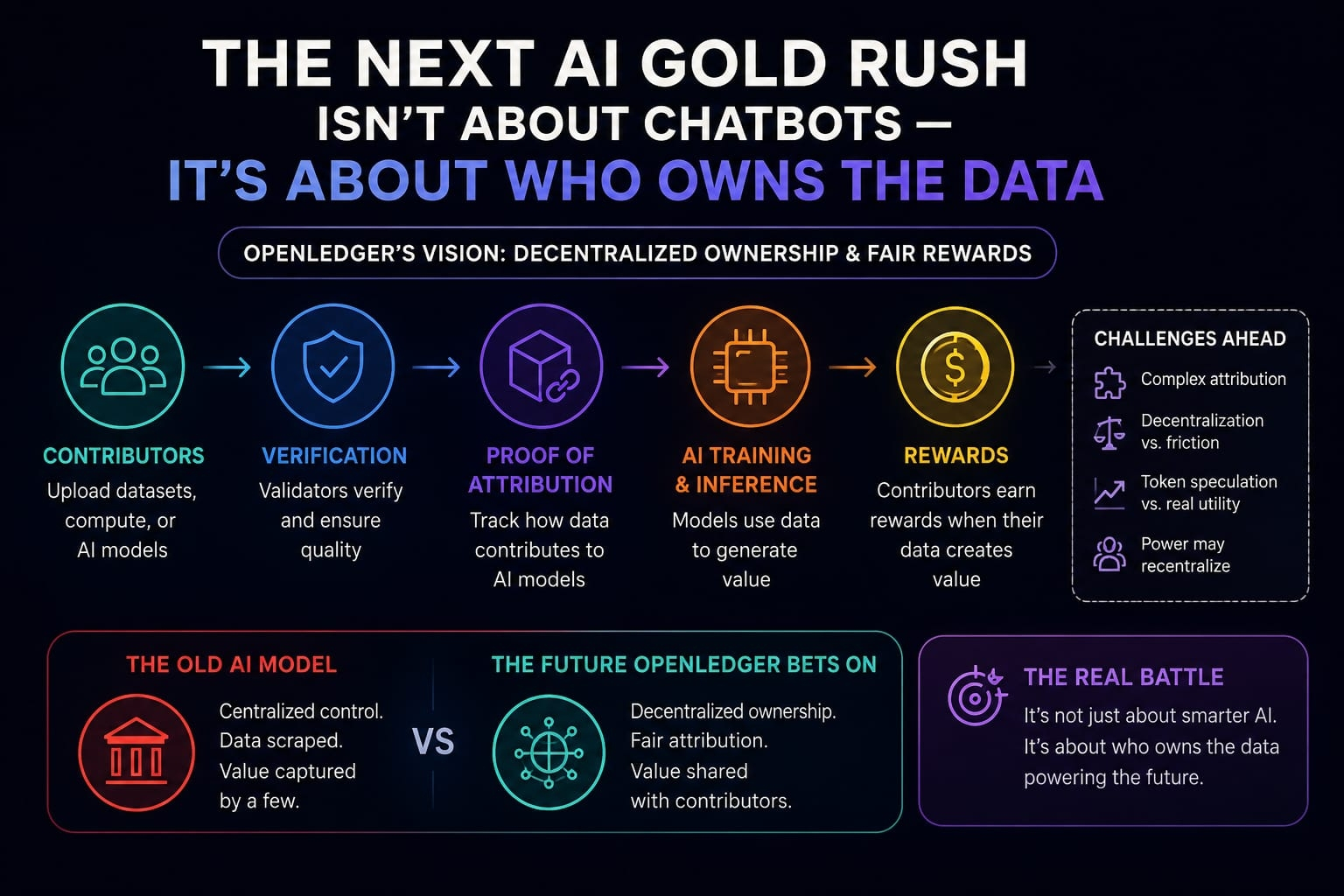
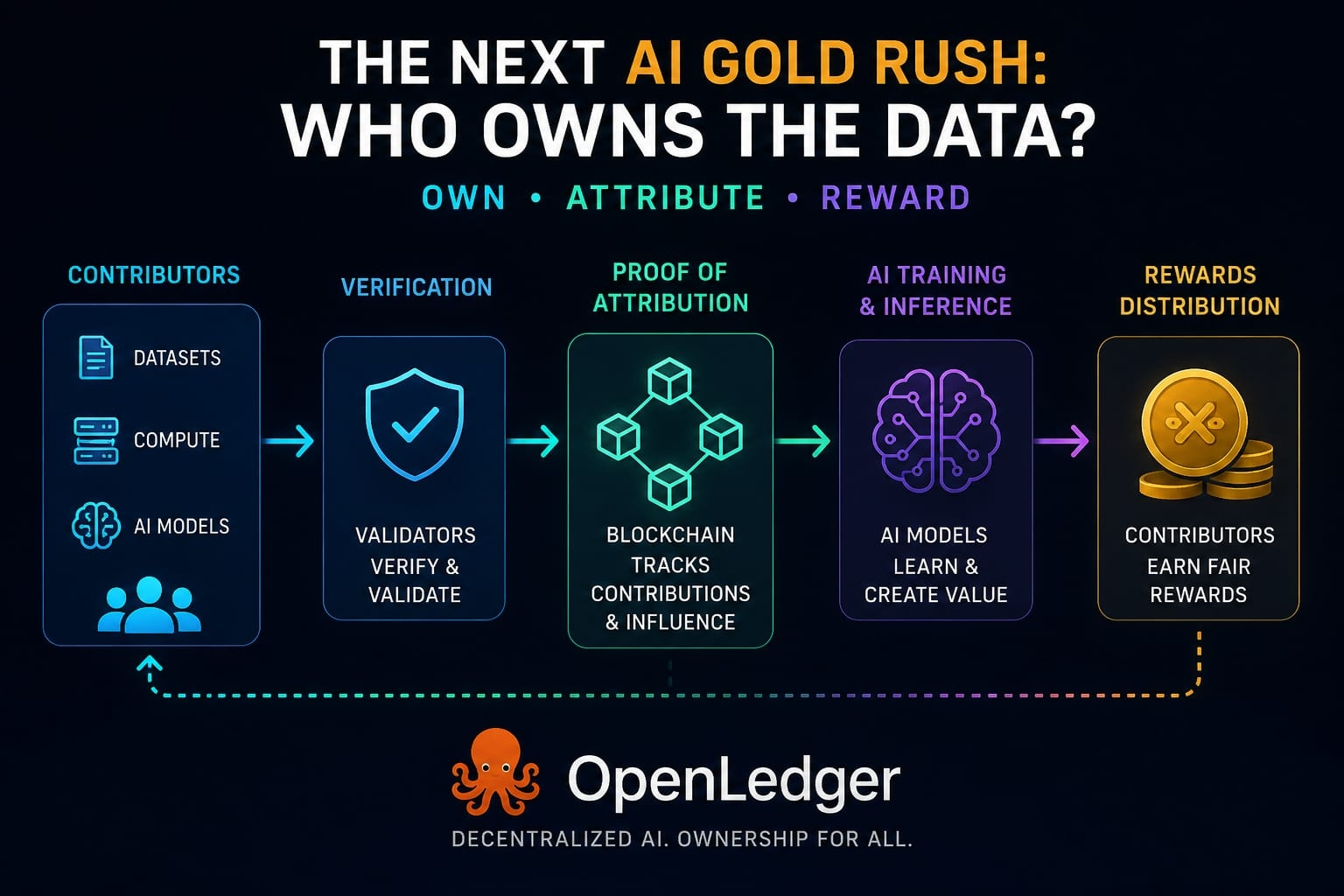
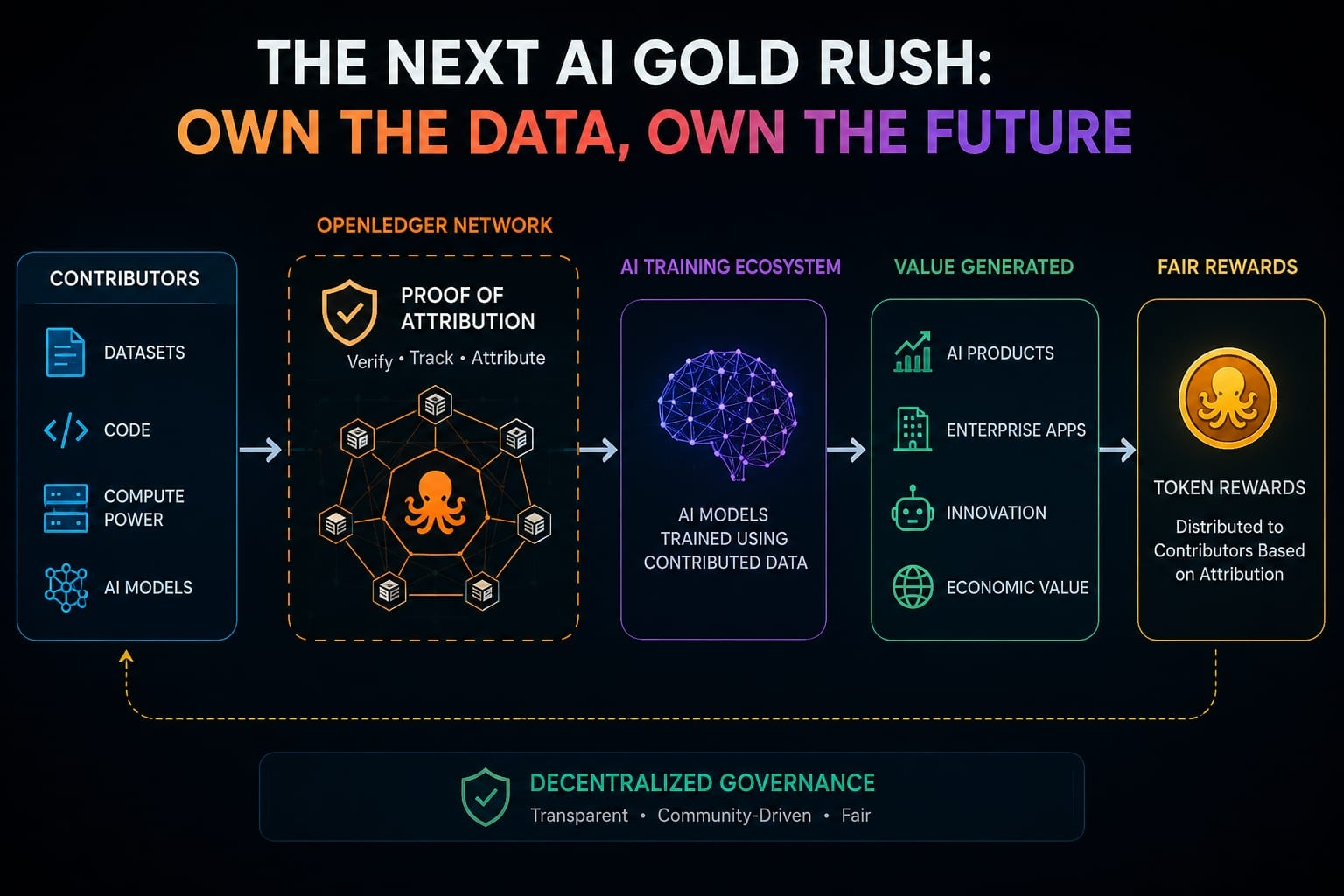
The pitch sounds smart enough. Build a decentralized system where contributors upload datasets, computing power, or AI models. Track those contributions through blockchain verification. Then reward contributors whenever that data helps create value.
Simple idea. Messy reality.
Because AI models are not neat accounting systems. You cannot cleanly trace one AI response back to one exact piece of data. These systems absorb billions of inputs at once. Data overlaps. Influence becomes blurry. Even researchers still argue about how attribution should properly work.
OpenLedger’s answer is something called “Proof of Attribution,” a system designed to track who contributed what and reward them accordingly.
Sounds reasonable.
Until you realize how much machinery is required to make it function.
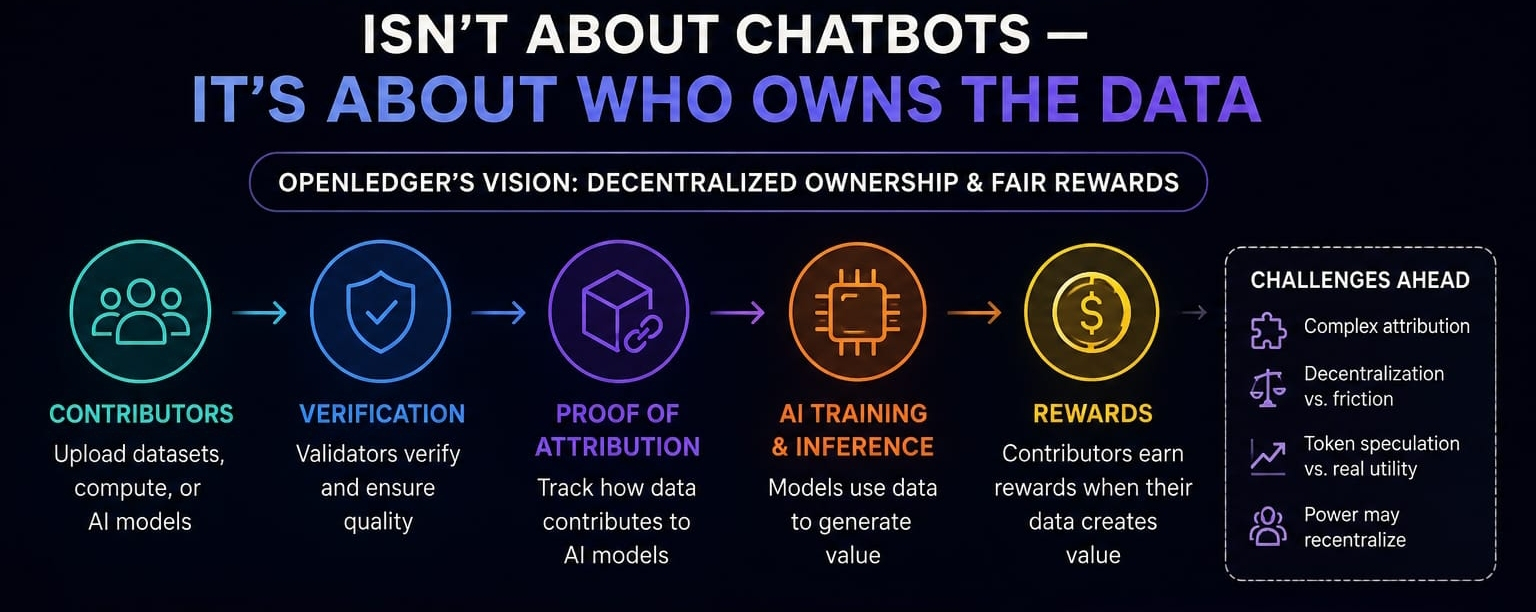
First, contributors upload data. Then validators verify it. Then the network tracks how that information interacts with AI training systems. Then token incentives distribute rewards. Then governance systems settle disputes when people argue about compensation.
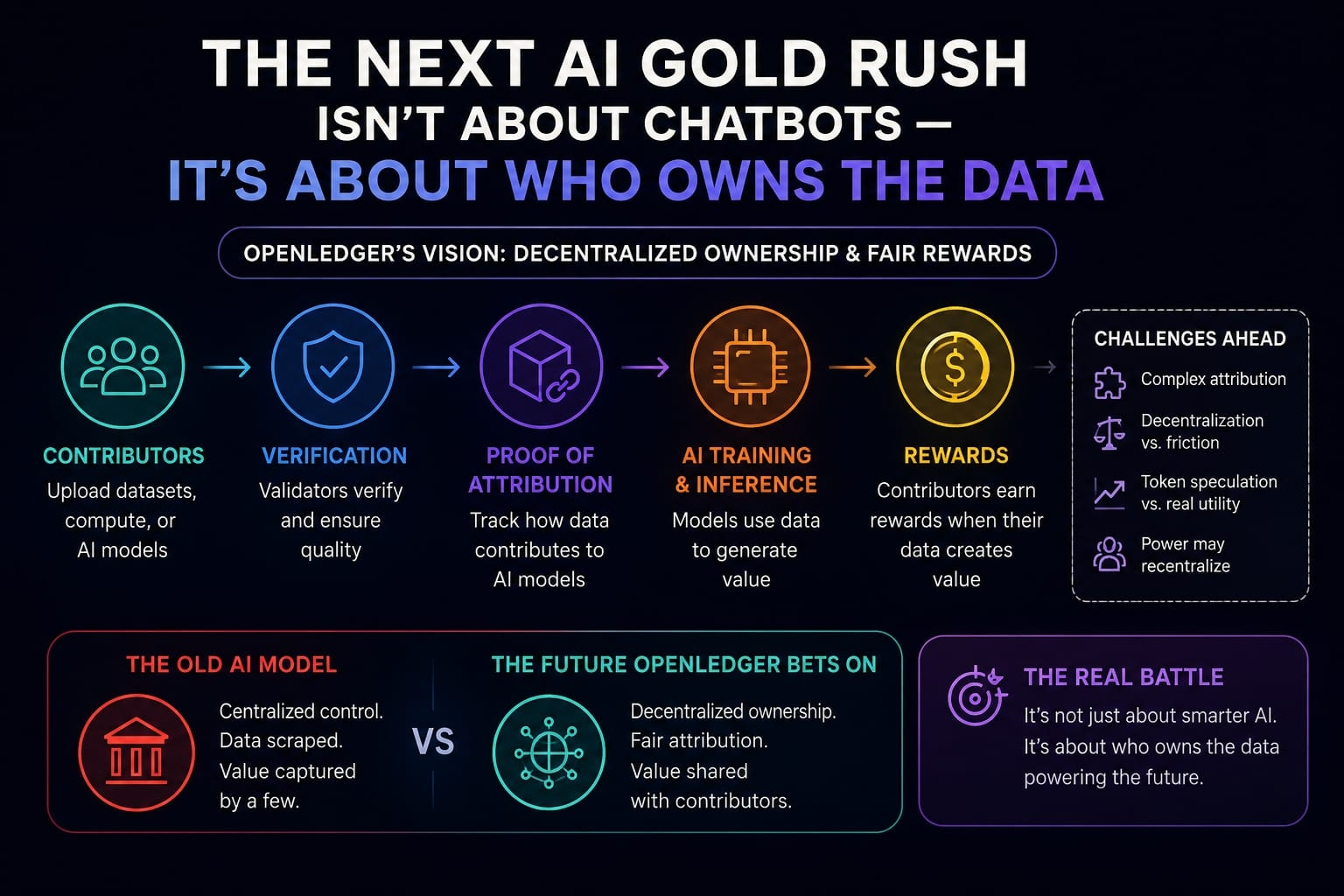
That’s a huge coordination layer sitting on top of an already complicated industry.
And here’s the part crypto projects rarely admit: decentralization often creates more friction instead of less.
Businesses care about reliability, speed, and stability. Most companies choose centralized systems because centralized systems are easier to run. Amazon, Microsoft, and Google dominate cloud infrastructure for exactly that reason.
OpenLedger is trying to compete against companies that already control massive compute infrastructure, AI ecosystems, and enterprise relationships.
That’s a brutal challenge.
Then comes the token economy.
Of course there’s a token attached to all of this.
The token is supposed to reward contributors and keep the ecosystem running. But crypto history shows the same pattern repeatedly: speculation grows faster than actual utility. Traders arrive before real customers. Hype builds faster than infrastructure adoption.
People stop participating because the network is useful. They participate because they expect profits later.
We’ve seen this before.
There’s also the decentralization problem nobody likes discussing openly. Power usually recentralizes anyway. Large token holders gain influence. Early investors secure major allocations. Governance participation fades over time.
The branding stays decentralized. The economics often don’t.
Still, OpenLedger is more interesting than most AI crypto projects because it focuses on ownership and attribution instead of just selling another “decentralized compute” narrative.
That matters.
The next major AI battle may not simply be about building smarter models. It may revolve around who owns the data feeding those systems and who gets compensated when that data creates enormous commercial value.
That’s the future OpenLedger is betting on.
The question is whether decentralized infrastructure can survive long enough to matter before centralized companies build their own version first.