

I did something uncomfortable last month. I fed my own wallet address into three different on-chain analytics tools and asked each one to profile me as if I were a target, not a researcher. The output was unsettling in a way that no whitepaper warning had prepared me for.
The tools knew my short tolerance from my liquidation history. They knew my sector knowledge depth from which protocols I had interacted with early versus late in their adoption curves. They knew my FOMO signature from the timing patterns between when narratives went viral on crypto social and when my transaction timestamps appeared. They knew my liquidity ceiling from my peak USDT balance windows. Individually none of that feels catastrophic. Assembled into a behavioral profile, it is a precise map of exactly how to extract maximum value from me in any future transaction.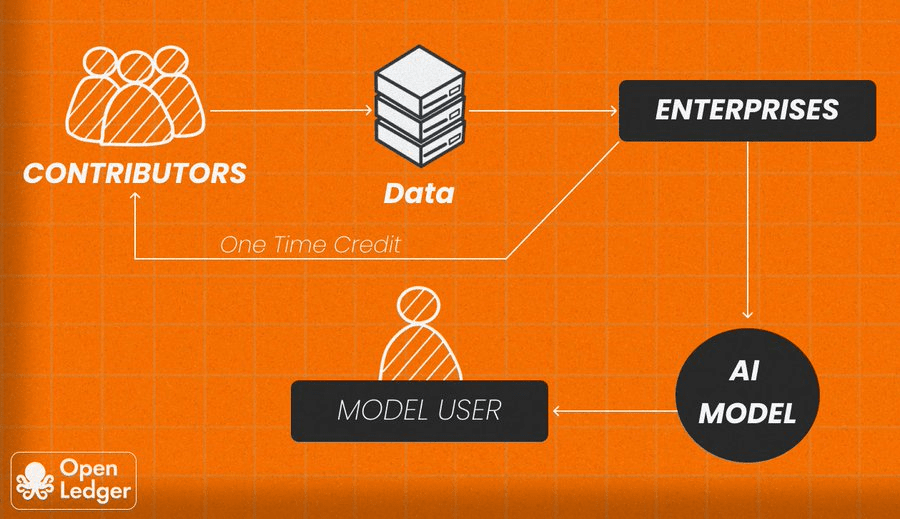
Now imagine that profile is not sitting in an analytics dashboard. Imagine it is the context layer feeding an AI agent that is about to quote you a price.
This is the most underreported risk in the agentic AI space and almost nobody is talking about it with the specificity it deserves. Price down is not a hypothetical future problem. The infrastructure to execute it is already assembled. What has been missing is the agent layer sophisticated enough to deploy it in real time at the moment of transaction. That gap is closing fast.
Here is how the attack surface works in concrete terms. An AI agent operating in a DeFi environment does not need access to your identity. It needs access to your wallet's public history, which is available to anyone. From that history a sufficiently capable model can infer your loss aversion score, your average holding period before panic selling, which asset categories you over-index on emotionally, and how much dry powder you typically deploy when you believe you have spotted an opportunity. Every one of those signals is a lever. An agent quoting you liquidity, offering you a swap rate, or presenting you with a yield opportunity can use those levers to personalize the offer in ways that extract more from you than a neutral market price would.
The scenario is not that the agent lies to you. The scenario is that the agent tells you a price that is technically accurate and simultaneously calibrated to the exact upper bound of what your behavioral profile suggests you will accept without hesitation. That is not fraud in any legal sense currently written. It is optimization against you using your own public data as the objective function.
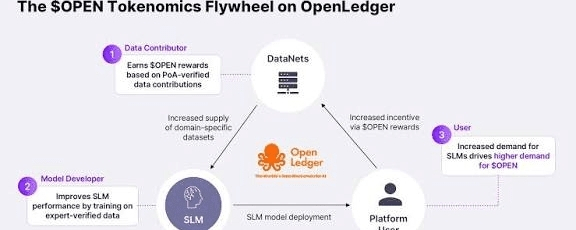
This is where the accountability architecture that OpenLedger is developing becomes a structural counter-argument rather than just a product feature. The on-chain execution logging that underpins the Theoriq integration creates something that personalized price discrimination fundamentally cannot survive at scale: a legible, verifiable record of what the agent knew, when it knew it, and what decision it made with that knowledge.
If every agent action is signed and logged at execution time, behavioral profiling that feeds into discriminatory pricing becomes forensically traceable. You can look at the sequence of inputs the agent processed before quoting you and compare that against what inputs it processed before quoting someone with a different behavioral profile for an identical transaction. The disparity becomes evidence. Without that execution record, the disparity is invisible, plausibly deniable, and impossible to litigate.
The OpenCircle grant program dimension is worth examining alongside this because it illustrates the same dynamic operating at the ecosystem layer rather than the individual transaction layer.
Grant programs that pay developers to build on a specific chain or protocol are not inherently predatory. But they deserve scrutiny that most coverage skips. When a $25 million developer fund distributes capital to builders, those builders do not just build products. They normalize the standards, data formats, and integration patterns of the chain they built on. Their documentation references those standards. Their developer communities internalize them. The next generation of builders learns those patterns first because the tooling, examples, and ecosystem support all point that direction.
This is standard capture dressed as generosity and it is a legitimate strategy, not a conspiracy. Every major technology platform has used it. The question worth asking is not whether OpenCircle's fund has good intentions but whether the standards being normalized are ones the ecosystem should want normalized. Grant-funded lock-in through developer tooling is far stickier than token incentives because it lives in institutional knowledge and codebases rather than in yield calculations that change every week.
The honest read is that both mechanisms, on-chain behavioral profiling of individual users and ecosystem-level standard capture through developer grants, represent the same underlying dynamic. Whoever controls the information layer controls the terms of participation. OpenLedger's attribution and execution logging framework is a direct intervention against that dynamic at the infrastructure level. Making agent behavior auditable and data contribution economically accountable is not just a product feature set. It is a structural argument that the information layer should be legible to participants rather than exclusively legible to the agents and protocols extracting value from them.
Your wallet already tells a detailed story about you. The question is whether the systems reading that story are accountable to you or only to themselves.
