

The part I keep noticing with OpenLedger is not the agent finding the route.
It is the wallet context behind the route.
A builder can vibe code a trading agent, launch it through OctoClaw, set the cloud config, and get the agent to understand a strategy that sounds clean. The agent can read the task. The route can look usable. The bridge and vault path can seem ready.
But the agent still has to answer a very plain question before it touches anything.
Whose wallet context is this run actually using?
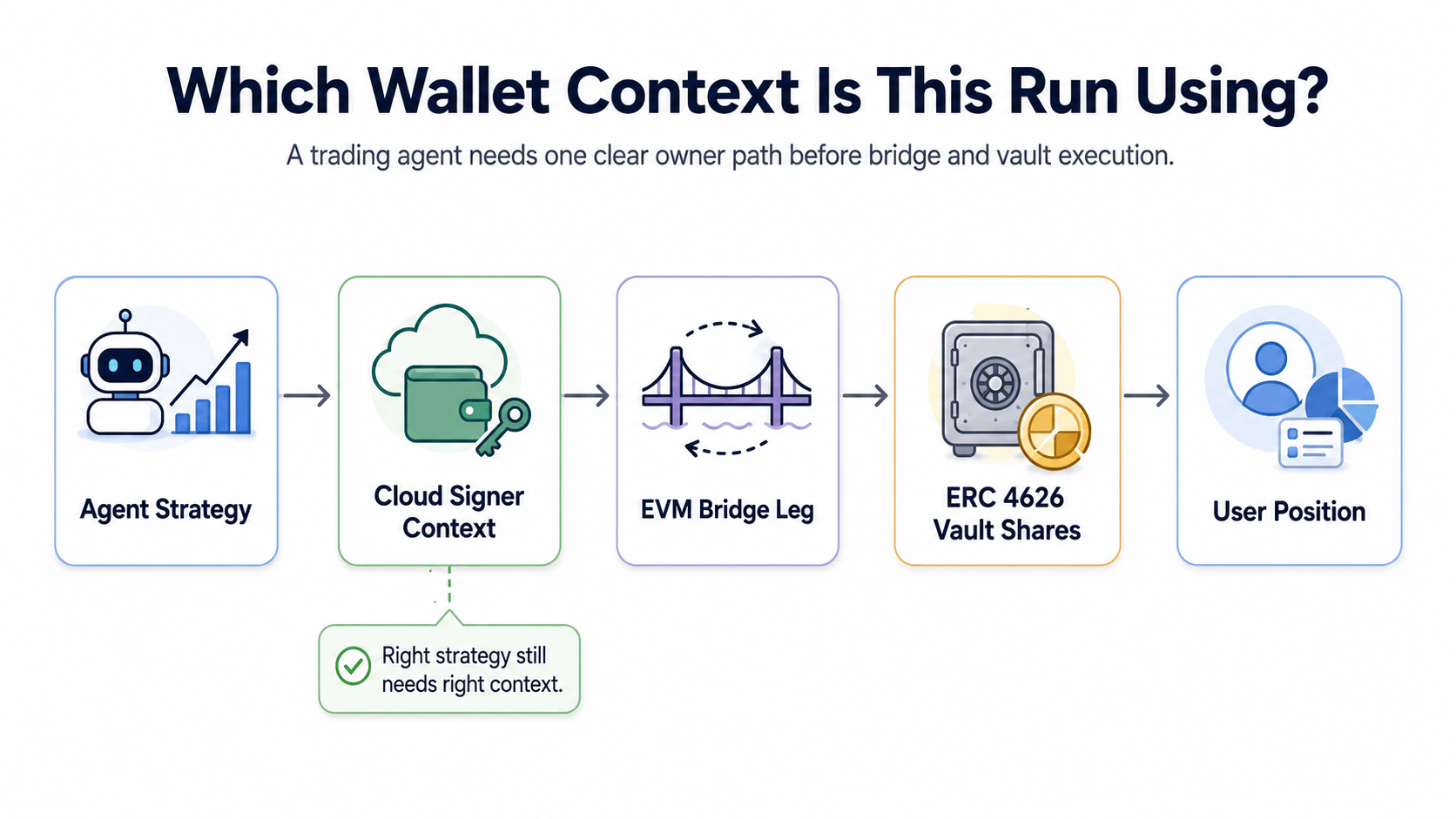
That sounds boring until the route crosses real surfaces. An EVM bridge does not care that the agent had a nice strategy explanation. It moves value from a specific source context toward a specific destination context. An ERC 4626 vault does not care that the builder meant one user position. It issues shares to the address that actually interacted with it.
If the agent’s logic, the cloud config, and the signer context are not lined up, the run can become confusing without looking broken.
That is the OpenLedger bottleneck I would watch. Not whether the agent can trade, but whether the agent can prove the exact wallet context behind the trade before and after the route.
A trading agent may read a balance from one place, prepare a route from another, and rely on a cloud permission boundary that decides what it can sign. If those are not tied cleanly, the builder is left hoping the right context stayed attached across the whole run. Hope is not enough once the route includes a bridge leg and a vault position.
The scary version is not a wild exploit. It is quieter. The bridge moves correctly. The vault action works. The shares exist. But the operator now has to explain why the position appears under the context the user did not expect, or why the agent can enter a vault route but later cannot explain the wallet path that owns the result.
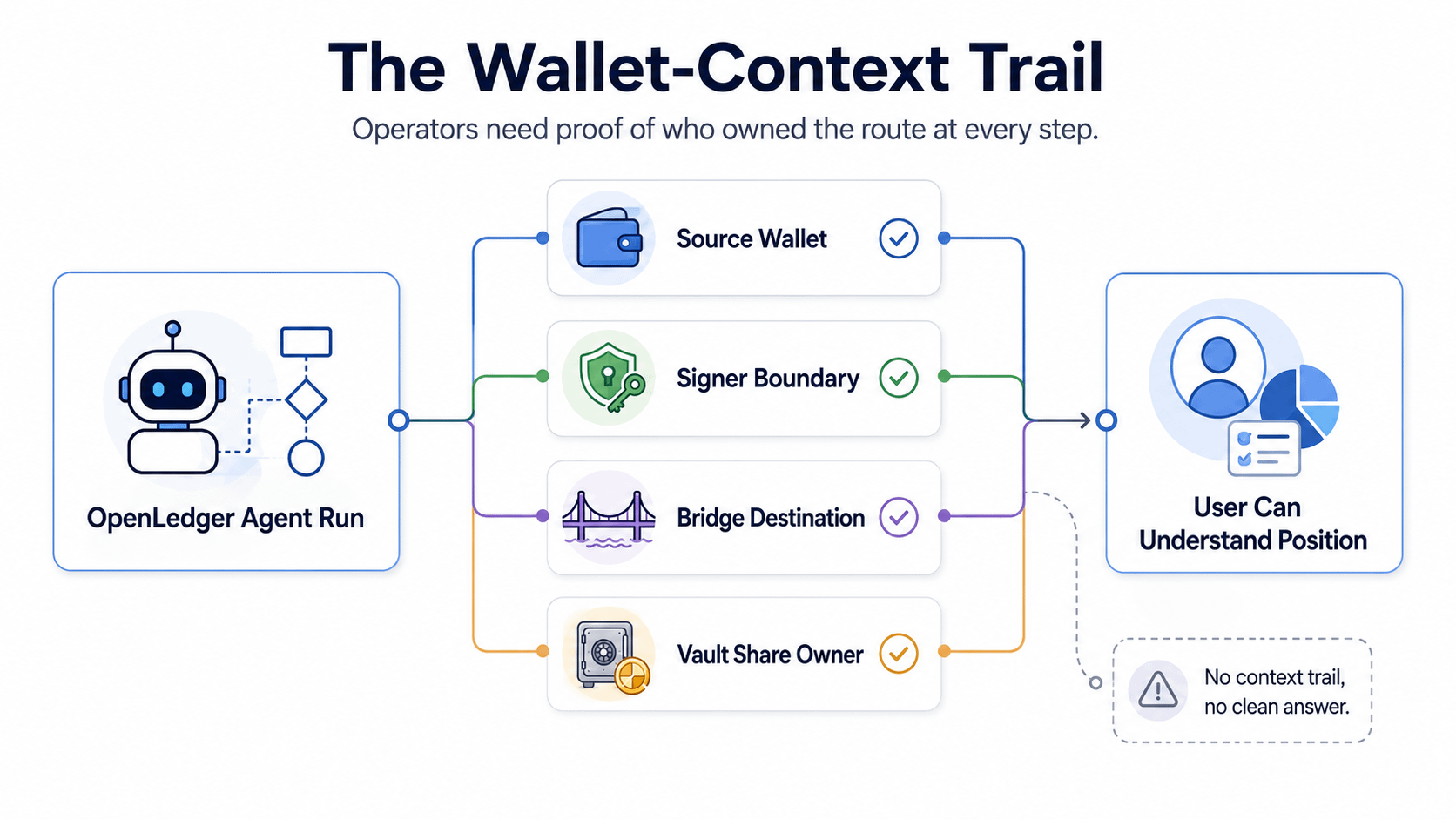
The visible consequence lands on the user first.
They ask a simple question: why is my agent showing this position here?
That question should not force the builder to dig through signer history, bridge direction, vault interaction, and cloud config to reconstruct the owner path. The run should already carry it. Source wallet. Destination context. Signing boundary. Vault share owner. Agent run ID.
If those pieces are separated, the user sees uncertainty exactly where the product should feel most concrete.
This is why I think wallet context is a sharper angle than another agent launch take. Launch proves the agent can start. Wallet context proves the agent knows whose capital it is allowed to move and where the resulting position belongs.
ERC 4626 makes this especially important because the final user view may be shares, not the original asset. Once the asset becomes shares, ownership context becomes part of the explanation. The user should not have to infer whether the agent’s vault position belongs to their intended route or some reused signer setup from a previous run.
The EVM bridge makes the same issue more sensitive. A bridge adds a before and after. The agent needs to preserve the identity of the run across that boundary, not just the amount. If the bridge completes but the agent loses clarity on the destination context, the route can technically work while the user experience starts to feel loose.
This is where $OPEN only belongs if it stays close to real run identity. If OpenLedger activity carries usage, cost, or attribution, then the record should sit beside the wallet context that produced the action. A run should not only say an agent operated. It should show which context paid, which context moved, and which context received the vault position.
That is the pressure line for me.
Once an OpenLedger agent can bridge value and touch an ERC 4626 vault, the strategy is not enough.
The agent has to prove which wallet context carried the money from intent to position.