
Last night I've been watching more companies push AI into real business workflows lately and one thing keeps standing out
everybody wants deployment first faster models faster integration faster automation documentation usually comes later if it comes at all and while everything is growing that barely looks like a problem
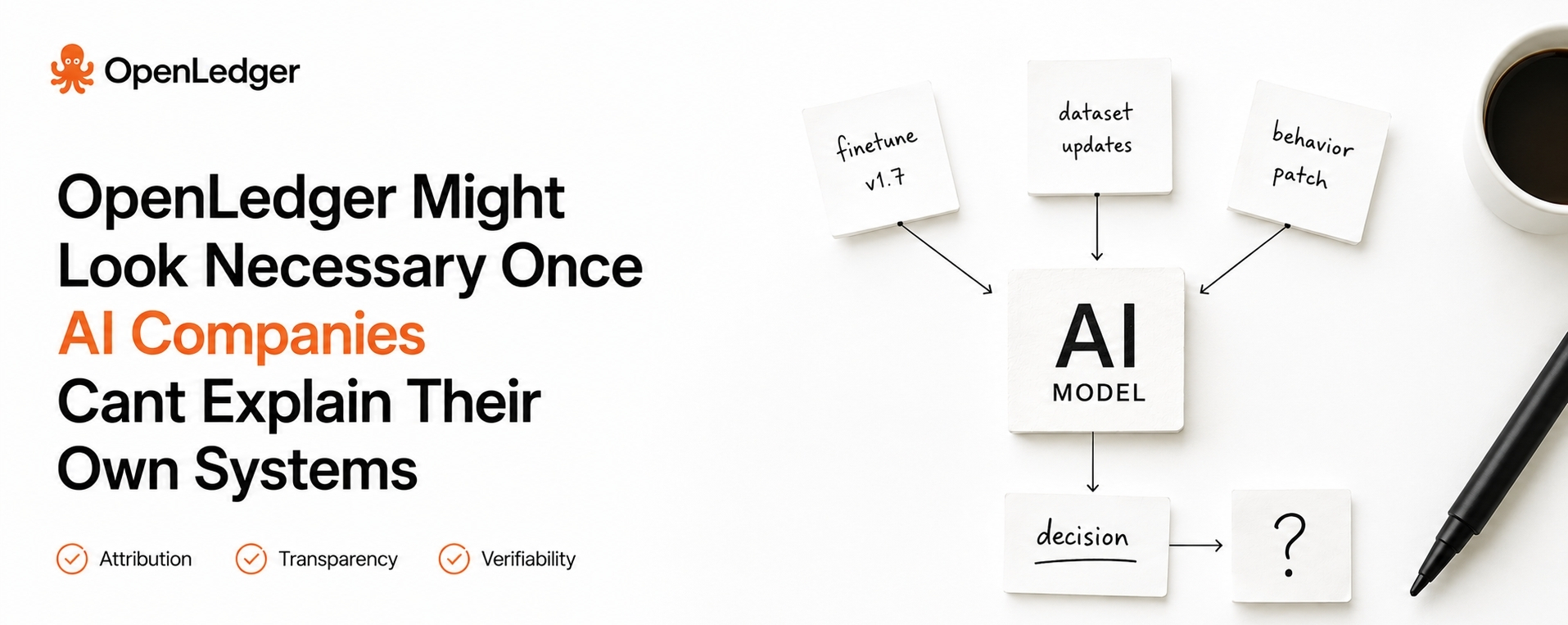
the system works customers stay happy teams keep shipping nobody stops a meeting to ask where a model picked up a certain behavior from but AI is starting to land inside areas where bad decisions dont disappear after a screen refresh anymore
loan approvls insurance claims compliance reports medical summries internal risk scoring staff companies may need to explain years later in front of regulators clients auditors or courts
thats where things start getting messybecause most models dont stay clean for long
dataasets change people fine tune behavior outside information gets added teams leave vendors switch new layers keep stacking onto old ones
after enough time the system still gives answers confidently while nobody inside the company can fully reconstruct why certain outputs happen the way they do
and large organizations already struggle tracing human decisions across departments now
AI just speeds the confusion up thats why @OpenLedger kept sitting in my head longer than most AI infrastructure projects i looked at
not because (AI transparency) sounds exciting because eventually some company is going to get hit with a very simple question after something expensive goes wrong
(show us exactly how this lsystem learned to make this decision)
and i dont think “we cant fully trace it anymore” is going to sound acceptable for very long
thats usually how infrastructure shifts happen not when the technology appears
when operating without records starts becoming dangerous and once enough companies realize they cant properly untangle their own AI systems anymore
attribution probably stops looking optional very fast??!