

The current intersection of Web3 and Artificial Intelligence is flooded with grand promises, yet many projects fall short under the surface. They offer basic wrappers around centralized chatbots or pitch vague roadmaps without addressing the core structural problem: standard blockchains aren't natively designed to manage complex AI lifecycles, data provenance, and automated machine-to-machine economies.
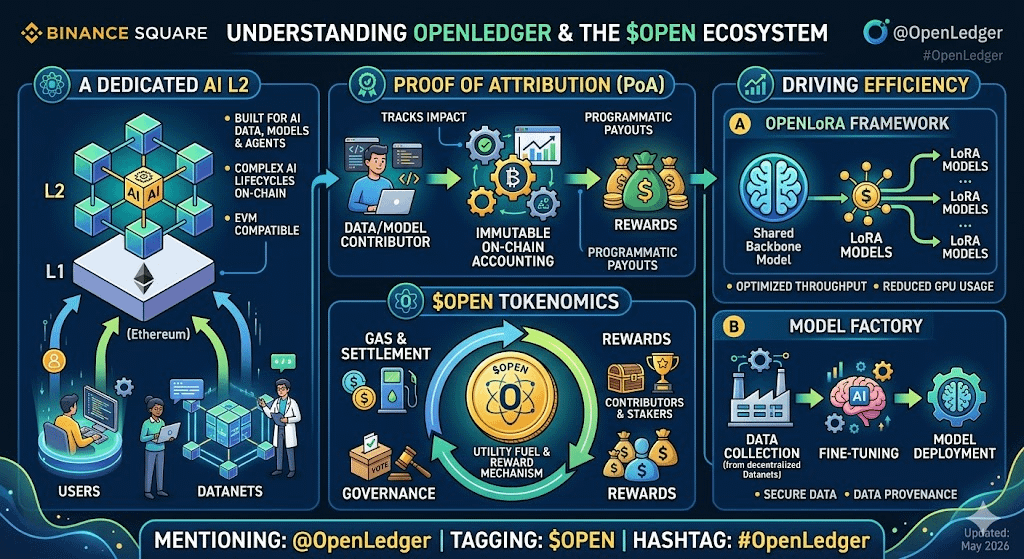
This is exactly why OpenLedger stands out from the noise. Instead of trying to force AI into a general-purpose financial ledger, they are building a dedicated Ethereum L2 execution layer designed specifically for AI data, models, and autonomous agents.
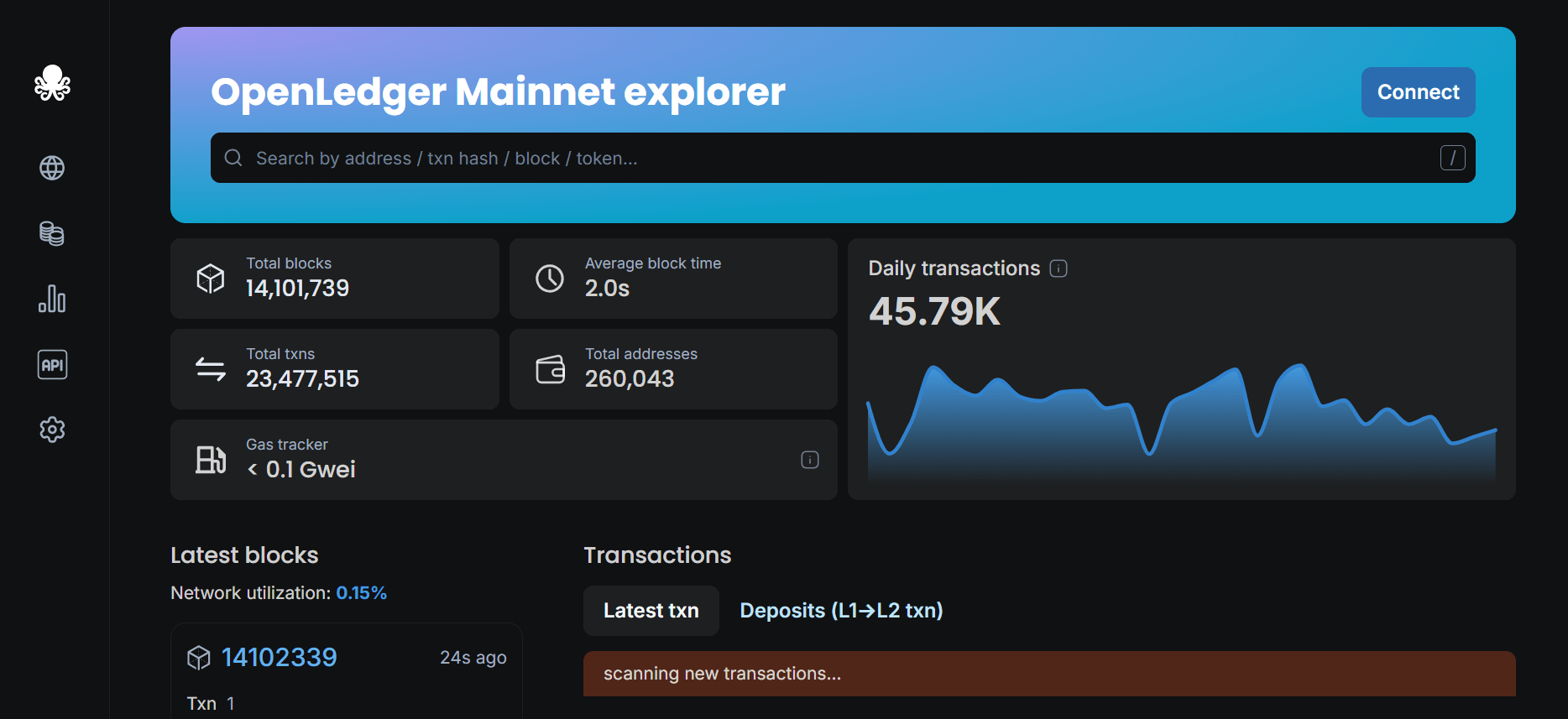
Solving the Black Box: Proof of Attribution
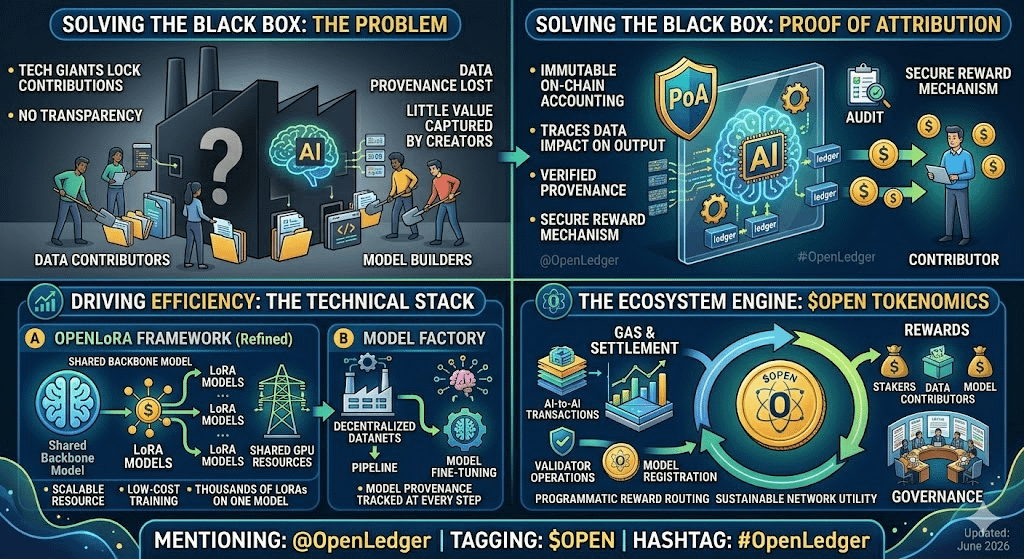
In traditional AI ecosystems, data contributors and developers act as the backbone of machine learning models but rarely capture the value they generate. Tech giants lock these contributions away inside "black boxes."
OpenLedger shifts this dynamic using Proof of Attribution (PoA). This cryptographic system acts as an immutable on-chain accounting mechanism. It tracks exactly how specific datasets or adjustments influence an AI model's final output during inference. When data is verified as having an impact, rewards are programmatically routed directly back to the creators using the native OPEN token.
Driving Efficiency: The Technical Stack
Building a scalable ecosystem requires eliminating structural friction for developers. The architecture handles this with two core components:
OpenLoRA Framework: Rather than deploying entirely separate, costly hardware instances for every fine-tuned model, OpenLedger allows thousands of low-rank adaptation (LoRA) models to share a single, pre-trained backbone model simultaneously. This significantly optimizes GPU throughput and slashes hosting overhead.
Model Factory: An intuitive graphical interface that bridges the gap for developers, streamlining secure data collection from decentralized "Datanets" to fine-tune specialized models with clear data provenance.
The Ecosystem Engine: $OPEN Tokenomics
The network economy relies on a concrete utility model rather than speculative decoration. The OPEN token serves as the essential infrastructure fuel:
Gas & Settlement: Powering transactions, inference calls, model registration, and validator operations.
Reward Distribution: Functioning as the settlement layer to distribute fees transparently to stakers, data contributors, and model builders.
Decentralized Governance: Giving community holders direct voting power over key protocol parameters and upgrades.
As the industry shifts away from generic LLMs toward specialized, verifiable domain intelligence, having a transparent, machine-native payment layer becomes a necessity. With its EVM-compatible design and native attribution engine, OpenLedger provides a highly scalable foundation for autonomous agents to interact and transact seamlessly on-chain.
