
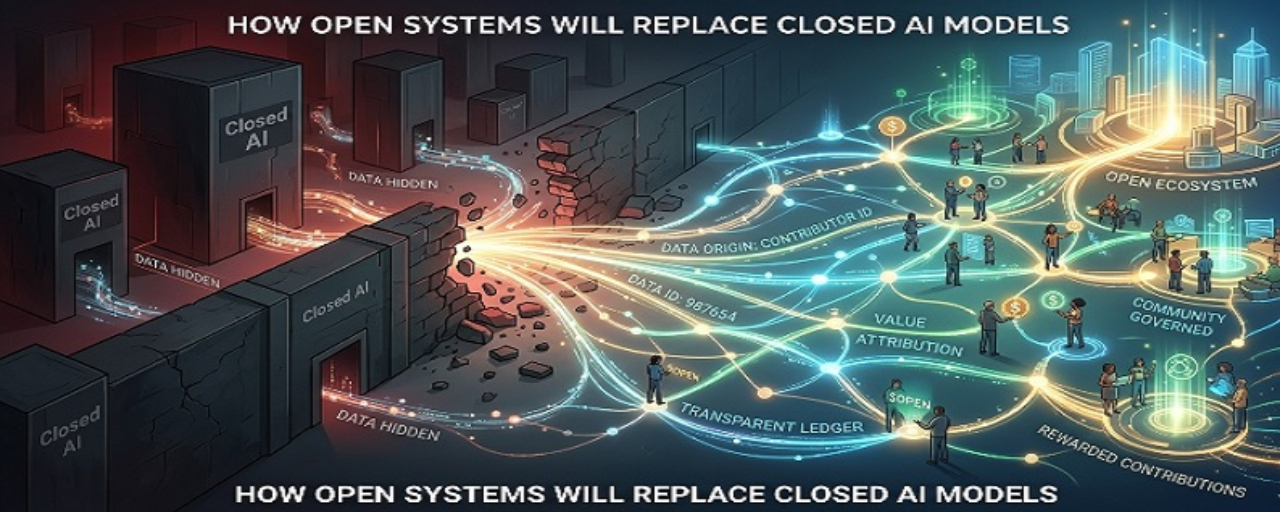

I've been thinking about this a lot lately.
Every time a new AI model gets released, people get excited for a few days. Then the same question comes back.
Who owns the data behind it?
It's interesting because AI keeps becoming a bigger part of everyday life, yet most people have almost no visibility into how these systems are trained, improved, or rewarded. We use them, contribute to them indirectly, and help generate value around them, but the process itself often stays hidden.
Maybe that's why open systems have been catching my attention recently.
Not because they're perfect.
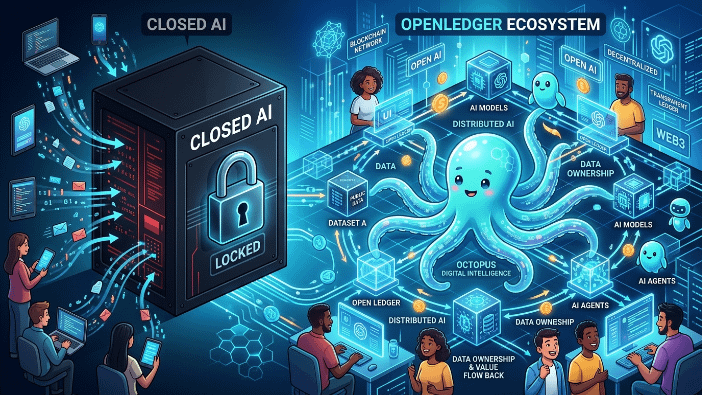
Just because they feel closer to how the internet evolved in the first place.
I was reading about @OpenLedger and one idea stayed in my mind longer than expected. Instead of treating data as something that disappears into a closed environment, the network focuses on making contributions visible and traceable.
That sounds simple, but it changes the conversation.
When data has an identity, people start thinking differently about ownership. When ownership exists, incentives start making more sense.
For years, the AI industry mostly moved in one direction. Bigger models, bigger datasets, larger companies controlling the process.
But lately it feels like another path is appearing.
A path where contributors, builders, and communities can participate in the value they help create.
That's one reason the idea behind $OPEN feels relevant right now.
Not because it's chasing a trend.
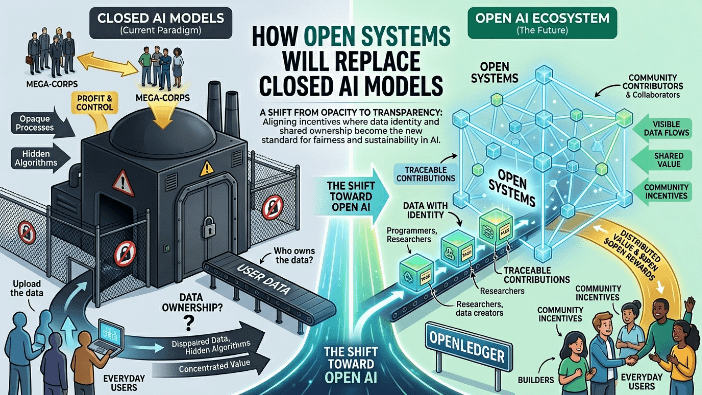
Because the discussion around AI is slowly shifting from capability alone toward transparency and accountability.
I noticed that many people are no longer asking only whether an AI system works.
They're asking where the information came from.
They're asking who benefits.
They're asking whether contributors are recognized.
Those questions seem increasingly important.
The more I watch the AI space, the more I feel that open systems may eventually become the default expectation rather than the alternative option.
Not everyone will care about the technical details.
Most people probably won't.
But people do care about fairness.
They care about knowing that value isn't flowing in only one direction.
Projects connected to #OpenLedger are exploring that idea from an interesting angle. The focus isn't only on AI performance but also on the ecosystem around the data that makes AI possible.
For some reason, that feels more sustainable.
The conversation around #openledger often reminds me that data is becoming a real economic asset. Not just something collected and forgotten, but something that can remain connected to the people who created it.
And maybe that's where open networks gain an advantage.
Not because they're louder.
Because they align incentives in a way that closed systems struggle to replicate.
I could be wrong, of course.
The future rarely unfolds exactly as expected.
Still, when I look at AI today, it feels like the move toward openness is less of a prediction and more of a gradual shift that's already happening.
That thought keeps bringing me back to #open and the broader role that $OPEN may play as these systems continue to evolve.
We'll see where it leads, but it's an interesting change to watch.
