
The proposed BRICS currency, or "Unit," faces significant challenges before a global launch, primarily due to vast economic disparities among members, geopolitical tensions, and a lack of unified political will and institutional framework. The initiative is currently a digital settlement tool prototype and not a full sovereign currency.
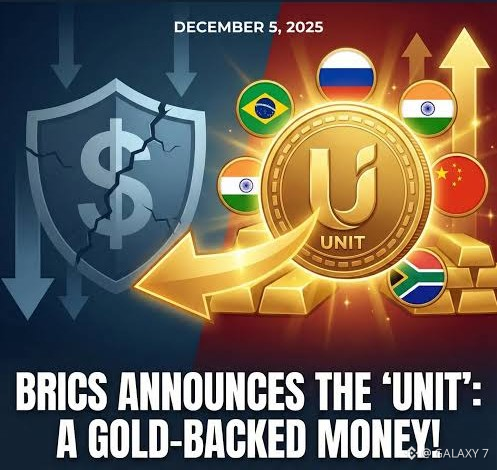
Key Insights
Economic Divergence: BRICS nations have vastly different economic structures, inflation rates, growth trajectories, and debt levels, making a single, unified monetary policy difficult to implement successfully.
Political Will: Achieving consensus among diverse political systems (democracies like India and autocracies like China and Russia) with often conflicting national interests and foreign policy goals is a major hurdle. India, for example, has explicitly stated it has no policy to replace the dollar.
Institutional Weakness: Unlike the Eurozone, BRICS lacks the strong institutional framework, central bank, and fiscal integration required to manage a common currency, which would take years of preparation to establish.
Geopolitical Risks: Some members are cautious about completely alienating the US and EU by joining an explicitly anti-dollar bloc, which could expose them to tariffs or other economic countermeasures, as threatened by President Trump.
Lack of Trust/Credibility: The US dollar's dominance is built on decades of stability and deep, liquid financial markets. A new BRICS currency would need to build similar trust and credibility to gain widespread international acceptance, a long-term process.
Technical/Logistical Hurdles: Developing the necessary technological infrastructure (like the existing BRICS Pay and mBridge platforms), ensuring security, and harmonizing financial systems across member nations is a complex and costly undertaking.
The current approach focuses more on promoting trade settlements in local currencies and developing alternative payment systems like the BRICS Unit prototype and BRICS Pay rather than an immediate, full-fledged common currency.