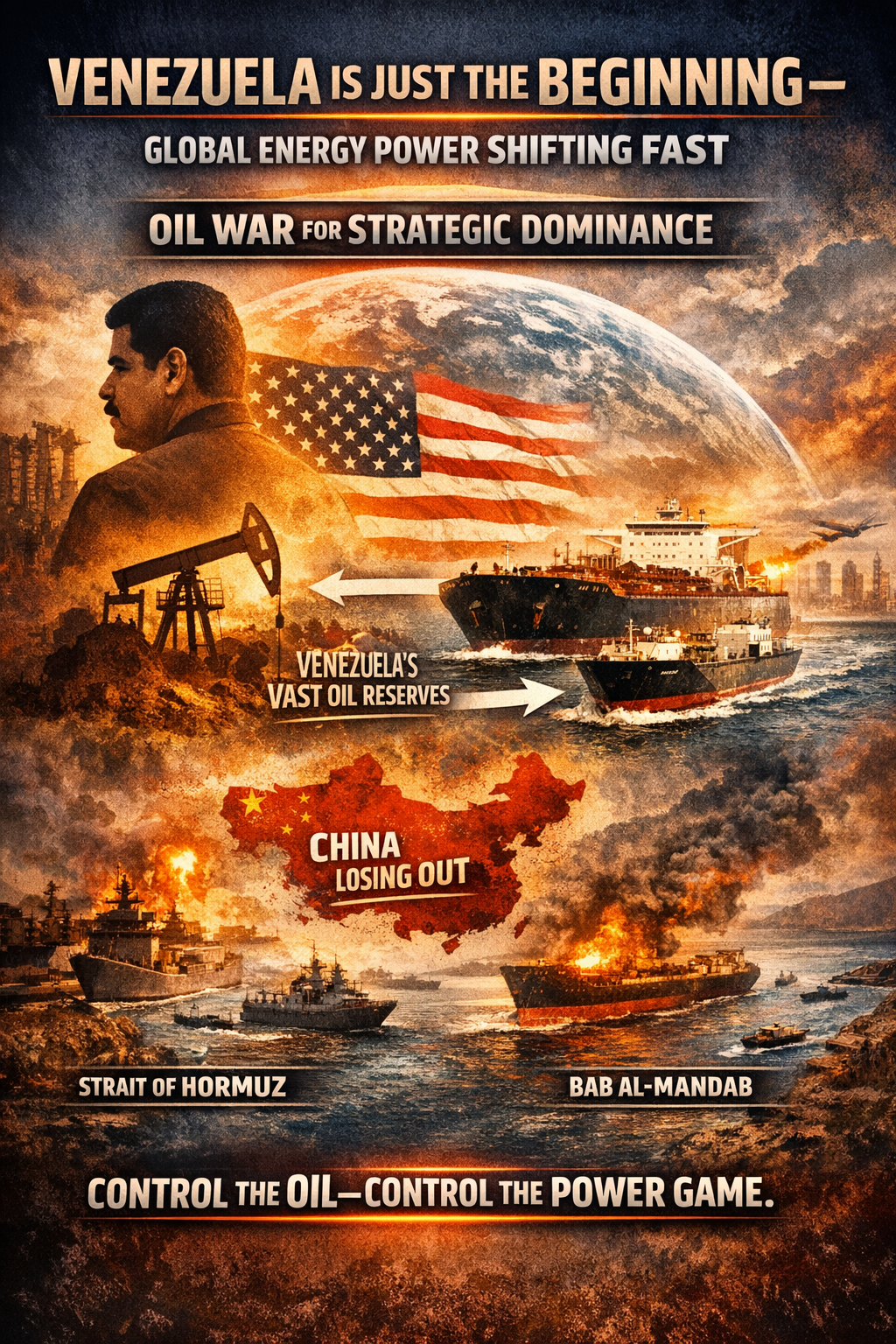
То, что происходит в Венесуэле прямо сейчас, гораздо важнее, чем Мадуро или внутренняя политика. Речь идет о том, кто будет контролировать потоки энергии и глобальное влияние в ближайшие годы. Действия США в Венесуэле не случайны — они явно направлены на перенаправление цепочек поставок нефти и перестройку доступа к одному из самых ценных ресурсов мира.
На протяжении многих лет Китай был крупнейшим покупателем венесуэльской нефти, получая выгодные скидки на тяжелую нефть, идеально подходящую для его нефтеперерабатывающих заводов. Но теперь, при серьезных обсуждениях направления значительной части этой нефти в США, Китай рискует потерять важное преимущество. Если этот канал скидок исчезнет, Вашингтон получит огромное влияние на мировом рынке нефти.
В то же время глобальная торговля энергией по-прежнему зависит от уязвимых точек, таких как проливы Хормуз и Баб-эль-Мандеб. Эти маршруты ежедневно перевозят огромные объемы нефти, и любое нарушение немедленно наносит ущерб крупным импортерам — особенно Китаю, Японии и Европе. Контроль над этими маршрутами — это не только военная сила, но и экономическое превосходство.
Именно поэтому Венесуэла так важна. В стране находятся крупнейшие доказанные запасы нефти в мире. Тот, кто сможет повлиять на направление поставок этой нефти, сможет изменить рынки, союзы и глобальный баланс сил. Если США удастся направить поставки венесуэльской нефти, сохранив при этом контроль над критически важной инфраструктурой и морскими путями, это укрепит их стратегическое преимущество перед Китаем и другими растущими державами.
По моему мнению, Венесуэла может стать первым шагом в гораздо более масштабной игре в области энергетики и экономики — игре, которая определит следующую фазу глобального превосходства.
Итак, главный вопрос:
👉 Подготовимся ли мы к бычьему тренду в энергетических активах? 🚀
Следите за этими популярными акциями: $RIVER | $BROCCOLI714 | $JASMY
#Venezuela a #Oil #GlobalEnergy #CPIWatch