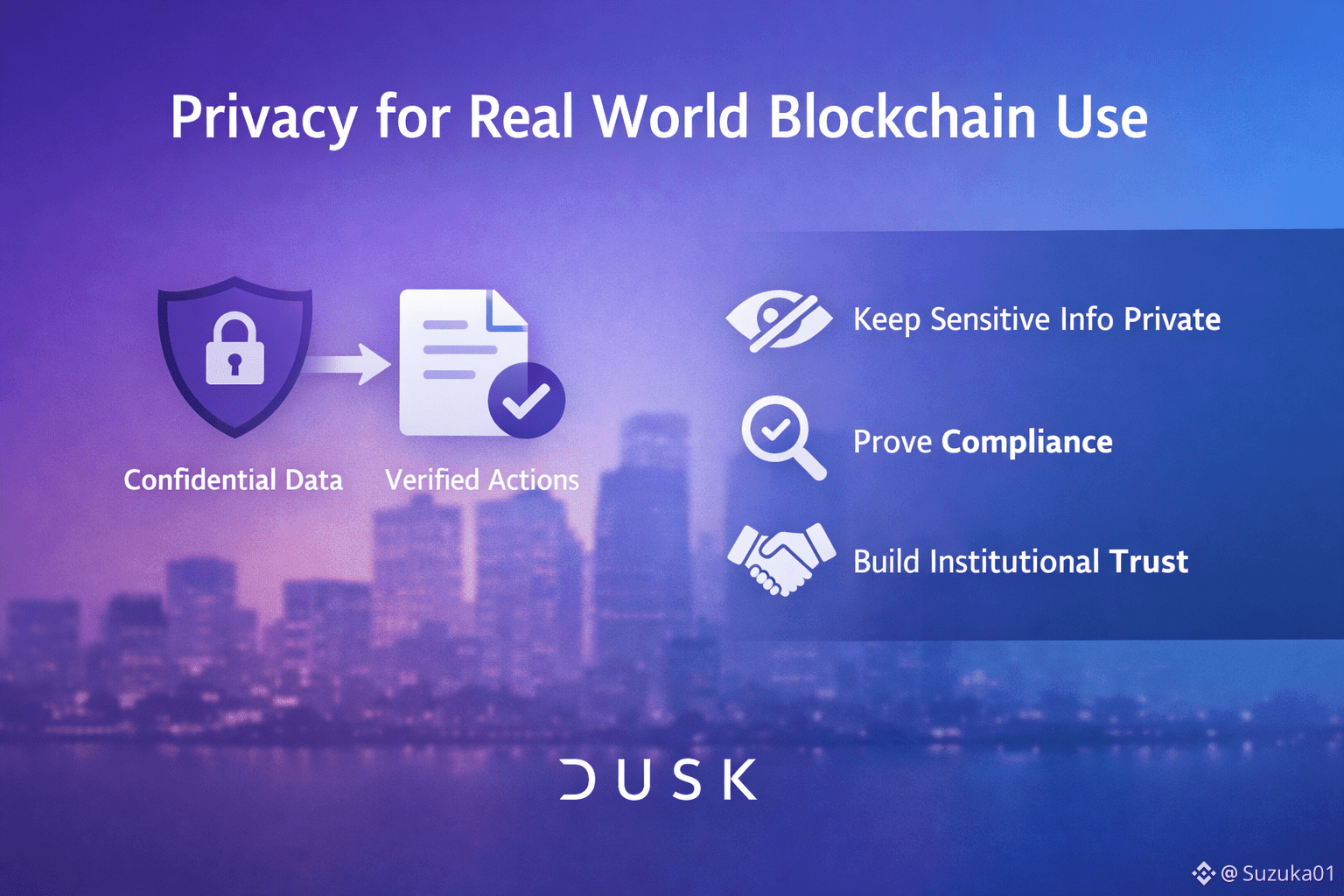
When people first learn about blockchains, transparency is often presented as a benefit. Everything is visible, everything can be verified. In theory, that sounds ideal. But once you think about how real businesses or institutions operate, full transparency starts to feel less practical.
Not every process is meant to be public.
DUSK approaches this problem from a realistic angle. Instead of assuming that all data should be exposed, it recognizes that some information needs to stay private while actions still need to be verifiable. This is a common requirement in the real world, especially in regulated or sensitive environments.
What makes @Dusk different is that privacy is not added later as a workaround. It is part of how the protocol itself is designed. This means teams don’t have to rely on complex external tools or custom solutions just to protect sensitive information.
For organizations testing blockchain systems, uncertainty around data exposure often slows everything down. Decisions take longer, approvals get delayed, and pilots never move forward. $DUSK helps reduce this friction by allowing systems to prove correctness without revealing everything behind the scenes.
Choosing DUSK is less about hiding data and more about using transparency responsibly. It reflects an understanding that adoption depends not only on what technology can do, but on whether people feel comfortable using it in real operational settings.
This balance between privacy and verification is why DUSK matters, particularly for use cases where trust, compliance, and confidentiality all need to work together.