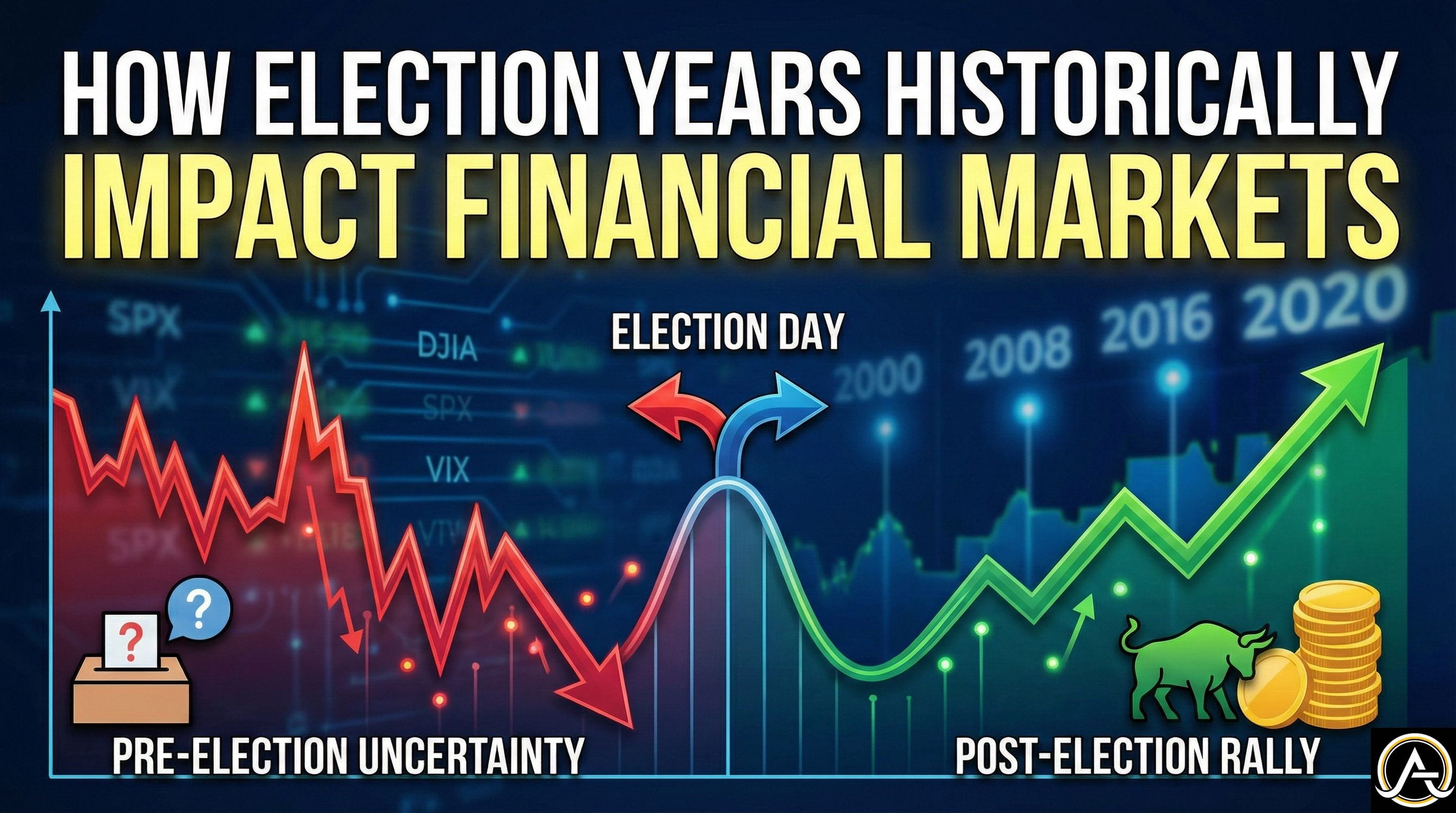
Годы выборов всегда приносят особую энергию на финансовые рынки. В воздухе витает неопределенность, кампании в полном разгаре, а инвесторы пытаются предсказать, что будет дальше. Но вот интересная часть: реальное влияние выборов на рынки часто довольно сильно отличается от того, что ожидают люди.
Предвыборное волнение
В месяцы, предшествующие крупным выборам, рынки, как правило, становятся немного нервными. Инвесторы не любят неопределенность, а выборы – это по сути неопределенность, завернутая в красные, белые и синие гирлянды. Вы часто увидите повышенную волатильность, когда опросы меняются, и происходят дебаты. Однако это волнение обычно временно и больше связано с неизвестностью, чем с каким-либо конкретным кандидатом.
Историческая модель
Вот что-то увлекательное: с 1928 года фондовый рынок был положительным в выборные годы примерно 83% времени. На самом деле это лучше, чем в невыборные годы! Индекс S&P 500 в среднем показывал рост около 11% в годы президентских выборов. Так что насчет "выборы плохо влияют на рынки"—это не так?
Почему рынки обычно остаются сильными
Существует простая причина, по которой рынки часто хорошо показывают себя в выборные годы. Политики хотят быть избранными, и они хотят, чтобы избиратели чувствовали себя хорошо относительно экономики. Это означает, что правящие партии, как правило, поддерживают рыночно-дружественную политику в выборные годы. Это похоже на то, что все ведут себя наилучшим образом, когда к ним приходит гость.
Поствыборный ралли
Как только голоса подсчитаны и неопределенность развеяна, рынки, как правило, вздыхают с облегчением. Почти не имеет значения, кто победит — важно, что вопрос решен. История показывает, что рынки часто растут в месяцы после выборов, независимо от того, какая партия приходит к власти.
Различия между партиями: это действительно важно?
Все хотят знать: рынки лучше под управлением демократов или республиканцев? Честный ответ может вас удивить. В долгосрочной перспективе рынки хорошо себя показывали при обеих партиях. С 1953 по 2023 год индекс S&P 500 в среднем показывал около 14% годовых доходов при демократических президентах и около 9% при республиканцах. Но вот в чем загвоздка: эти цифры не рассказывают всю историю.
Широкая картина
На рынки влияют бесчисленные факторы, помимо того, кто сидит в Овальном кабинете. Политика Федеральной резервной системы, мировые события, технологические инновации, корпоративные доходы и экономические циклы играют огромную роль. Обвинять или хвалить президента за рыночные показатели все равно что обвинять ваш GPS в пробках — существуют более крупные силы.
Что должны делать инвесторы?
Самые умные инвесторы не позволяют результатам выборов диктовать свою инвестиционную стратегию. История учит нас, что оставаться инвестированным в разные политические циклы гораздо прибыльнее, чем пытаться угадать, когда входить на рынок, основываясь на результатах выборов. Рынок выживал и процветал при демократиях, республиканцах, мировых войнах, финансовых кризисах и всем, что между ними.
Итог
Выборные годы приносят драму, дебаты и множество прогнозов о гибели или славе рынка. Но данные рассказывают более спокойную историю. Рынки исторически были устойчивыми в выборные годы, часто показывая лучшие результаты, чем ожидалось. Главное - помнить, что рынки движимы фундаментальными факторами, а не только политикой.
Так что в следующий раз, когда кто-то скажет вам, что рынок рухнет из-за результата выборов, вы можете улыбнуться и помнить: рынки уже видели это раньше. Они адаптировались, корректировались и продолжали расти на протяжении почти века разных администраций. Это не партийное — это просто история.
Ваш ход
Не позволяйте заголовкам выборного года испугать вас от твердых инвестиционных принципов. Оставайтесь диверсифицированными, думайте о долгосрочной перспективе и помните, что политические циклы временны, но восходящая траектория рынка со временем была удивительно стабильной. Это настоящая история, которую выборы рассказывают нам о инвестициях.
#election #USJobsData #AzanTrades #crypto