
I remember the first time I tried to use crypto as real money. It felt like promising technology trapped inside hobbyist rituals. Sending funds across a border for a small business payment turned into a three step headache: estimate fees, pray the transaction does not fail, and then wait while the counterparty lost patience. That experience is why projects like Plasma feel important to me. Plasma is trying to remove the awkward bits of on chain money movement and make stablecoin settlement feel like the rails people already trust. In this article I walk through the project from the ground up, explain why its design choices matter for traders and institutions, and try to pull together reporting and technical notes so you can see the full picture.
Plasma is not trying to be everything. It is trying to be a specific kind of thing: a settlement first Layer 1 built to move stablecoins cheaply and reliably at scale. That focus changes the technical trade offs, the way incentive systems are designed, and the kinds of partners the chain pursues. The practical question at the heart of Plasma is simple. If stablecoins are going to act like digital dollars, what does the base layer need to look like so that payments, treasury operations, and institutional flows behave the way people expect money to behave? Plasma’s answer is methodical. It treats transfers as a public good, it optimizes finality and predictability rather than raw benchmark throughput, and it ties network security to a model that is practical for financial settlement. The team took those ideas to market with a mainnet beta and token launch in September 2025. 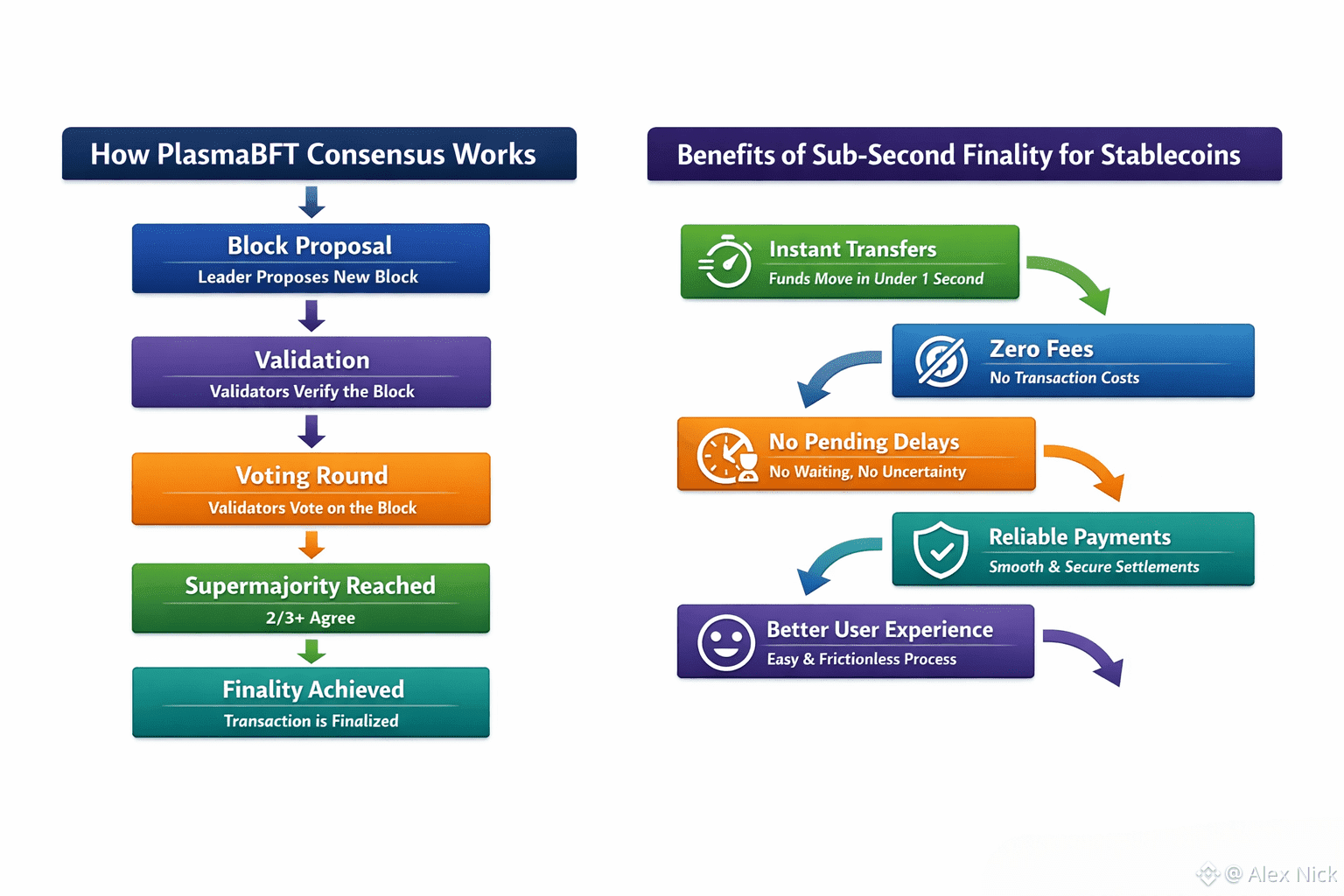
Why stablecoins deserve their own rails Most blockchains grew up around general computation and shared state. That’s a brilliant base for experimentation. But money is different. The people who use money professionally do not want novelty. They want certainty. If you are running a treasury or settling a trade, you need to know when a transfer is irreversible, predictable in cost, and auditable. You care about settlement risk much more than you care about raw transactions per second. Plasma starts from that real world posture and builds a stack around it.
One of the clearest ways this shows up is fees. When nominal fees spike, the economics of moving money change overnight. Businesses delay payroll, remittances become costlier, and small margin payment flows stop making sense. Plasma’s core claim is that simple stablecoin transfers should not be a revenue product taxed per action. Instead they should be cheap and predictable so volume and liquidity can grow without artificial friction. To make that viable the protocol must reconfigure where value accrues and how validators are compensated. That is a design decision with ripple effects. It changes what kinds of dApps find the chain attractive. It changes the token model. And it changes monetization: instead of charging for basic transfers, value is captured by higher order services layered on top. Several project writeups and interviews made this strategic point central to Plasma’s narrative at launch.
Core technical pillars in plain language Plasma’s architecture is built around a few pillars that are worth clarifying without the usual jargon. First, finality matters. PlasmaBFT is the protocol component the project highlights to provide deterministic and very fast finality for settlement. Second, stablecoin native mechanics matter. The chain is tuned to make moving dollar-equivalents predictable and cheap. Third, developer ergonomics matter. Plasma intentionally embraces EVM compatibility while also layering on the specialized settlement features institutions need. Finally, security assumptions matter. Plasma negotiates a security model that aims to be practical for censorship resistance while recognizing financial operators value predictable behavior above absolute decentralization.
Putting that together gives you a mental model. The chain behaves like a clearing rail. Transfers post, they finalize quickly, and the network has tools to make everyday payments feel like familiar rails rather than speculative mechanics. That does not mean Plasma rejects decentralization. It means the tradeoffs are explicit and oriented toward reliability for money flows. Investors and traders should pay attention to whether that reliability persists under load and stress because markets punish settlement risk more than theoretical design purity. Coverage of the launch described those pillars and how they mapped to initial partner integrations and the token launch.
EVM compatibility with operational differences You will often hear that EVM compatibility is table stakes for adoption. That is true for Plasma too, but the project tries to keep EVM tooling while inserting operational constraints that matter for regulated settlement use cases. Plasma’s approach is to make it easy for smart contract teams to ship with familiar languages while ensuring the runtime environment respects the chain’s settlement and compliance orientation. That balance shows up in how the team talks about Reth and EVM execution on Plasma. The goal is developer familiarity without forgetting that the execution environment must play nice with the chain’s settlement guarantees and its stablecoin centric economics. The project made this a visible part of its launch story in September 2025. 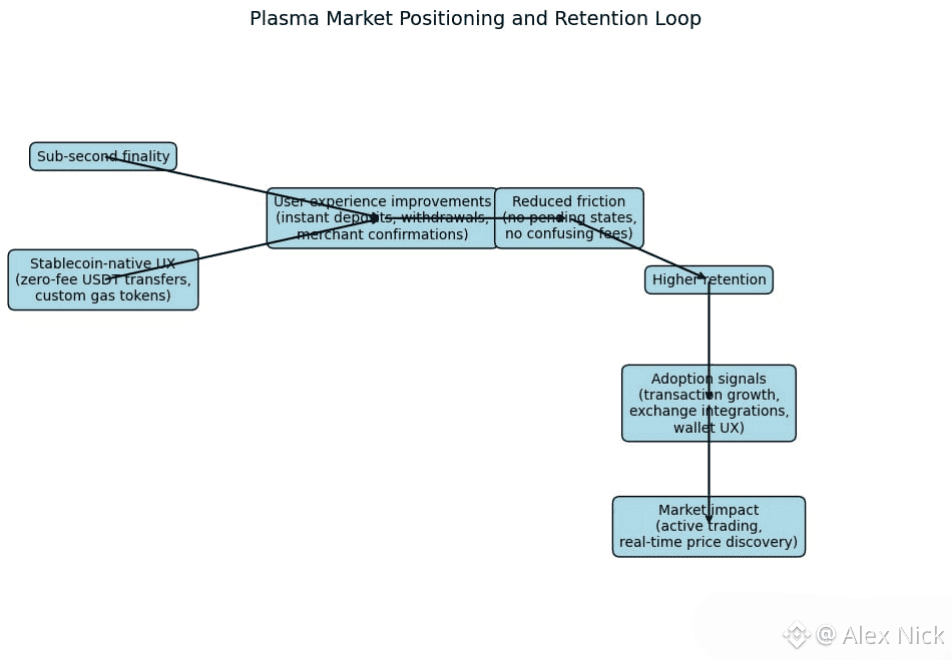
What “free transfers” really means in economic terms The phrase “free USD transfers” is eye catching. But the economics require unpacking. Free transfers in the basic sense mean users will not pay per small transfer in stablecoins as they do today on congested chains. That does not mean validators do not get compensated. It means the compensation model aims to recapture value at different layers. For example, validators and operators can be compensated through staking rewards, protocol level subsidies, or fees on higher complexity operations such as smart contract execution, issuance, or settlement services. The practical effect for users is reduced friction for the many small moves that add up into real world financial flows. For operators it requires carefully engineered incentives so the network does not become dependent on unsustainable subsidies. Coverage of the token sale and the launch emphasized exactly that point: the chain wants volume and real usage to be the long term revenue driver rather than per transfer fees.
Security, Bitcoin anchoring, and the trust profile Any protocol that aims to host money must make a credible security claim. Plasma has presented a set of design choices intended to give the chain weight in the market. One interesting angle the project talks about is anchoring and externalized security primitives. The idea is not to copy Bitcoin’s mechanics but to align with external anchors that provide an additional layer of economic or social trust. That matters for institutional counterparties that care about where final settlement can be traced and how disputes are resolved. The project’s early materials and reporting framed this as part of the broader credibility story: stablecoins plus credible settlement primitives make the network more usable for institutional activity. As always, the practical test is operations under stress and the durability of those anchors.
Tokenomics and market context You cannot evaluate a settlement chain without looking at the token mechanics. Plasma sold a portion of its XPL supply ahead of launch and positioned the allocation to support early security incentives and long term network stability. Token sale reporting at the time of the mainnet beta highlighted institutional interest, strategic investors, and a significant allocation for ecosystem growth. The project’s token launch was part of the mainnet beta narrative and helped bootstrap liquidity and operations on day one. If you want to think like an operator you watch token distribution and vesting schedules closely because they influence incentives for validators and partners over time. The market reacted strongly to the XPL launch with high initial trading interest. For readers tracking price and market depth I recommend checking current aggregator data because token metrics matter for operational channels and for the ability to absorb large flows. 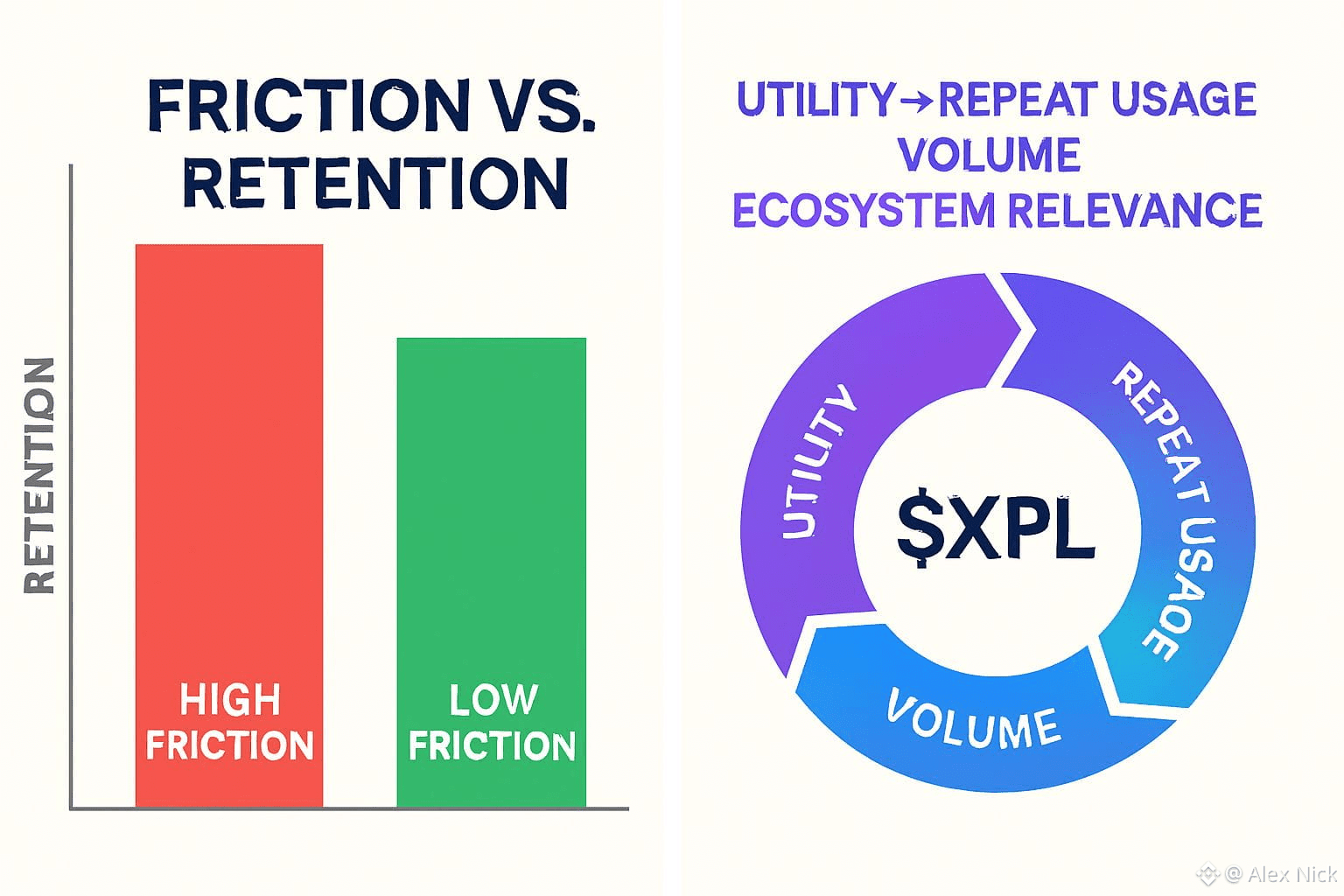
Partners and the practical path to adoption A lot of blockchain projects talk about partnerships as if they were a substitute for real usage. Plasma’s path was different in one practical sense: early partnerships were chosen to demonstrate the settlement story rather than to create marketing noise. That meant working with stablecoin issuers, liquidity providers, and custodial partners that can test real flows. The project also emphasized integrations with regulated venues because tokenized settlement and RWA money flows require legal compliance in ways purely speculative activity does not. The early press and coverage highlighted Bitfinex and other institutional participants as strategic backers and test partners. Those connections do not guarantee product market fit, but they do create testing grounds where settlement assumptions get validated against real world constraints.
User experience and the psychology of money movement This is a non technical point, but it is perhaps the most consequential. Money movement is as much psychological as it is technical. When fees spike unpredictably people delay transactions. When confirmations take unpredictable time people avoid on chain rails. Plasma’s thesis is that if you remove those psychological frictions people will use the chain for everyday money flows and not only for speculative repositioning. That shift matters because stable usage creates recurring demand for value capture that is far more durable than one time speculators. We are already seeing financial rails that succeeded by making repeated small actions cheap and boring. Plasma wants to translate that into the crypto world. The difference is subtle but massive. If transfers feel normal people stop optimizing for the network and start optimizing for the business outcomes they care about. That is the kind of adoption that sticks.
Risks and the checklist you should care about No infrastructure bet is without risk and Plasma is not an exception. There are three categories I watch closely. First, operational resilience. Settlement rails must withstand congestion, attacks, and peak loads without losing finality guarantees. Second, economic sustainability. If the network relies on heavy early subsidies to make transfers feel free then the protocol must have a credible plan to replace subsidies with organic demand. Third, regulatory and custody complexity. When money flows at scale legal frameworks matter. Any chain that moves institutional money must have clear custody models, dispute mechanisms, and auditability. Evaluating Plasma therefore means watching incidents, measuring real payment volume, and checking whether partners are able to run production grade flows on day to day schedules.
A reader friendly example helps ground this. Imagine a payroll provider uses a stablecoin rail to pay thousands of employees across many jurisdictions. For that provider a single day of settlement ambiguity is a regulatory and business nightmare. They will not pick the cheapest chain. They will pick the chain with predictable operations, clear audit trails, and a credible incident response. Plasma’s success depends on proving that combination consistently. That is why the project’s early focus on settlement properties and product oriented partners matters. It is also why adoption is likely to be steady rather than explosive.
Developer opportunities and what to build first If you are a developer wondering what to build on Plasma the short answer is build things that expect steady frequent transfers rather than rare auctions or speculative yield plays. Think payroll primitives, merchant rails, treasury automation, private settlement adapters for exchanges, and tokenized real assets where auditable settlement matters more than permissionless bombast. Those are the places where transaction economics and settlement behavior actually change product decisions. EVM compatibility lowers the onboarding cost. But the deeper call to action is to design products that take advantage of cheap transfers and deterministic finality rather than try to re use DeFi models that optimized for very different assumptions. The first wave of useful apps will show whether transfer economics actually unlock new behaviors at scale.
Closing with a concrete mental picture If you strip away the rhetorical dust you can imagine Plasma as a set of rails inside a larger financial city. Some systems are highways for speculative traffic. Plasma is trying to be the bus network and the payment clearinghouse. If it can make transfers cheap, predictable, and auditable then a huge class of practical flows will start to move on chain. That does not mean it will outrun other layer ones in headlines. It does mean that, over time, the rails could become the plumbing that real money depends on.
I am not proposing that Plasma will automatically become the global settlement substrate overnight. That would be naive. Instead what I find interesting is that Plasma chooses to optimize for the boring, necessary parts of money movement that most blockchains avoid. The mainnet beta and launch were only the beginning. The real tests are stability under production load, whether revenue models can support validators without reintroducing friction, and whether institutional partners are willing to route real flows through the chain repeatedly. If those three boxes get checked then we will have moved beyond promising ideas into real world infrastructure. And that is when the broader market starts recalibrating which rails matter.
Plasma asks a quiet but heavyweight question of the industry. Can we build blockchains that are not primarily about speculation but about predictable financial plumbing? If your answer is yes then the interesting work is getting serious about engineering, partnerships, audits, and long term incentives. If your answer is no then Plasma remains an interesting experiment. Either way I think we are seeing an important shift: the industry maturing from narrative first to utility first. That is the sort of change that is slow to start and then obvious in hindsight.

