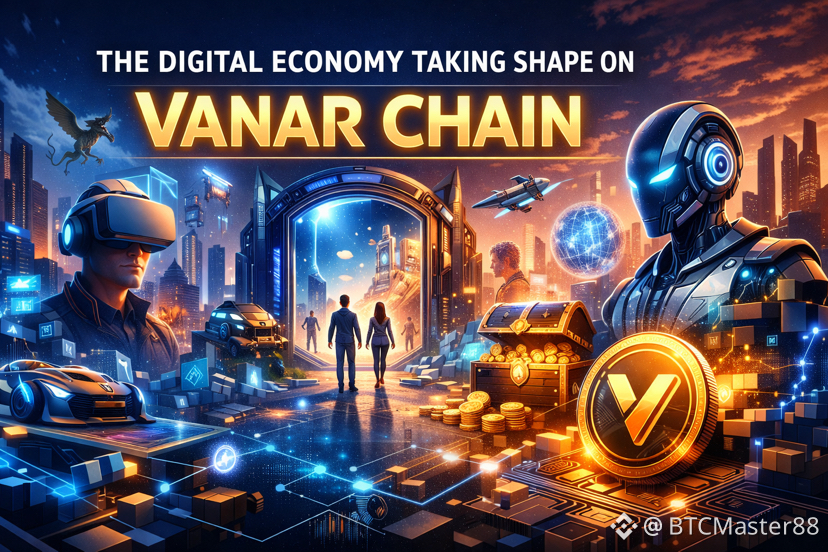
This is a chain designed with real intention and a clear purpose that makes sense in the real world, especially for the next wave of users who will enter Web3 without even realizing it. Vanar feels like the missing connection between entertainment, gaming, AI, brands and blockchain. It is building an environment where people can interact naturally, where technology hides in the background and where the experience takes the spotlight.
Most chains obsess over speed and TPS but forget that the world does not operate on performance charts. It operates on culture, content, identity and digital ownership. Vanar starts from that point. The team behind it comes from gaming, entertainment and brand focused industries, not from typical crypto engineering circles. That alone changes the entire way they think about utility. They are not asking how to get crypto natives excited. They are asking how to bring three billion real consumers into digital economies without forcing them to learn the language of blockchain. That mindset is what makes Vanar feel like a genuine bridge instead of another technical experiment.
The more you study the ecosystem, the clearer the architecture becomes. Vanar is not a single product. It is a stack of interconnected experiences built around one idea. People do not want to understand blockchain. They want to enjoy games, explore digital worlds, build identities, collect things they care about and connect with brands they already trust. Vanar uses blockchain as the invisible engine powering all of that. The technology fades into the background and the user simply interacts with experiences that feel familiar.
Look at the Virtua Metaverse. It is not another empty world that tries to look futuristic but ends up feeling lonely. Virtua focuses on immersive experiences that can actually keep people engaged. It blends entertainment, brands and interactive environments in a way that feels alive. When you walk inside a Virtua world, you do not feel like you are inside a tech demo. You feel like you are stepping into a digital layer of culture. That is exactly what the next generation of Web3 needs. Worlds that feel lived in, not engineered.
Then you move to the VGN games network. This part of the ecosystem is even more transformative. Gaming is one of the fastest growing sectors in the world, but most attempts to merge gaming with blockchain create friction. Players hate complicated transactions, confusing wallets and gas fees. Vanar solves this by designing the infrastructure around gamers first. Smooth onboarding, seamless interactions and invisible blockchain rails. The player just plays. The chain handles the rest. This is how you onboard millions. Not by forcing them to learn crypto but by integrating blockchain into the flow of familiar experiences.
What makes the Vanar economy even more interesting is the way all these verticals connect. Gaming alone is powerful. Metaverse alone is interesting. AI alone is becoming essential. But when all three live inside the same chain with shared identity, shared ownership and shared experiences, that is where new types of economies appear. Digital assets that move across worlds. Characters that exist beyond one game. Brand experiences that evolve across different environments. Creators who can build once and reach audiences across multiple platforms. All powered by the VANRY token sitting at the center of the ecosystem.
The VANRY token is not just a speculative asset. It is the fuel of an expanding digital universe. It supports creators, brands, developers and users by enabling operations, ownership and participation within the network. Every time the ecosystem grows, the role of the token becomes more meaningful. This is not one of those ecosystems where the token exists separately from the utility. VANRY is directly tied to the experiences being built on top of Vanar. It grows with the actual activity inside the worlds powered by the chain.
Another thing that stands out is the ambition. Vanar is not playing small. It is not building one game or one metaverse or one product. It is building a multi vertical digital economy. Gaming, entertainment, AI, eco solutions, brand integrations, digital identity and creator tools all living under a unified chain. This is what a next generation blockchain looks like. Not a chain that tries to replace the internet but a chain that blends seamlessly into the digital lives of people.
What impresses me most is how early everything still feels. You see the foundation being built and you know what is coming on top of it will be much larger than what is visible today. Gaming studios joining the ecosystem. Brands entering digital experiences. AI powered interactions becoming natural. Metaverse worlds gaining real user activity. This does not feel speculative. It feels like infrastructure being built for a future that is getting closer every day.
Vanar is creating a digital economy where millions of people can enter without friction. An economy that feels natural, intuitive and fun. An economy designed for gamers, creators, brands and everyday consumers. It is not trying to force blockchain into their lives. It is redesigning blockchain to fit into the world they already know.
That is why the digital economy taking shape on Vanar Chain feels different. It is not built on hype. It is built on experience, culture and a deep understanding of how people actually interact with digital worlds. And when you combine that with a chain ready to scale, a token designed for real utility and a team that understands the entertainment industry better than most in Web3, you get something rare. You get a chain that might actually be ready for the next three billion users.
This feels like the beginning of a digital universe that will grow far beyond gaming and metaverse. Vanar is building the rails for an entirely new generation of experiences, and the most interesting part is that everything still feels early. The digital economy of Vanar has only started taking shape and it already looks stronger than most ecosystems that have been around for years.