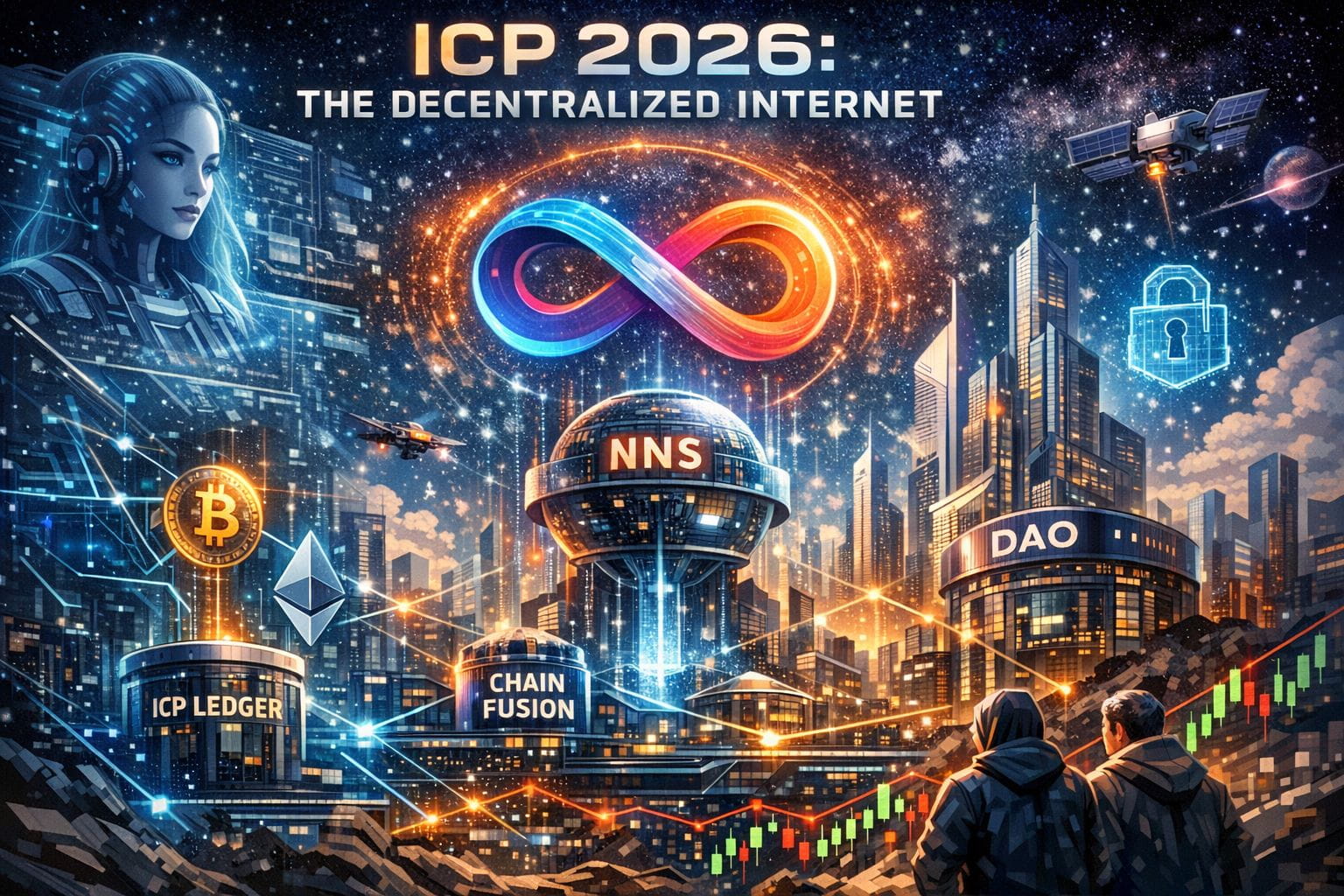
Крипторынок в 2026 году больше не только о хайпе — это о реальной инфраструктуре, реальных пользователях и реальной прибыли. И один проект, который продолжает оставаться вне поля зрения, строя неустанно, — это Internet Computer (ICP).
В то время как большинство блокчейнов все еще полагаются на централизованные облачные провайдеры, такие как AWS или Google Cloud, $ICP работает полностью на блокчейне — фронтенд, бэкенд, данные и логика — без традиционных серверов. Это не обещание. Это действующая технология.
🌐 Что делает ICP особенным в 2026 году?
К 2026 году $ICP стал полнофункциональным децентрализованным интернетом, способным размещать:
Веб-приложения и социальные платформы.
dApps на основе ИИ.
Игры на цепочке.
Протоколы DeFi без мостов.
Системы управления DAO.
Услуги корпоративного класса.
Все 100% на цепочке, без централизованных зависимостей.
Это ставит ICP в уникальное положение по сравнению с Ethereum, Solana или сетями второго уровня, которые все еще сильно зависят от внецепочечной инфраструктуры.
🔥 Ключевые катализаторы ICP 2026 года.
1️⃣ Конвергенция ИИ + Блокчейн.
$ICP является одной из первых блокчейнов, способных запускать модели ИИ непосредственно на цепочке. К 2026 году ожидается, что канистры ИИ будут обеспечивать:
Децентрализованные ИИ-помощники.
Модели вывода на цепочке.
Автономные агенты DAO.
Это огромно, так как регулирование ИИ ужесточается, а спрос на бездоверительный ИИ растет.
2️⃣ Технология Fusion Цепей.
Цепочка Fusion ICP позволяет прямую интеграцию с Bitcoin, Ethereum и другими цепочками — без мостов, без обернутых активов.
Нативный BTC на ICP.
Взаимодействия с умными контрактами ETH.
Кросс-цепной DeFi без риска моста.
Эта технология сама по себе ставит ICP на несколько лет вперед в архитектуре безопасности.
3️⃣ Принятие Web3 в масштабах.
В 2026 году правительства, предприятия и стартапы все больше ищут защиту от подделки и устойчивую к цензуре инфраструктуру.
ICP предлагает:
Предсказуемые затраты.
Высокоскоростная окончательность.
Производительность на уровне интернета.
Это делает его привлекательным для реального применения, а не только для спекуляций DeFi.
📊 Токеномика и динамика поставок.
Тикер: ICP.
Максимальная эмиссия: ~469 миллионов ICP
Дефляционный механизм:
ICP сжигается при конвертации в циклы (топливо для вычислений).
Большее использование = больше сожженного ICP.
По мере увеличения использования сети в 2026 году, давление сжигания ICP возрастает, сжимая обращающуюся эмиссию.
🧠 Управление и стекинг (NNS).
Держатели ICP могут ставить токены в Нервной системе сети (NNS), чтобы зарабатывать вознаграждения и голосовать за обновления протокола.
Долгосрочные блокировки = большая голосующая сила + большая доходность.
Это способствует:
Долгосрочное удержание.
Стабильность сети.
Сниженное давление на продажу.
📍 Официальные ссылки на контракты / канистры.
В отличие от токенов ERC-20, ICP является нативной монетой уровня 1, а не развернутой в виде традиционного умного контракта.
🔹 Канистра бухгалтерского учета ICP (официальная).
Идентификатор канистры:
ryjl3-tyaaa-aaaaa-aaaba-cai
🔹 Нервная система сети (NNS).
Канистра управления NNS:
rrkah-fqaaa-aaaaa-aaaaq-cai
🔹 Корневая канистра ICP:
Идентификатор корневой канистры:
r7inp-6aaaa-aaaaa-aaabq-cai
Это основные системные канистры, которые обеспечивают экономику и управление ICP.
🎯 Прогноз цены ICP на 2026 год (спекулятивный).
Если ICP продолжит выполнять свои обязательства, и принятие ускорится:
Консервативный сценарий: $25 – $40.
Сценарий сильного принятия: $60 – $100+
Полная инфраструктура Web3: потенциал с тремя цифрами.
Волатильность гарантирована — но также и возможности.
🧩 Заключительные мысли.
ICP не пытается быть очередным 'убийцей Ethereum'.
Он строит то, чего Ethereum никогда не собирался делать:
Децентрализованная версия самого интернета.
К 2026 году, когда масштабируемость, ИИ, соответствие и безопасность будут важнее мемов, ICP, возможно, наконец, получит признание, которого оно заслуживает.
Раннее позиционирование всегда имеет значение.
Убеждение имеет большее значение.