
What does it look like when a Layer-1 blockchain actually aligns its core design with the coming wave of AI-powered digital economies? VANRY (Vanar Chain) has been evolving its technical foundation and ecosystem in ways that extend beyond simple token utility, building toward an infrastructure that supports intelligent and interactive Web3 applications. Unlike many projects that chase narrative cycles, Vanar Chain has prioritized a deep integration of AI-native tools directly into its protocol stack. Recent updates show that components like Neutron, an AI compression and storage layer, and Kayon, a decentralized intelligence engine, are being expanded to enable smarter on-chain data handling and real-time analytics, driving measurable utility for tokens and applications alike. These movements suggest that VANRY’s role is increasingly tied to data-driven digital experiences rather than isolated financial transactions.
At the heart of this alignment is VANRY’s position as a utility token embedded within the network’s operational mechanics, where it is used for transaction fees, staking, and access to advanced features like AI-assisted services and storage. Observable on-chain activity reflects growing engagement in use cases that go beyond speculative trading, tying token usage directly to infrastructure demand. Market behavior aligns with broader mid-cap utility tokens, showing volume and liquidity that respond to macro crypto conditions rather than isolated project hype. When Bitcoin (BTC) dominance increases, capital tends to rotate toward large-cap assets, temporarily dampening activity in ecosystems like VANRY’s; conversely, during BTC consolidation phases, tokens with real utility can see normalized volume as capital broadens into infrastructure segments
Partnerships and ecosystem expansions further underscore this integration with digital economies. Verified collaborations aimed at real-world asset tokenization and AI tooling broaden the functional scope of Vanar Chain, reinforcing its utility in decentralized finance (DeFi) and data-centric applications. These integrations support a trading environment where VANRY’s price and liquidity behave consistently with utility and infrastructure token dynamics, as opposed to narrative-focused assets. Comparative performance metrics across AI, gaming, and infrastructure tokens reveal that assets anchored in real usage tend to maintain steadier engagement even amid market shifts.
Supply mechanics also reflect this infrastructure perspective. VANRY’s circulating supply and staking structures are designed to balance transactional accessibility with ecosystem participation, while subscription models for tools like myNeutron convert usage into token demand, buybacks, and burns—mechanics that support on-chain activity and ecosystem sustainability over time. These mechanisms are visible in network data that shows ongoing engagement across diverse applications, further linking VANRY’s evolution to functional demand rather than hype cycles.
Liquidity movement in VANRY’s trading environment follows patterns seen in other utility tokens, with order book depth and exchange participation scaling with overall market conditions. Price action and volume trends indicate responsive behavior to broader crypto flows, particularly during shifts in large-cap dominance, while on-chain activity maintains an underlying baseline tied to usage rather than speculation. This separation between market sentiment and real network demand is a hallmark of tokens integrated into operational ecosystems.
Developers in the space are increasingly drawn to VANRY’s ecosystem because of this alignment with practical utility requirements. Tools that support AI data processing, semantic identity layers, and cross-chain storage capabilities attract builders who need robust infrastructure rather than promotional visibility. Observable development trends show an uptick in smart contract deployment and application interaction, indicative of deeper ecosystem engagement that precedes broader market recognition.
At the same time, VANRY’s positioning within AI-native infrastructure differentiates it from simpler utility tokens by enabling complex interactions such as decentralized intelligence queries and semantic identity features that are planned for rollout in early 2026. These features reflect a broader commitment to real-world AI integration, where blockchain and machine learning converge to support programmable data environments directly on-chain.
When broader market volatility arises, such as fluctuations in BTC prices or shifts in dominance metrics, tokens with deeper functional utility like VANRY exhibit patterns consistent with mid-cap infrastructure assets: temporary compression during capital rotation toward large caps, followed by stabilization as capital redistributes more widely across sectors. Comparative trends show that utility and infrastructure tokens often maintain steadier liquidity and engagement than narrative-only assets, especially during normalization phases.
In summary, VANRY’s alignment with the future of AI-powered digital economies is built on tangible developments that strengthen its position as more than a token. By embedding utility directly into network operations, expanding infrastructure capabilities, and supporting real-world digital use cases, Vanar Chain is observable evolving toward a foundational layer for intelligent Web3 applications. These trends are reflected in on-chain activity, ecosystem growth signals, and market dynamics that together delineate a pathway grounded in measurable utility.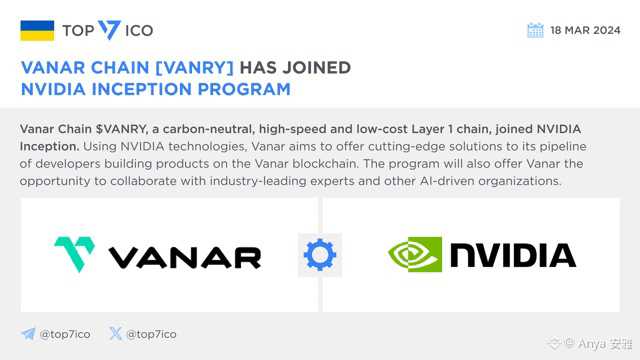
Anya sees through these verifiable updates and market indicators that VANRY’s evolution is not shaped by narrative alone but by structural alignment with the emerging intersection of blockchain, AI, and decentralized digital economies.