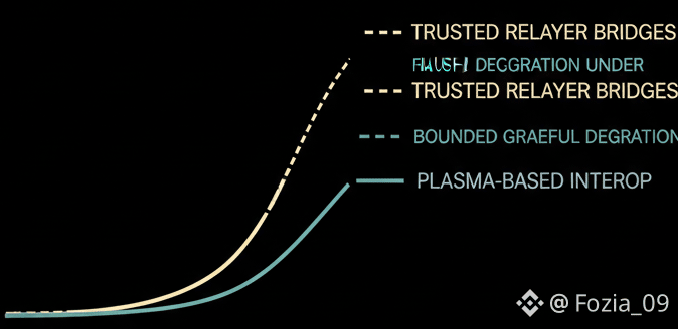
People like to talk about interoperability as if the problem’s already been solved.From what I’ve seen reading through bridge disasters over the last few cycles,that’s just not true.Most cross chain systems still lean on trusted relayers,multisigs,or some kind of off-chain coordination.That works fine when everything’s calm.But when the market’s under real stress,those setups break down, and suddenly everyone’s exposed.Now,with the ecosystem splintering into modular blockchains,rollups,and app specific execution layers,the risks around interoperability aren’t shrinking they’re stacking up.Moving assets across chains isn’t the real challenge.The real question is:Can you move value without forcing users to trust something they can’t see or check for themselves?
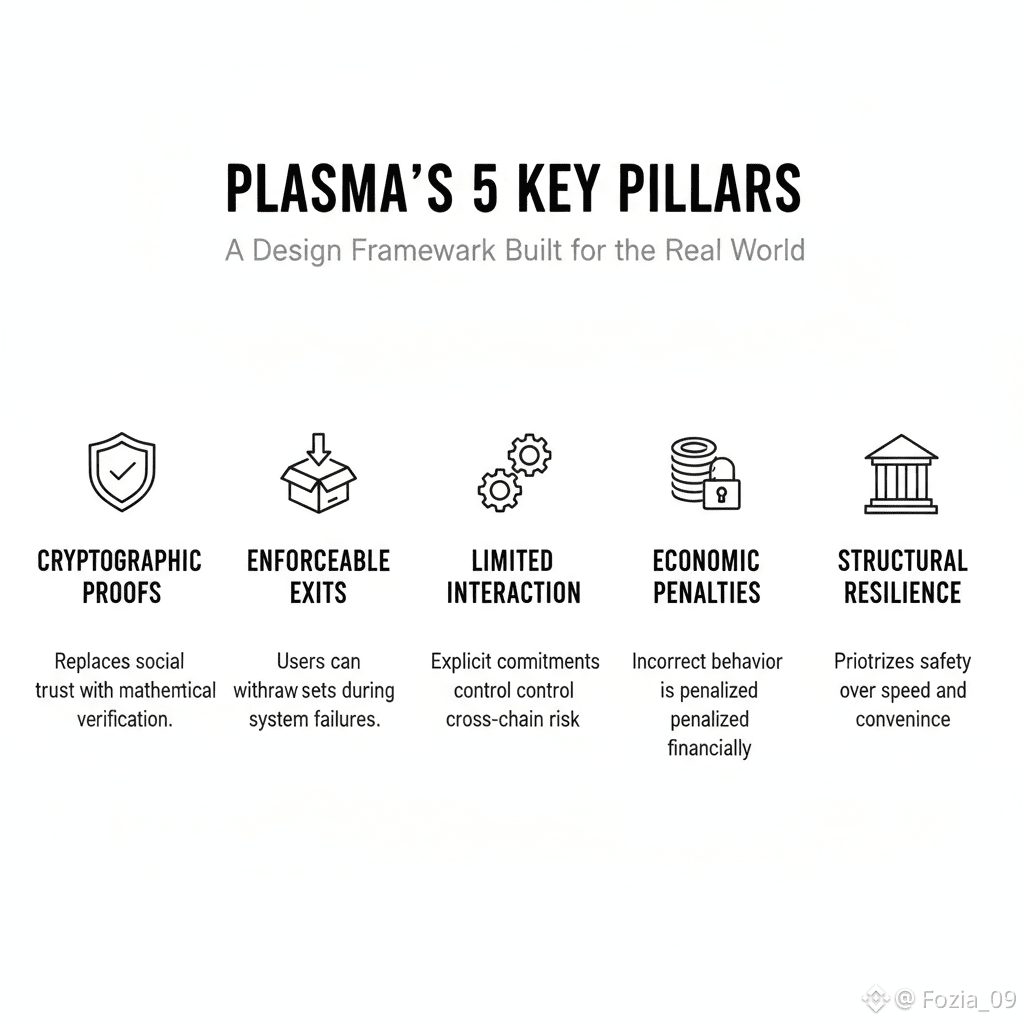
That’s why Plasma stands out to me.It doesn’t treat interoperability as just a messaging problem.Instead of telling users,“Trust us, this happened on another chain,”Plasma turns it into a verification problem:“Here’s the proof.” This feels a lot more honest.You can execute trades or transactions wherever you want speed or specialization,take your pick but the only outcomes that matter are the ones you can prove at settlement.This clean separation makes sense to me.Financial systems work best when you can experiment at the edges but demand real accountability at the core.
Plasma’s mental shift hits home when I look at bridge design.Most bridges basically say, “Take our word for it.”Plasma’s approach is more like,“Here’s the evidence,and if things go sideways,here’s your exit.”To me, enforceable exit rights are hugely underrated in interoperability design.If users can pull their money out on their own during a failure, the power dynamic flips.Operators lose their grip, and users get control which is how it should be.
Another thing I appreciate about Plasma is how it draws clear boundaries.Instead of syncing unlimited cross chain state or letting anything talk to anything,Plasma restricts interactions with explicit commitments.I don’t see this as a drawback.It’s a way to control risk.As people start pushing interoperability into wild new areas cross chain liquidity,AI compute,modular apps the idea of syncing everything everywhere just doesn’t hold up. Plasma admits fragmentation is here to stay and focuses on keeping the risk boxed in.
From an economic angle,Plasma’s push for cryptographic enforcement over social trust feels like a direct lesson from the market’s pain.Instead of hoping validators or relayers do the right thing,it locks in correctness through proofs and real economic penalties. That matters,especially with institutional capital coming into these modular systems. Big money won’t stand for murky trust assumptions for long.Plasma’s approach lines up better with how professional risk actually gets managed,not how crypto hype likes to spin it.
Of course,Plasma isn’t some magic upgrade. Longer exit windows,heavier user responsibility,more complicated failure modes these are real trade offs.I think it’s important to be upfront about that.Choosing Plasma means picking safety over convenience.Fast cross chain finality almost always comes with extra trust.Plasma skips the shortcut,which probably means latency-sensitive apps will pass on it.Still,for people who care more about keeping their capital safe than shaving off a few seconds,the trade is worth it.
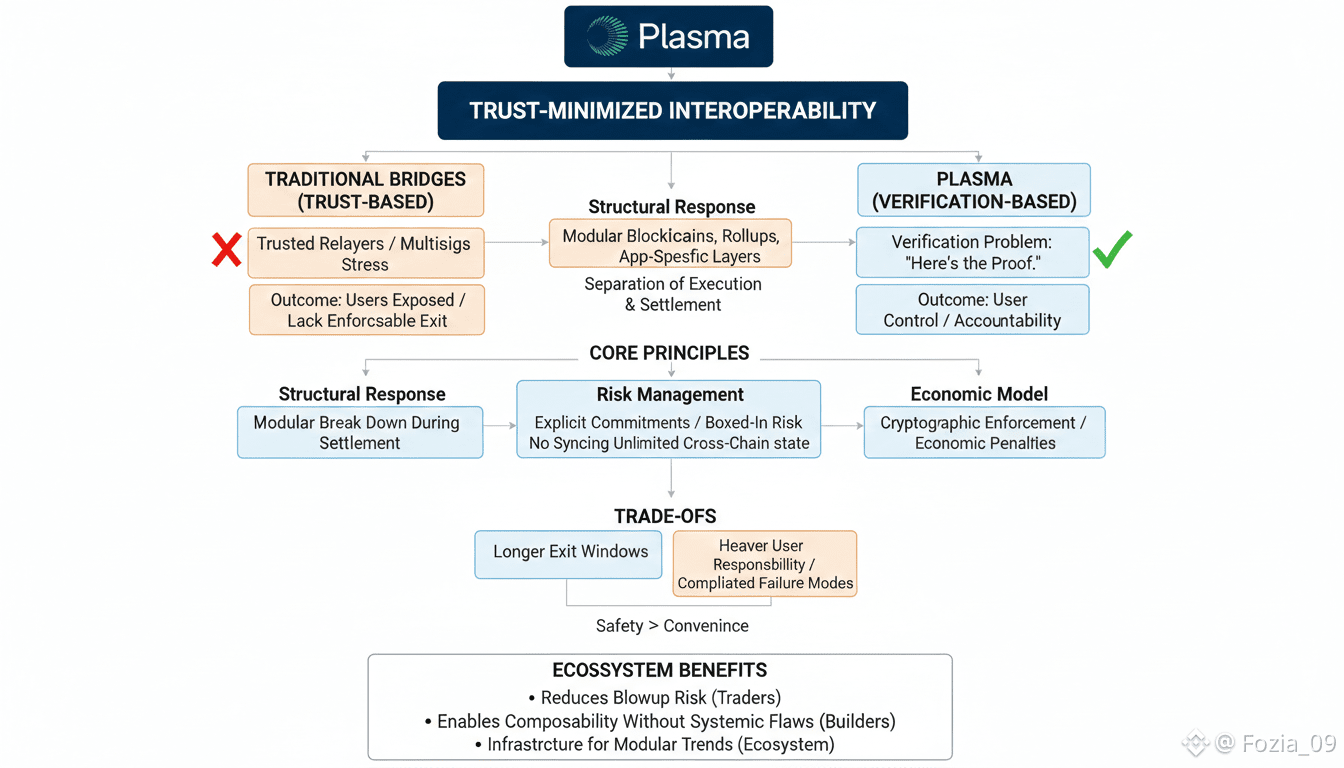
Stepping back,the Plasma model feels like the direction crypto’s heading,not just a response to old problems.For traders,it cuts down on blowup risk during market shocks. For builders,it enables composability without dragging in systemic bridge flaws.For the whole ecosystem,it’s a sign we’re moving away from reckless growth toward infrastructure built for resilience.From where I sit,this fits right in with the broader trends modular design,restaking risk awareness, tighter capital controls in a tougher liquidity world.
At the end of the day,trust minimized interoperability isn’t just a little improvement. It’s a correction a necessary reaction to years of prioritizing speed and smoothness at all costs,and then paying for it when things broke.Plasma might feel slower or less flashy, but it’s more honest at the structural level.My bottom line:interoperability should be treated like leverage great when you understand it, dangerous if you ignore it,and only really safe when it’s boxed in by proofs,exits,and clear limits.