
The Plasma Foundation's direction is different from many other chains, which are primarily competing based on "throughput." Instead, the Plasma Foundation is pursuing a strategy that emphasizes the construction of durable (long-lasting) structural value where it will provide the greatest amount of "durable value," which, according to the Foundation's strategy, is via its economic engine and real-world bridges.
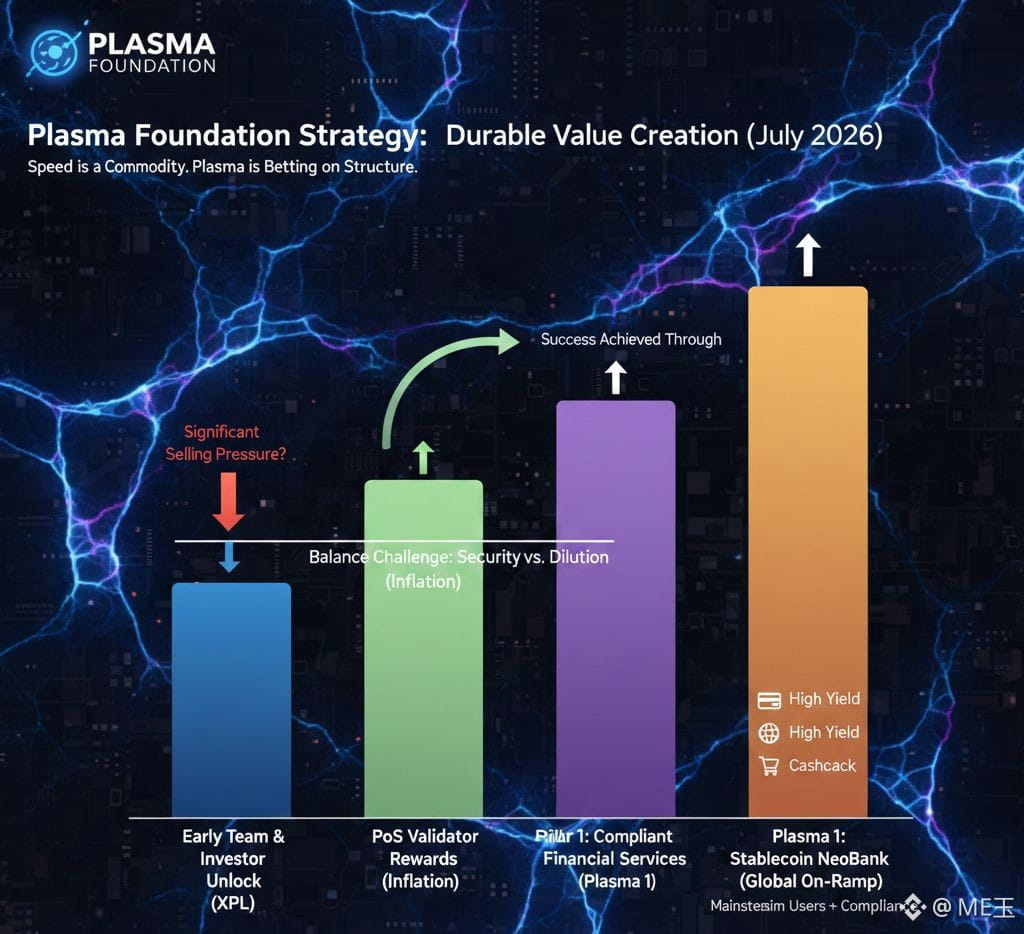
Pillar1: The first of these is their deliberately engineered economy. Specifically, the structure of Plasma is based upon the XPL token (tokens), which is/are intended as a “foundational asset” for a new financial system. The upcoming year will be a very important test for this — on July 2026, there will be a significant unlocking of tokens for both early teams and investors (a test of underlying utility with the potential for a significant amount of selling pressure).
At the same time, the activation of the network's Proof-of-Stake security model will provide the network's validators rewards in the form of token inflation. As a result, the foundation must manage the balance between incentivizing network security through the issuance of rewards, while at the same time, managing dilution due to token inflation associated with the rewards. Ultimately, success will largely be achieved through pillar two.
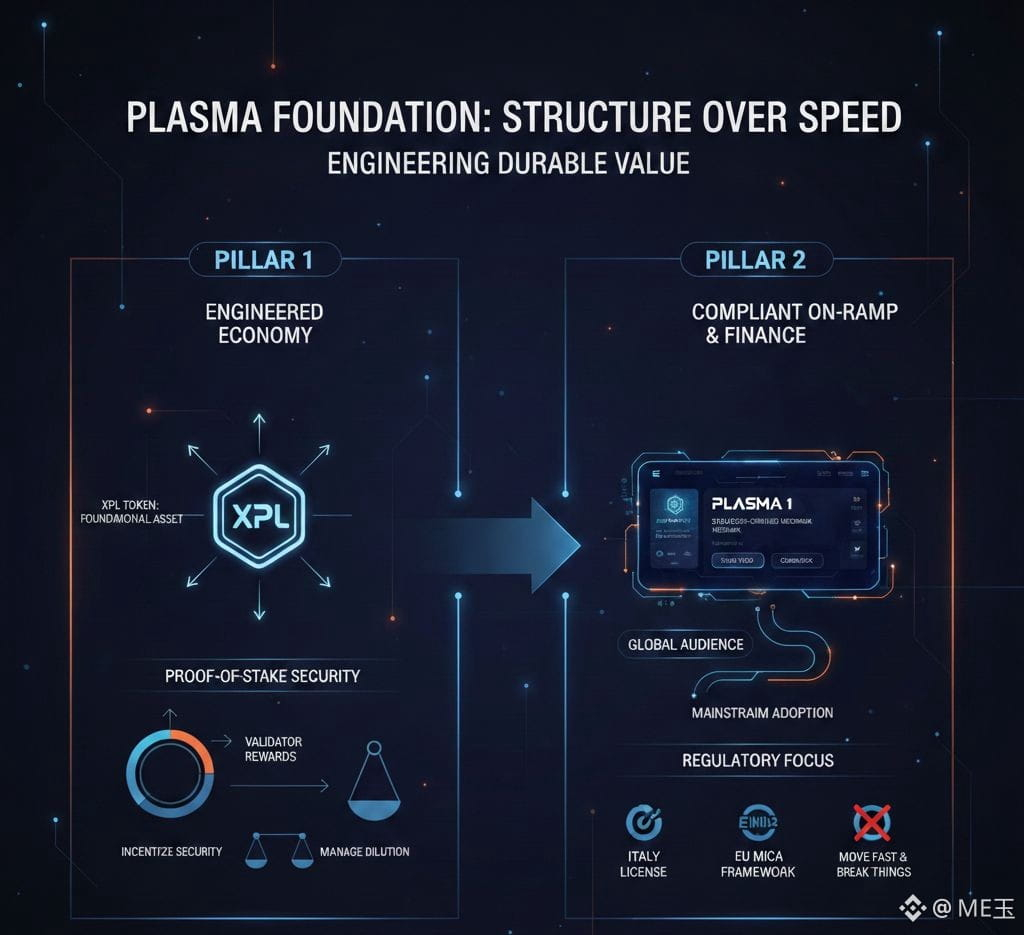
Pillar Two: Establishing Compliant Ramp for Non-Technology Users & Financial Services
Plasma's solution to the question of utility appears to be a significant shift toward conventional financial services. The primary focus of #Plasma will be on its flagship product, Plasma 1, which is a stablecoin-oriented neobank with high yield and cashback features that are intended for a global audience. Plasma is not simply another DeFi App; it is an on-ramp for mainstream users through compliance.
Furthermore, Plasma is aggressively working towards regulatory approval by obtaining a license in Italy, and pursuing a broader EU regulatory framework such as MiCA. The structure and regulations for Plasma's growth diverge significantly from the traditional cryptocurrency model of: Move Fast and Break Things.
Bottom Line
For Plasma, the goal for 2026 is not to simply win on the spec sheet. The goal is to show that a well-structured token-based economy can provide the funding for security, and that a regulatory-first on-ramp can attract real capital and users. While Plasma faces the short-term hurdle associated with the July Unlock, they are laying the groundwork for a long-lasting financial layer. Their bet is simple: over time, a resilient structure will outperform a commoditized speed.